
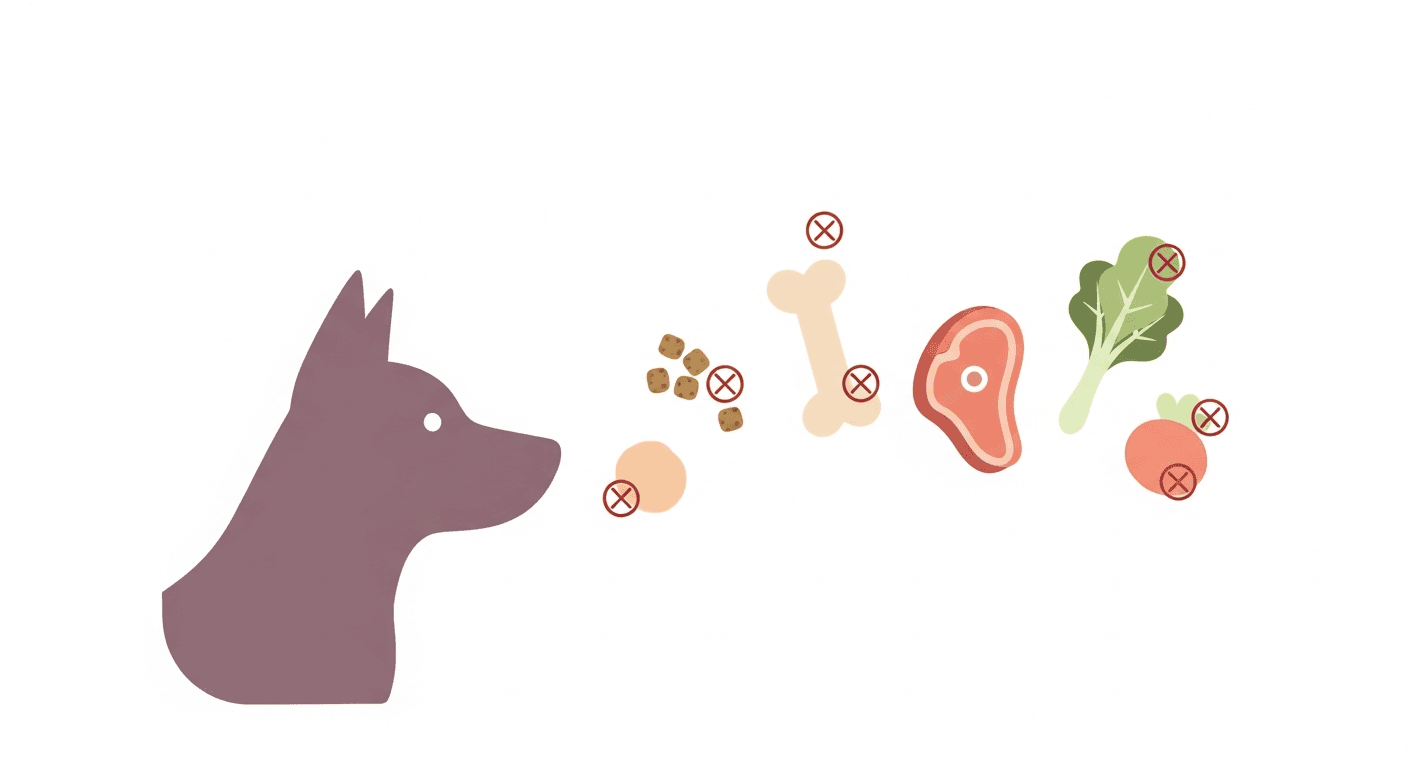
Understanding Food Allergies vs. Food Intolerance in Dogs
Food allergy and food intolerance are often used interchangeably, but they're different conditions with different mechanisms. True food allergy is an immune-mediated response (IgE or IgG-mediated) to a specific food protein. Food intolerance is a non-immune digestive reaction — like lactose intolerance — that causes GI symptoms without activating the immune system.
Both conditions cause distress and require dietary management, but true allergies often manifest with skin symptoms in addition to GI signs, while intolerance typically presents with GI symptoms alone. Food allergies account for approximately 10–15% of all allergic disease in dogs — far less common than environmental (atopic) allergies, though they often coexist.
If your dog has been itching, experiencing recurrent ear infections, or suffering from chronic diarrhea, Book a vet appointment at Happy Paws to get a proper diagnosis before starting an elimination diet. Track symptom patterns daily with the TailRounds Daily Log.
Common Symptoms of Food Allergies in Dogs
Skin/dermatological signs (most common):
- Year-round pruritus (itching) — particularly of face, ears, paws, and groin
- Recurrent otitis externa (ear infections) — often the first presenting sign
- Recurrent skin infections (pyoderma)
- Hot spots, hair loss, hyperpigmentation of chronically inflamed skin
- Paw licking or biting (interdigital pruritus)
Gastrointestinal signs:
- Chronic or intermittent vomiting
- Chronic or intermittent diarrhea — often soft, mucoid, or with urgency
- Increased frequency of bowel movements (more than 3 per day)
- Flatulence
- Poor body condition despite adequate food intake
The Most Common Food Allergens in Dogs
| Allergen | Approximate Prevalence | Notes |
|---|---|---|
| Beef | ~34% | Most common allergen; often from years of exposure |
| Dairy (milk proteins) | ~17% | Casein and whey — common in treats |
| Wheat/gluten | ~15% | Less common than marketed; true gluten allergy rare |
| Egg | ~13% | Usually egg white proteins |
| Chicken | ~15% | Rising with increased use in commercial foods |
| Lamb | ~6% | Formerly considered hypoallergenic — now overexposed |
| Soy | ~6% | Plant protein allergen |
| Fish | ~4% | Less common, but rising as fish-based diets become popular |
Notably, grains are responsible for a minority of food allergies despite being the target of grain-free marketing. The most common allergens are animal proteins — particularly proteins the dog has been exposed to extensively over its lifetime.
The Elimination Diet Trial: The Gold Standard for Diagnosis
No blood or saliva allergy test accurately diagnoses food allergies in dogs — these tests are commercially available but have poor sensitivity and specificity in veterinary studies. The only reliable diagnostic method is an elimination diet trial.
How to conduct an elimination diet trial:
- Choose a novel diet: Select either a hydrolyzed protein diet (proteins broken into fragments too small for immune recognition) or a novel protein diet (a protein the dog has never eaten before — kangaroo, venison, alligator, rabbit, or insect protein). The protein source must be genuinely novel for the individual dog.
- Strict trial period: Feed ONLY the elimination diet for a minimum of 8–12 weeks. No treats, flavored medications, dental chews, or table scraps of any kind. Even small exposures invalidate the trial.
- Monitor and document: Track skin, ear, and GI symptoms weekly. Improvement typically begins at 4–6 weeks but may take the full 12 weeks.
- Provocation challenge: After symptom resolution, reintroduce the original diet for 1–2 weeks. If symptoms recur, food allergy is confirmed. If they don't recur, the original diet was not the cause.
- Sequential reintroduction: Reintroduce individual protein sources one at a time (2-week intervals) to identify the specific allergen.
Long-Term Management After Identification
Once the offending allergen is identified, management is straightforward — permanently avoid that ingredient. This requires vigilant label reading, as allergens can appear in unexpected places (beef flavor in chicken food, wheat in sauce-coated treats).
Learn to read labels effectively with our guide to reading pet food ingredient labels. For prescription hydrolyzed diets, you'll need a veterinary recommendation — Find a Clinic near you. Log daily symptom scores in the TailRounds Daily Log during the trial to capture objective data for your vet.
Continue Reading
 🥩 Pet Nutrition
Dry vs Wet vs Raw Dog Food: A Complete Comparison Guide
Compare dry kibble, wet canned food, and raw dog food across nutrition, cost, convenience, and health outcomes to find the best option for your dog.
 🥩 Pet Nutrition
How to Read Pet Food Ingredient Labels: A Complete Owner's Guide
Decode pet food labels with confidence. Learn what AAFCO statements mean, how ingredients are listed, what marketing terms actually mean, and red flags to avoid.
 🥩 Pet Nutrition
Grain-Free Diets for Dogs: Benefits, Risks, and the DCM Controversy
Should you feed your dog a grain-free diet? Explore the evidence on grain-free dog food, the FDA's DCM investigation, and what science actually says.
 🥩 Pet Nutrition
Homemade Dog Food: What's Safe, What's Not, and How to Balance Meals
A complete guide to cooking homemade dog food safely. Learn which ingredients are safe, what to avoid, and how to ensure complete nutritional balance.