
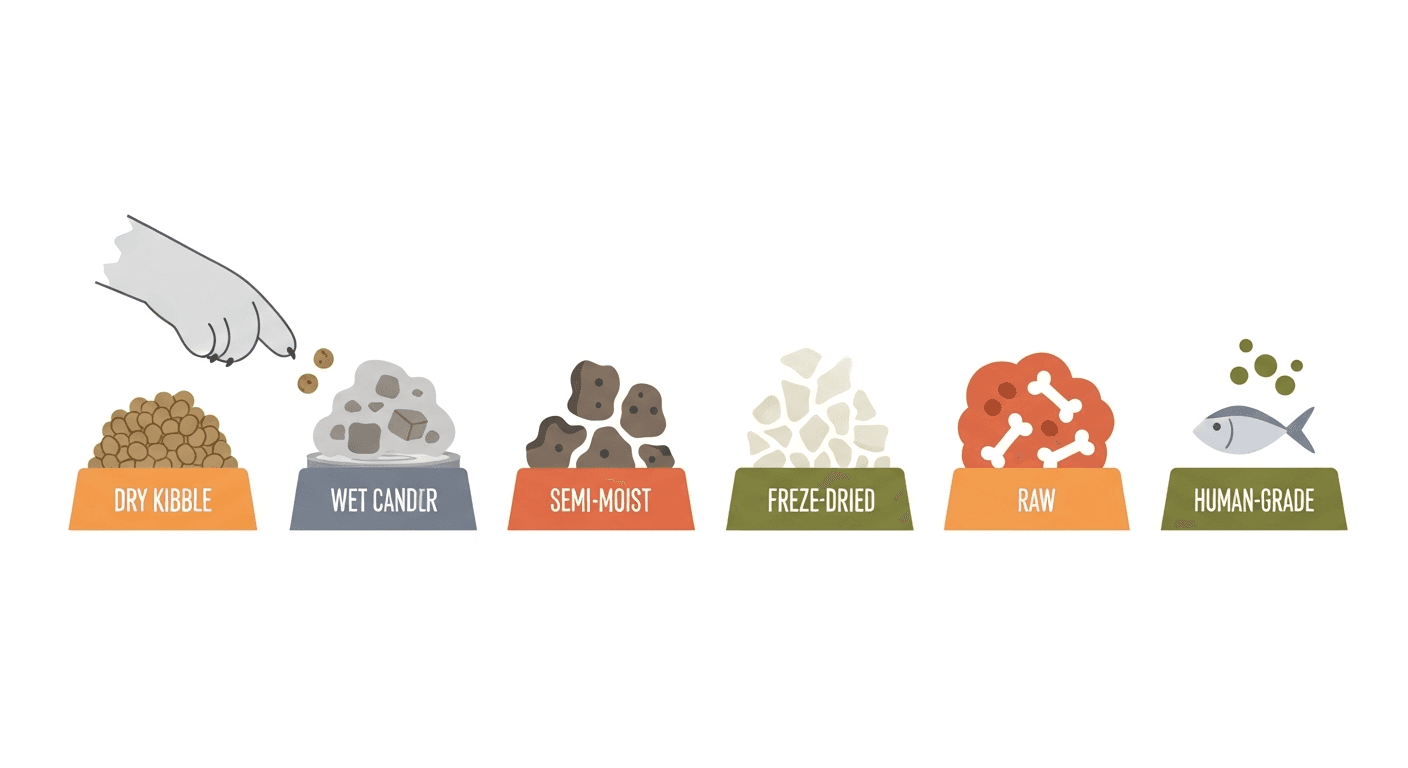
Why Cat Nutrition Is Uniquely Demanding
Cats are obligate carnivores — unlike dogs, they have no metabolic flexibility when it comes to protein. A cat's liver continuously processes protein regardless of dietary intake, meaning low-protein diets cause muscle wasting rather than adaptation. Cats also cannot synthesize taurine, arachidonic acid, or vitamin A from plant precursors — they must come from animal tissue. This biological reality makes food format choice especially consequential for feline health.
If your cat has been showing signs of a poor diet — dull coat, low energy, weight changes — the TailRounds Daily Log is a great place to start tracking symptoms before your next vet visit. You can also Book a vet appointment at Happy Paws to discuss a personalized nutrition plan.
Dry Cat Food (Kibble): Convenient but Moisture-Poor
Dry kibble dominates the cat food market by volume, largely because of its convenience and low price. However, from a feline biology standpoint, dry food has some real limitations.
The hydration problem: Cats evolved in arid environments and have a low thirst drive — they are designed to get most of their water from prey. Wild cat prey is approximately 70% moisture. Dry kibble is only 8–10% moisture. This chronic mild dehydration contributes to the high prevalence of urinary tract disease and kidney disease in domestic cats fed exclusively dry food.
The carbohydrate problem: Kibble must contain starch to bind into pellet form — typically 30–50% carbohydrates by dry matter. Cats lack the salivary amylase enzyme to begin carbohydrate digestion, and have limited hepatic glucokinase activity. High-carb diets are linked to feline diabetes and obesity.
When dry food is appropriate:
- As a supplement to wet food (not the sole diet)
- For dental support (some veterinary dental kibble formulas)
- For free-feeding households where wet food would spoil
- Budget-constrained situations where premium wet is unaffordable
Wet Cat Food (Canned): The Closer-to-Natural Option
Most veterinary nutritionists and feline medicine specialists consider high-quality wet food the closest commercially available match to a cat's natural dietary needs. At 70–80% moisture with higher protein and lower carbohydrate content, it aligns with feline biology far better than kibble.
Health benefits of wet food for cats:
- Dramatically increases daily water intake — critical for urinary and kidney health
- Lower carbohydrate load reduces obesity and diabetes risk
- Higher protein from animal sources supports lean muscle mass
- Better palatability for sick, senior, or recovering cats
Types of wet cat food: Pâté (smooth, uniform texture), chunks in gravy, shreds, and mousse. Pâté typically has the most consistent nutrient density; gravy/sauce-based products sometimes contain relatively little actual meat in proportion to the liquid component — read labels carefully.
Raw Cat Food: High Reward, Higher Responsibility
Raw feeding for cats — either commercial frozen raw or home-prepared — provides the highest moisture content, the most bioavailable protein, and the least processing. Cats often thrive on properly balanced raw diets with improved coat, energy, and litter box output.
| Factor | Dry Kibble | Wet/Canned | Raw |
|---|---|---|---|
| Moisture | 8–10% | 70–80% | 65–75% |
| Protein (dry matter) | 30–40% | 40–55% | 50–65% |
| Carbohydrates (dry matter) | 30–50% | 5–15% | 0–5% |
| Cost per month (avg.) | $20–$60 | $60–$150 | $100–$250+ |
| Prep complexity | None | Minimal | High |
| Taurine guaranteed | Yes (added) | Yes (natural + added) | Depends on recipe |
Critical raw feeding caution: Home-prepared raw diets for cats are notoriously difficult to balance. Taurine deficiency from improperly prepared raw food can cause dilated cardiomyopathy (DCM) and retinal degeneration — both life-threatening. If you pursue raw feeding, use a veterinary nutritionist-formulated recipe or a commercial raw food meeting AAFCO standards.
Building the Ideal Cat Diet: Practical Recommendations
The ideal cat diet is high in animal protein, high in moisture, and low in carbohydrates. Here's how to achieve this across budgets:
- Best option: High-quality wet food as the primary diet, supplemented with limited amounts of dental kibble if needed for teeth.
- Budget approach: Mix wet and dry, but ensure wet food makes up at least 50% of caloric intake.
- Optimal for health-focused owners: Commercially prepared raw (AAFCO-compliant) or a veterinary-formulated home-cooked diet.
- Cats with kidney disease: Wet food is strongly preferred — the moisture alone can significantly slow disease progression.
Whatever format you choose, always transition gradually (over 7–10 days) to avoid digestive upset. Log your cat's response to dietary changes using the TailRounds Daily Log, and Find a Clinic to access professional nutritional guidance in your area.
Continue Reading
 🥩 Pet Nutrition
How Much to Feed Your Cat: A Complete Portion Sizing Guide
Calculate the right daily food portions for your cat by weight, age, and activity level. Prevent obesity and undernutrition with this vet-informed guide.
 🥩 Pet Nutrition
Kitten Nutrition Guide: What to Feed Your Kitten From Birth to 1 Year
Everything you need to know about feeding kittens from birth through 12 months, including weaning, calorie needs, and the best foods for healthy development.
 🥩 Pet Nutrition
How to Read Pet Food Ingredient Labels: A Complete Owner's Guide
Decode pet food labels with confidence. Learn what AAFCO statements mean, how ingredients are listed, what marketing terms actually mean, and red flags to avoid.
 🥩 Pet Nutrition
Food Allergies in Cats: Symptoms, Diagnosis, and the Right Diet
Understand how food allergies affect cats, what symptoms to look for, how to perform an elimination diet trial, and which foods are best for allergic cats.