
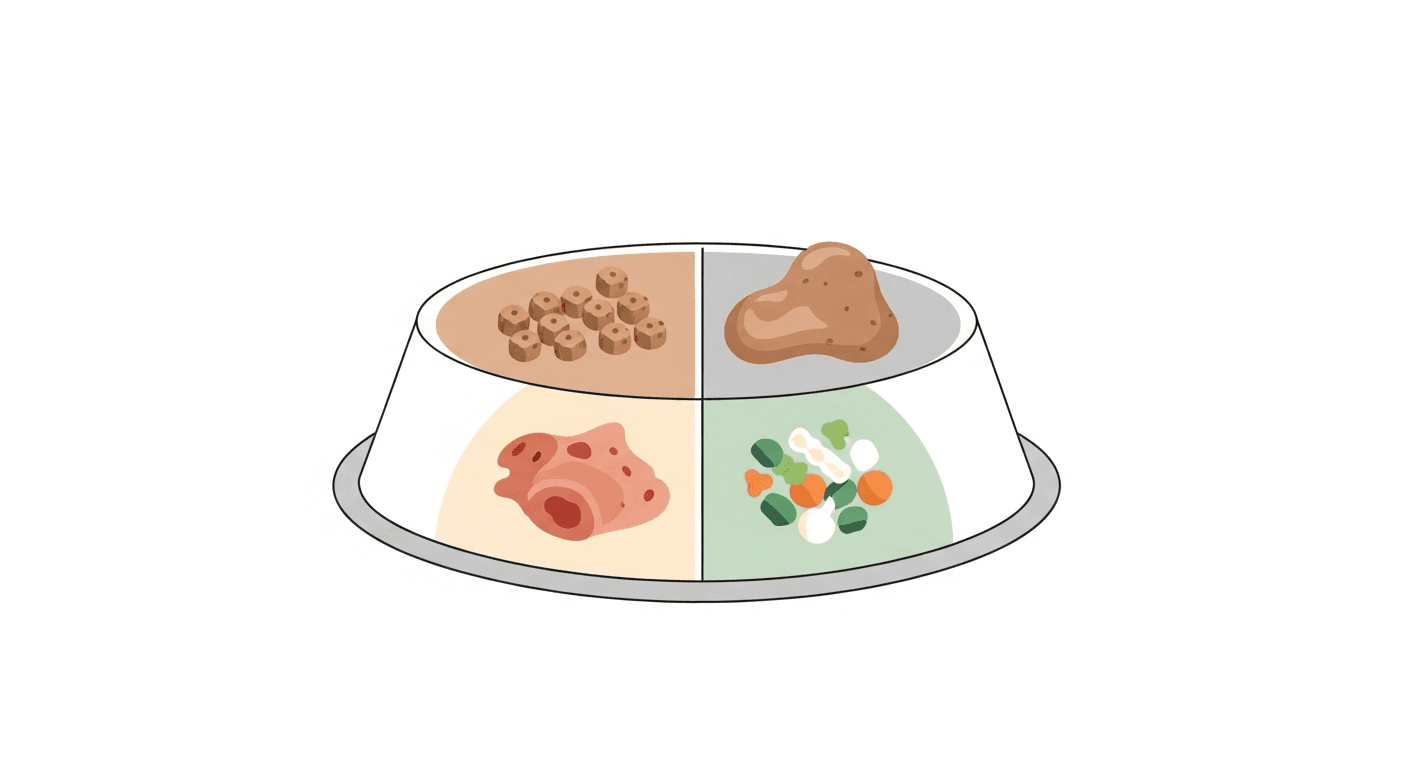
Understanding the Three Main Types of Dog Food
Choosing the right food for your dog is one of the most important decisions you'll make as a pet owner. Walk into any pet store and you'll be faced with an overwhelming wall of options — dry kibble bags, canned wet food, frozen raw patties, and everything in between. Each format has genuine strengths and real drawbacks, and the best choice depends heavily on your dog's age, health status, activity level, and your own lifestyle.
This guide breaks down all three major food types — dry, wet, and raw — so you can make an informed, confident decision. If you're ever unsure about your dog's specific dietary needs, use the TailRounds Daily Log to track food intake and symptoms over time, or Book a vet appointment at Happy Paws to get personalized nutritional guidance.
Dry Dog Food (Kibble): The Everyday Standard
Dry kibble remains the most widely used dog food in the world — and for good reason. It's affordable, shelf-stable, easy to portion, and available in formulas tailored to every life stage, breed size, and health condition.
How it's made: Kibble is produced through a process called extrusion, where raw ingredients are mixed, cooked at high temperatures, and shaped into bite-sized pellets. This process kills harmful bacteria but also degrades some heat-sensitive nutrients, which manufacturers compensate for by adding synthetic vitamins and minerals.
Nutritional profile: A good quality kibble will meet AAFCO (Association of American Feed Control Officials) nutritional standards. Look for a named meat as the first ingredient (chicken, beef, salmon — not "meat meal" or "poultry by-product" as the lead ingredient).
Pros of dry food:
- Cost-effective — lowest price per calorie of all formats
- Convenient to store and serve
- Long shelf life (12–18 months unopened)
- Dental abrasion may help reduce tartar buildup
- Easy to use with puzzle feeders and treat dispensers
Cons of dry food:
- Higher in carbohydrates than wet or raw options
- Lower moisture content (~10%) — dogs must drink more water
- Some dogs find it less palatable, especially picky eaters
- Quality varies dramatically between brands
Wet Dog Food (Canned): Higher Moisture, Higher Palatability
Wet food is cooked and sealed in cans or pouches at high temperatures (retort process), which sterilizes the contents and extends shelf life without preservatives. It typically contains 70–80% moisture, making it an excellent hydration source.
Who benefits most from wet food?
- Senior dogs with dental pain or missing teeth
- Dogs with kidney disease (increased water intake via food)
- Underweight dogs who need a calorie-dense, palatable option
- Picky eaters who refuse kibble
- Post-surgery recovery when soft food is recommended
Nutritional comparison vs. dry food: On a dry-matter basis (removing the water), wet and dry foods are often nutritionally comparable. The key difference is moisture. Wet food typically has more protein from animal sources and fewer carbohydrates than kibble.
Downsides: Cost per serving is significantly higher, opened cans must be refrigerated and used within 3–5 days, and the soft texture provides no dental abrasion benefit.
Raw Dog Food (BARF): Closest to the Ancestral Diet
The Biologically Appropriate Raw Food (BARF) diet consists of uncooked muscle meat, organ meat, raw meaty bones, vegetables, and sometimes eggs or dairy. Proponents argue this most closely mirrors what dogs' ancestors ate before domestication.
| Factor | Dry Kibble | Wet/Canned | Raw (BARF) |
|---|---|---|---|
| Moisture | ~10% | 70–80% | 60–70% |
| Cost (monthly, avg.) | $30–$80 | $80–$200 | $100–$300+ |
| Prep time | None | Minimal | High |
| Shelf life (unopened) | 12–18 months | 2–5 years | 3–6 months (frozen) |
| Bacterial risk | Low | Very low | Higher (Salmonella, E. coli) |
| Palatability | Moderate | High | Very high |
| Dental benefit | Moderate | Low | High (raw bones) |
Raw food safety considerations: Raw meat can harbor Salmonella, Listeria, and E. coli — posing risks to both your dog and your household, particularly children and immunocompromised individuals. If you choose raw feeding, source from reputable suppliers, follow strict food hygiene protocols, and have your dog's health monitored regularly.
Making the Right Choice for Your Dog
There's no universally "best" dog food type — the right answer is individual. Here's a quick decision guide:
- Healthy adult dog, busy owner: High-quality dry kibble is practical and nutritionally complete.
- Senior or kidney dog: Wet food provides essential hydration and is easier to eat.
- Dog with skin/coat issues: Raw or fresh food with high omega-3 content may help.
- Small breed with dental concerns: Wet food or dental kibble formulas.
- Highly active working dog: High-protein raw or premium kibble with animal-first ingredients.
Many owners successfully combine formats — dry kibble as the base with wet food as a topper for palatability, or rotating between fresh and kibble meals. Whatever you choose, monitor your dog's weight, coat condition, energy levels, and stool quality as the best indicators of dietary success. Use the TailRounds Daily Log to record these observations daily. Need expert advice? Find a Clinic near you to speak with a veterinary nutritionist.
Continue Reading
 🥩 Pet Nutrition
How Much to Feed Your Dog: A Complete Portion Size Guide
Learn how to calculate the right food portions for your dog based on weight, age, breed, and activity level. Avoid overfeeding and underfeeding.
 🥩 Pet Nutrition
Raw Feeding for Dogs (BARF): A Complete Beginner's Guide
Everything you need to know about raw feeding (BARF) for dogs: what to feed, how to balance meals, safety protocols, and who should avoid raw diets.
 🥩 Pet Nutrition
How to Read Pet Food Ingredient Labels: A Complete Owner's Guide
Decode pet food labels with confidence. Learn what AAFCO statements mean, how ingredients are listed, what marketing terms actually mean, and red flags to avoid.
 🥩 Pet Nutrition
Grain-Free Diets for Dogs: Benefits, Risks, and the DCM Controversy
Should you feed your dog a grain-free diet? Explore the evidence on grain-free dog food, the FDA's DCM investigation, and what science actually says.