
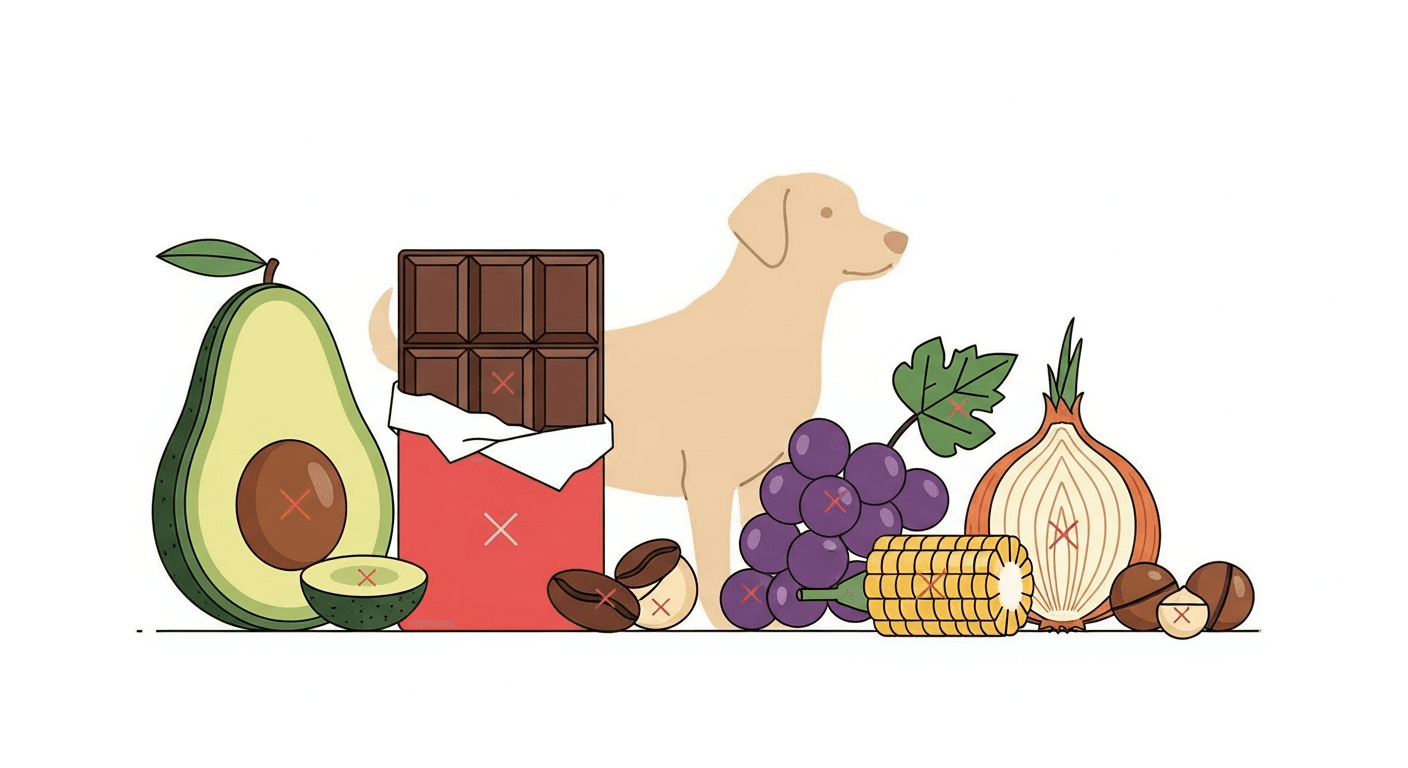
Why Knowing Toxic Foods Can Save Your Dog's Life
Dogs are opportunistic eaters with far less dietary discrimination than their owners often assume. Given the chance, most dogs will eat nearly anything — dropped food, counter-surfed snacks, garbage, or stolen holiday treats. Understanding which common foods are toxic is one of the most important pieces of knowledge any dog owner can have.
The ASPCA Animal Poison Control Center received over 401,000 calls in 2022, with food-related toxicities among the top categories. If your dog has eaten a potentially toxic food, act immediately — don't wait for symptoms. Call the ASPCA Poison Control (1-888-426-4435) or your emergency vet. You can also Book a vet appointment at Happy Paws for urgent assessments, and log symptoms in the TailRounds Daily Log.
The 20 Most Dangerous Foods for Dogs
| Food | Toxic Compound | Symptoms | Severity |
|---|---|---|---|
| Grapes & raisins | Unknown (possibly tartaric acid) | Vomiting, lethargy, kidney failure | Life-threatening |
| Xylitol (artificial sweetener) | Xylitol | Vomiting, weakness, seizures, liver failure | Life-threatening |
| Chocolate | Theobromine, caffeine | Vomiting, diarrhea, tremors, cardiac arrhythmia | Severe to life-threatening |
| Onions, garlic, leeks, chives | N-propyl disulfide, organosulfur | Hemolytic anemia, weakness, pale gums | Severe (cumulative) |
| Macadamia nuts | Unknown | Weakness, hyperthermia, tremors, vomiting | Moderate to severe |
| Alcohol | Ethanol | Vomiting, disorientation, respiratory depression | Severe to life-threatening |
| Caffeine (coffee, tea, energy drinks) | Caffeine, theobromine | Rapid heart rate, tremors, seizures | Severe |
| Avocado | Persin | Vomiting, diarrhea, respiratory distress | Moderate to severe |
| Raw yeast dough | Ethanol, CO2 | Bloat, alcohol poisoning, GI obstruction | Severe |
| Nutmeg | Myristicin | Tremors, seizures, disorientation | Moderate to severe |
Additional Dangerous Foods (11–20)
- 11. Cooked bones: Splinter into sharp fragments causing intestinal perforation, obstruction, or oral injuries. Raw bones are generally safer but still carry risks. Never feed cooked bones of any kind.
- 12. Apple, cherry, plum, peach seeds/pits: Contain amygdalin which metabolizes into cyanide. Apple flesh is fine; seeds and core are not.
- 13. Salt (large quantities): Hypernatremia (sodium poisoning). Symptoms include excessive thirst, vomiting, tremors, seizures. A few potato chips are generally fine; a bag is not.
- 14. Raw salmon and trout (Pacific Northwest): Can carry Neorickettsia helminthoeca causing "Salmon Poisoning Disease" — fatal if untreated. Safe once cooked thoroughly.
- 15. Mushrooms (wild): Some wild mushrooms (Amanita phalloides, Gyromitra) are fatally toxic. Store-bought culinary mushrooms (button, portobello) are generally safe in small cooked amounts.
- 16. Hops (beer-making ingredient): Malignant hyperthermia in dogs — extremely dangerous, especially in greyhounds and other thin-coated breeds.
- 17. Walnuts, pecans (moldy or black walnuts): Contain juglone and aflatoxins. All walnuts/pecans carry high aflatoxin mold risk if not very fresh. Macadamias are separately toxic.
- 18. Tobacco products and nicotine: Even a cigarette butt can cause severe nicotine poisoning (vomiting, tremors, rapid heart rate, death in severe cases).
- 19. Cannabis (marijuana): Dogs are more sensitive to THC than humans. Even secondhand smoke can cause intoxication, disorientation, and urinary incontinence. Edibles (often containing xylitol or chocolate) are doubly dangerous.
- 20. Blue-green algae: Found in warm, stagnant water — if a dog drinks from a bloom, liver toxins and neurotoxins can cause rapid death. Always keep dogs away from algae-covered water bodies.
What to Do If Your Dog Eats Something Toxic
- Step 1: Stay calm and quickly identify what was eaten, how much, and when
- Step 2: Call ASPCA Poison Control (1-888-426-4435) or your nearest emergency vet immediately — do not wait for symptoms
- Step 3: Do NOT induce vomiting unless specifically instructed by a vet — some toxins cause more damage on the way back up
- Step 4: If instructed to induce vomiting, 3% hydrogen peroxide at 1 ml/kg (max 45 ml) is the standard method — only with vet guidance
- Step 5: Bring the food packaging or a photo to the vet if possible
- Step 6: Follow up with your regular vet and document the incident in the TailRounds Daily Log
Prevention is the most effective strategy. Store human food out of reach, be vigilant during holidays when toxic foods are more accessible, and educate all household members. Find a Clinic near you that you can call in an emergency.
Continue Reading
 🥩 Pet Nutrition
Homemade Dog Food: What's Safe, What's Not, and How to Balance Meals
A complete guide to cooking homemade dog food safely. Learn which ingredients are safe, what to avoid, and how to ensure complete nutritional balance.
 🥩 Pet Nutrition
Food Allergies in Dogs: Elimination Diet Guide and Best Foods
Learn how to identify food allergies in dogs using an elimination diet, interpret allergy symptoms, and find the right hypoallergenic food for lasting relief.
 🥩 Pet Nutrition
Healthy Treats for Dogs: What to Buy, What to Make, and What to Avoid
Find the best healthy treats for dogs, learn how many treats are appropriate, which commercial treats to choose, and which common treats are dangerous.
 🥩 Pet Nutrition
How to Read Pet Food Ingredient Labels: A Complete Owner's Guide
Decode pet food labels with confidence. Learn what AAFCO statements mean, how ingredients are listed, what marketing terms actually mean, and red flags to avoid.