
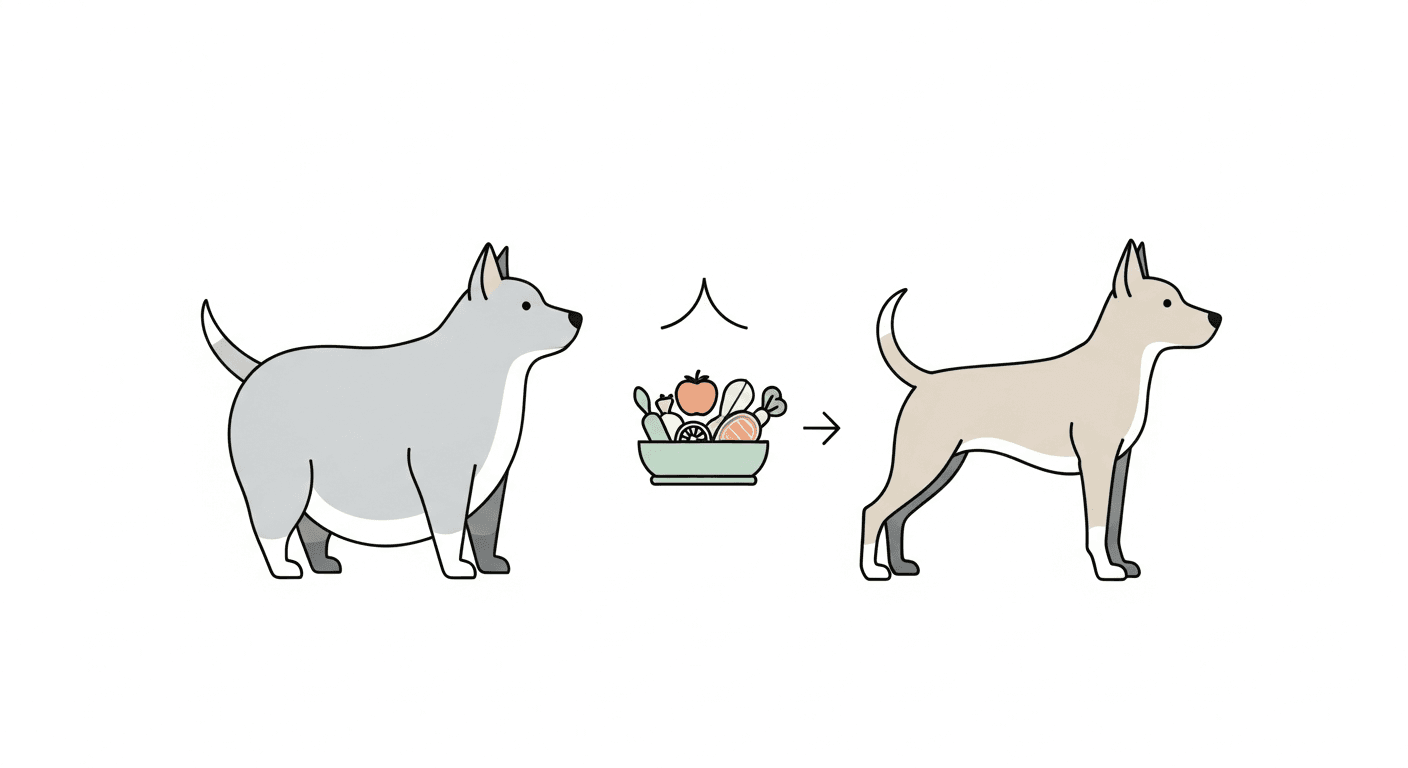
The Dog Obesity Crisis and Why It Matters
Veterinary organizations estimate that 55–60% of dogs in developed countries are overweight or obese. Beyond aesthetics, excess weight significantly damages a dog's health and lifespan. Research shows that Labrador Retrievers maintained at a lean body condition lived a median of 1.8 years longer than their overweight counterparts — the equivalent of nearly 15 human years.
Conditions directly caused or worsened by obesity include: osteoarthritis, intervertebral disc disease, Type 2 diabetes, respiratory compromise, heat intolerance, hypertension, increased anesthetic risk, urinary incontinence, and certain cancers. Weight loss in obese dogs significantly reduces joint pain, improves mobility, and may reduce anti-inflammatory medication needs.
Before starting a weight loss program, get a veterinary assessment — weight loss in some dogs can unmask underlying conditions like hypothyroidism or hyperadrenocorticism that need treatment. Book a vet appointment at Happy Paws and track your dog's daily food intake with the TailRounds Daily Log.
Step 1: Assess Body Condition and Set a Target Weight
The Body Condition Score (BCS) on a 9-point scale is the standard assessment tool. Dogs scoring 6–7 are overweight; 8–9 are obese. A score of 4–5 is ideal.
Estimating ideal body weight:
- For dogs scored 6/9 (10% overweight): Ideal weight = current weight × 0.91
- For dogs scored 7/9 (20% overweight): Ideal weight = current weight × 0.83
- For dogs scored 8/9 (30% overweight): Ideal weight = current weight × 0.77
- For dogs scored 9/9 (40%+ overweight): Ideal weight = current weight × 0.71
Your vet can perform a professional BCS assessment and determine a safe target weight. Realistic safe weight loss rate is 1–2% of body weight per week — so a 20 kg dog should lose 200–400g per week.
Step 2: Calculate Weight Loss Calorie Target
Weight loss calorie target = 70 × (target weight in kg)^0.75 × 1.0 (using a weight loss multiplier of 1.0 × RER at target weight, not current weight).
Practical example: A 25 kg dog with ideal weight of 20 kg: Target RER = 70 × (20)^0.75 = 70 × 9.46 = 662 kcal/day. Feed at 1.0 × RER = 662 kcal/day until target weight achieved.
Never reduce calories below the RER based on current weight — doing so risks muscle wasting and nutritional deficiency rather than healthy fat loss.
Food Choices for Weight Loss
Not all foods are equal for weight loss:
| Food Type | Advantages | Disadvantages |
|---|---|---|
| Prescription weight management diet (Hill's Metabolic, Royal Canin Satiety) | Precisely formulated; high fiber; promotes satiety | Higher cost; requires vet recommendation |
| Light/reduced calorie commercial kibble | Widely available; more affordable | Variable quality; higher carb than prescription |
| High-protein, low-calorie wet food | High satiety; increased hydration; fewer carbs | Higher cost; requires careful portioning |
| Home-cooked lean diet (vet-formulated) | Full control; high compliance possible | Requires professional formulation to avoid deficiency |
Strategies to Help Your Dog Lose Weight
- Measure every meal: Use a digital kitchen scale, not cups — volume measurement is inaccurate by 30–50%
- Account for all extras: Treats, dental chews, training rewards, and table scraps should not exceed 10% of daily calories. Switch to low-calorie treat options (green beans, carrots, apple slices without seeds).
- Feed from a puzzle feeder: Slows eating, extends satisfaction, provides mental stimulation
- Avoid free-feeding: Measure all meals; remove uneaten food after 20 minutes
- Increase meal frequency: Splitting the daily ration into 2–3 meals reduces hunger between feedings
- Exercise gradually: Start with short, low-impact exercise (leash walks, swimming for joint-compromised dogs) and increase duration as weight and fitness improve. Do not suddenly impose intense exercise on an obese dog — risk of joint injury and cardiopulmonary stress.
- Recheck weight monthly: Adjust portions up or down by 10% based on progress
Log daily portions, treats, and exercise in the TailRounds Daily Log to maintain accountability. Find a Clinic near you to access medically supervised weight loss programs for dogs requiring significant weight reduction.
Continue Reading
 🥩 Pet Nutrition
How Much to Feed Your Dog: A Complete Portion Size Guide
Learn how to calculate the right food portions for your dog based on weight, age, breed, and activity level. Avoid overfeeding and underfeeding.
 🥩 Pet Nutrition
Dry vs Wet vs Raw Dog Food: A Complete Comparison Guide
Compare dry kibble, wet canned food, and raw dog food across nutrition, cost, convenience, and health outcomes to find the best option for your dog.
 🥩 Pet Nutrition
Diet Changes for Senior Dogs: What to Feed an Aging Dog
Learn how a senior dog's nutritional needs change with age, and how to adjust diet, portions, and food types to support health and longevity after age 7.
 🥩 Pet Nutrition
Healthy Treats for Dogs: What to Buy, What to Make, and What to Avoid
Find the best healthy treats for dogs, learn how many treats are appropriate, which commercial treats to choose, and which common treats are dangerous.