Why Portion Control Matters for Dogs
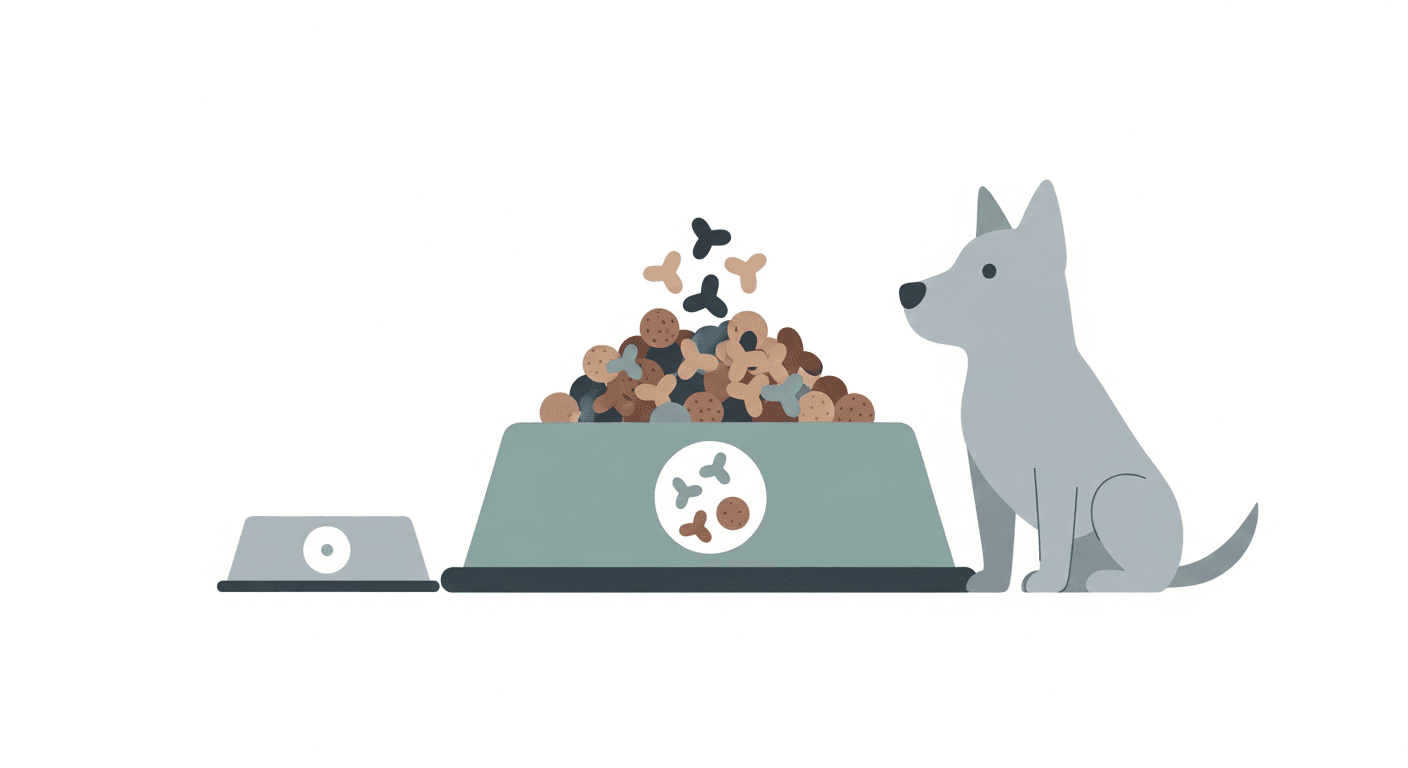
Overfeeding is one of the most common and damaging mistakes dog owners make. Studies estimate that over 56% of dogs in the United States are overweight or obese — a condition linked to joint disease, diabetes, heart disease, reduced immune function, and a shortened lifespan. Equally problematic is chronic underfeeding, which can cause malnutrition, muscle wasting, and immune suppression in growing puppies or working dogs.
Getting portions right isn't guesswork — it's a calculation based on your dog's individual characteristics. Use the TailRounds Daily Log to track daily food intake alongside weight trends, and Book a vet appointment at Happy Paws for a professional body condition score assessment.
Understanding Your Dog's Caloric Needs
All dog portion calculations begin with Resting Energy Requirement (RER) — the calories needed to sustain basic bodily functions at rest. The formula is:
RER (kcal/day) = 70 × (body weight in kg)^0.75
From RER, you apply a life stage multiplier to get the Daily Energy Requirement (DER):
| Life Stage / Status | Multiplier |
|---|---|
| Intact adult (not neutered) | RER × 1.8 |
| Neutered adult | RER × 1.6 |
| Inactive / obese-prone | RER × 1.2–1.4 |
| Weight loss | RER × 1.0 |
| Puppy (4 months and under) | RER × 3.0 |
| Puppy (4 months to adult) | RER × 2.0 |
| Active / working dog | RER × 2.0–5.0 |
| Pregnant (last 21 days) | RER × 3.0 |
| Lactating | RER × 4.0–8.0 |
Example: A 15 kg neutered adult dog has an RER of 70 × (15)^0.75 = 70 × 8.26 = 578 kcal/day. Applying the neutered multiplier: 578 × 1.6 = 925 kcal/day.
Translating Calories to Cups and Grams
Once you know your dog's daily caloric need, you need the caloric density of your chosen food. This is found on the food's label as "kcal/cup" or "kcal/kg." Divide your dog's daily calorie requirement by the food's caloric density.
Example: Your dog needs 925 kcal/day. Your kibble provides 380 kcal/cup. Daily portions = 925 ÷ 380 = 2.43 cups per day, split across two meals.
Feeding frequency guidelines by age:
- Puppies under 12 weeks: 4 meals per day
- Puppies 3–6 months: 3 meals per day
- 6 months to adult: 2 meals per day
- Adults: 2 meals per day (some do fine with 1, but 2 reduces bloat risk)
- Senior dogs: 2–3 smaller meals per day to ease digestion
Quick Reference Feeding Chart by Body Weight
The following chart is a starting-point estimate for a moderately active neutered adult dog eating standard dry kibble (~360 kcal/cup). Adjust based on your dog's actual food's caloric density and body condition.
| Dog Weight | Daily Kcal (est.) | Approx. Cups/Day |
|---|---|---|
| 2 kg (4.4 lb) | 140–160 | ½ cup |
| 5 kg (11 lb) | 290–330 | ¾–1 cup |
| 10 kg (22 lb) | 490–550 | 1¼–1½ cups |
| 20 kg (44 lb) | 820–920 | 2–2½ cups |
| 30 kg (66 lb) | 1,100–1,250 | 3–3½ cups |
| 40 kg (88 lb) | 1,400–1,580 | 3½–4½ cups |
Body Condition Scoring: The Most Reliable Check
Numbers are only a starting point. The best real-world measure of whether portions are correct is your dog's Body Condition Score (BCS) — a 1–9 scale used by vets:
- 1–3: Too thin. Ribs, spine, and hip bones easily visible. Increase portions by 10–15%.
- 4–5: Ideal. Ribs easily felt but not seen. Visible waist from above and side. Maintain current portions.
- 6–7: Overweight. Ribs felt with pressure only. Waist barely visible. Reduce portions by 10–15%.
- 8–9: Obese. Ribs not palpable. No visible waist. Reduce portions by 20–30%, consult vet.
Weigh your dog monthly and reassess BCS every 4–6 weeks, especially during growth phases, after spay/neuter, or in senior years when metabolism slows. The TailRounds Daily Log makes it easy to track weight trends at home. For a formal BCS assessment, Find a Clinic near you.
Continue Reading
 🥩 Pet Nutrition
Dry vs Wet vs Raw Dog Food: A Complete Comparison Guide
Compare dry kibble, wet canned food, and raw dog food across nutrition, cost, convenience, and health outcomes to find the best option for your dog.
 🥩 Pet Nutrition
Weight Loss Diet for Overweight Dogs: A Vet-Approved Guide
Help your overweight dog lose weight safely with this complete guide to calorie reduction, food choices, feeding strategies, and exercise recommendations.
 🥩 Pet Nutrition
Puppy Nutrition by Age: What to Feed From Birth to 12 Months
A complete puppy feeding guide covering nutritional needs from newborn to one year old, including weaning, portion sizes, and food transition tips.
 🥩 Pet Nutrition
Diet Changes for Senior Dogs: What to Feed an Aging Dog
Learn how a senior dog's nutritional needs change with age, and how to adjust diet, portions, and food types to support health and longevity after age 7.