
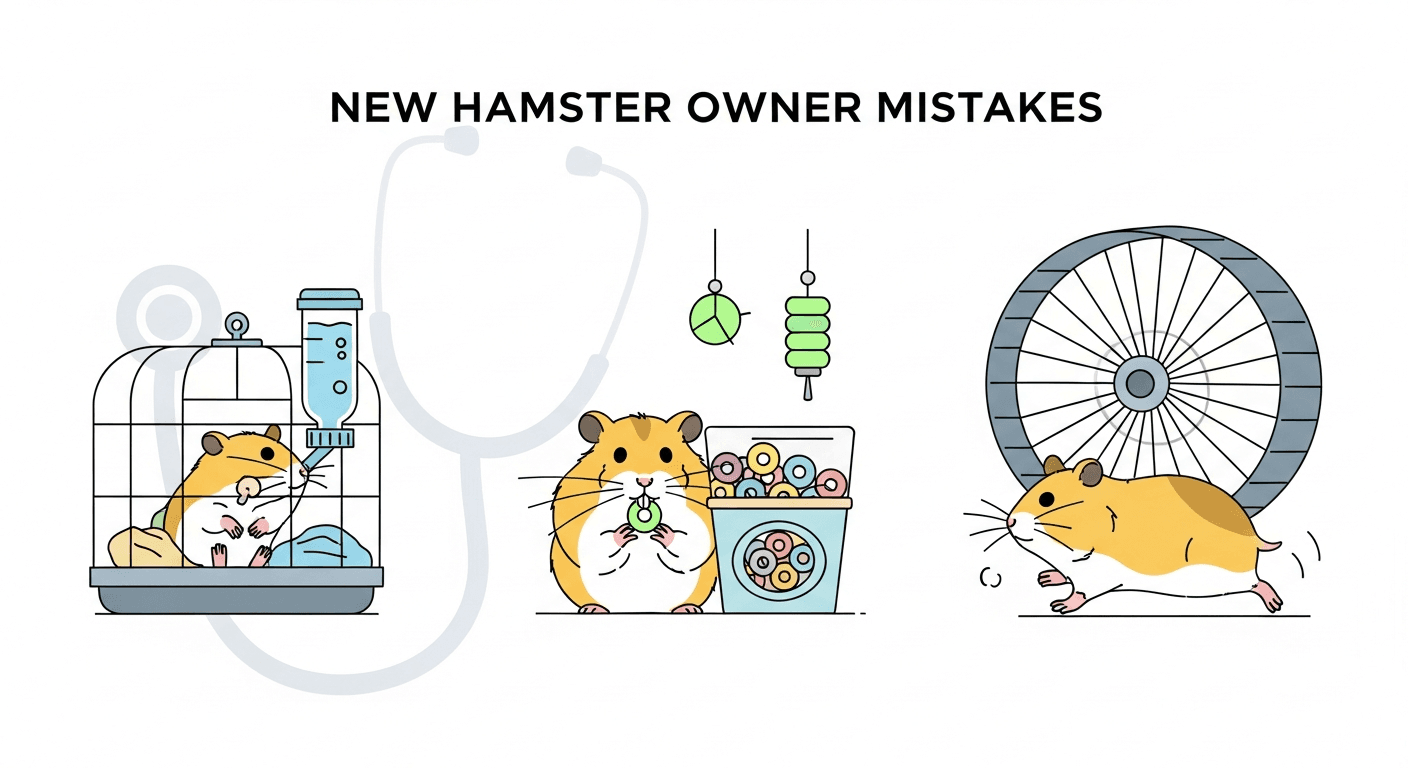
The Most Important Things New Hamster Owners Get Wrong
Hamsters are often chosen as a "starter pet" for children — perceived as low-maintenance and easy to care for. In reality, hamsters have specific and often misunderstood needs. Many commonly sold products and widely repeated care advice are actually harmful. Getting these basics right from day one prevents the most common hamster health problems.
The Top 8 Mistakes to Avoid
- Buying a cage from a pet store: Most commercially sold "hamster cages" are far too small. Minimum floor space for a Syrian hamster is 80cm × 50cm. Deep plastic storage bins or large glass tanks are better options and often cheaper.
- Not providing deep bedding: Hamsters need at least 20–30cm of loose bedding to burrow. Shallow bedding causes chronic stress. Buy a large quantity of paper-based bedding and fill the enclosure deeply.
- Handling immediately after bringing home: New hamsters need 1–2 weeks to acclimate before handling. Forcing interaction too early causes severe stress and can trigger wet tail in young hamsters.
- Feeding too much fruit and sugary treats: Yogurt drops, honey sticks, and dried fruit cause obesity and diabetes — especially in dwarf hamsters. These should be rare treats at most.
- Using a wheel that's too small: A wheel that causes the hamster's back to curve during running causes spinal damage over time. Syrian hamsters need a 28cm+ wheel; dwarf species need at least 22cm. All wheels must have a solid surface, not wire.
- Keeping the enclosure in a cold room: Temperatures below 15°C trigger torpor. Keep the enclosure in a room that stays at 18–22°C year-round.
- Housing Syrian hamsters together: Syrian hamsters are solitary and territorial — housing two together will result in fighting and injury. They must always be housed alone.
- Using cedar or pine bedding: Aromatic oils from softwood shavings are toxic to hamster respiratory systems. Always use paper-based, aspen, or hemp bedding.
When to See the Vet
- Any health problem developing in the first few weeks — often related to stress from incorrect setup
- Wet tail symptoms in a young hamster — emergency
- Respiratory symptoms — often related to inappropriate bedding
Track Early Health with TailRounds
Start logging food intake, water consumption, and daily activity from day one in the TailRounds Daily Log. Building this baseline early helps you identify problems quickly.
Book a Vet Appointment
A first-week wellness exam for a new hamster is a great investment. Book at Happy Paws with our exotic team — we can confirm the hamster is healthy and advise on optimal care setup.
Summary for Your Clinic Visit
Tell your vet the hamster's age, where you acquired it, the current enclosure setup, diet, and any health concerns you've noticed since bringing the hamster home.
Continue Reading
 🐭 Hamster Health
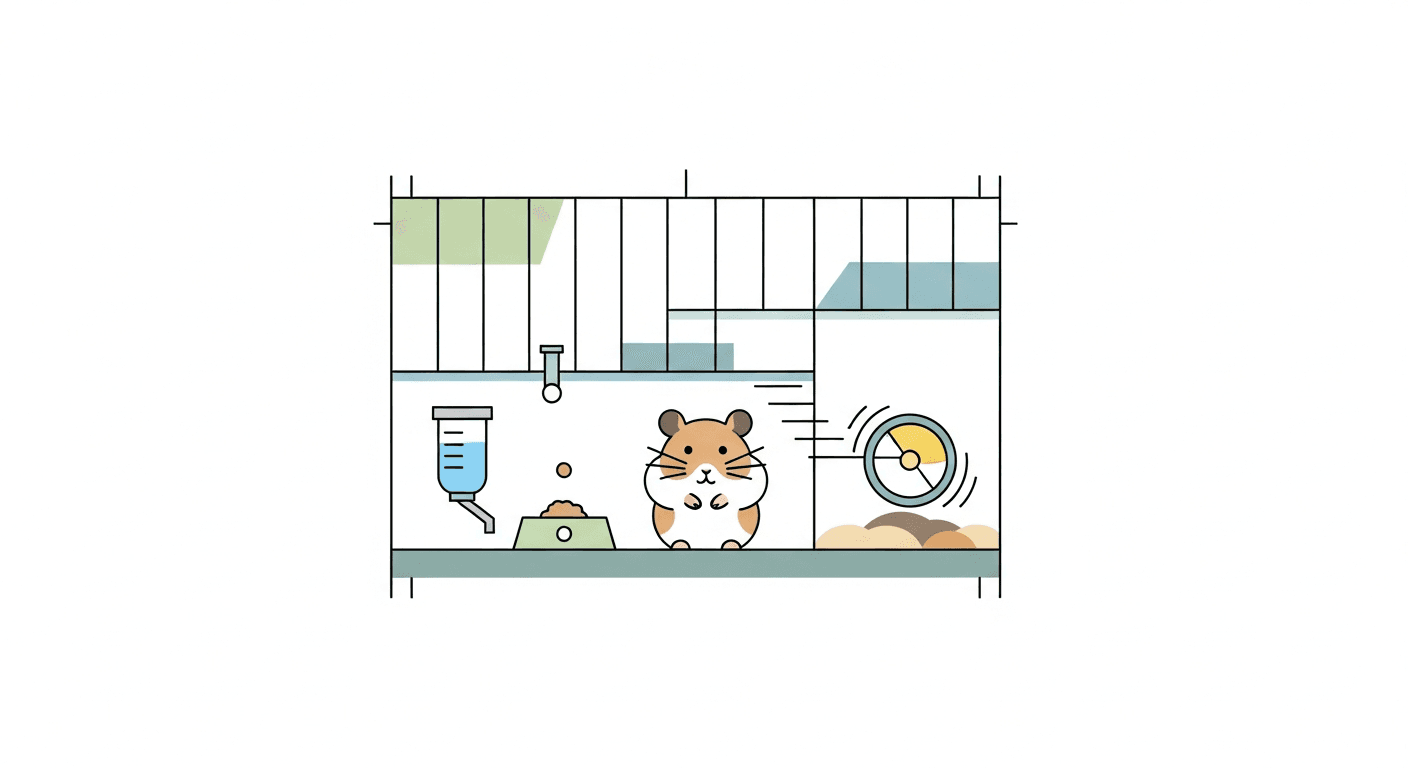
Hamster Housing Guide: Cage Size, Bedding, and Enrichment
Most commercial hamster cages are too small and cause chronic stress. Learn what hamsters actually need for space, bedding depth, and environmental enrichment.
 🐭 Hamster Health
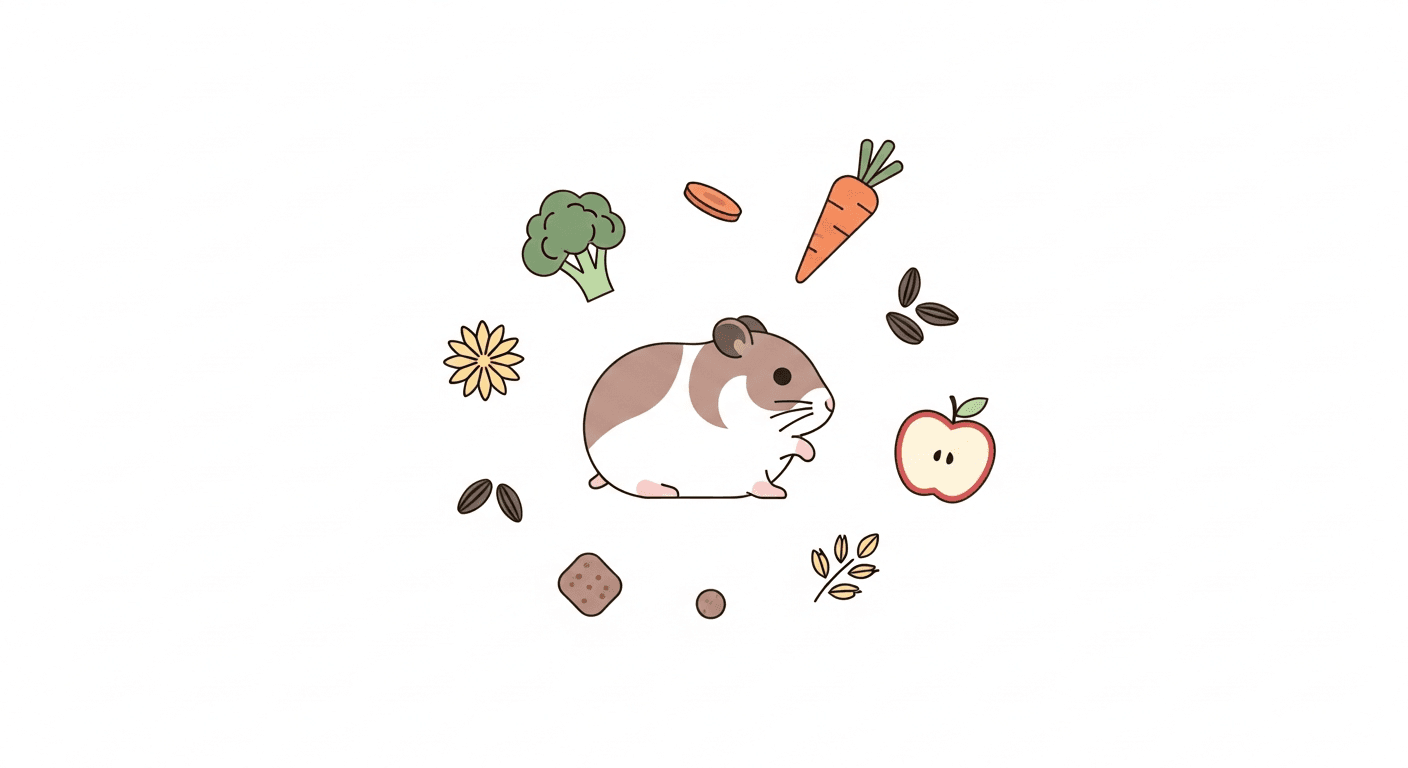
Hamster Diet Guide: What to Feed for Optimal Health
The right diet prevents common hamster diseases. Learn which foods are safe, which cause diabetes and obesity, and how to provide variety safely.
 🐭 Hamster Health
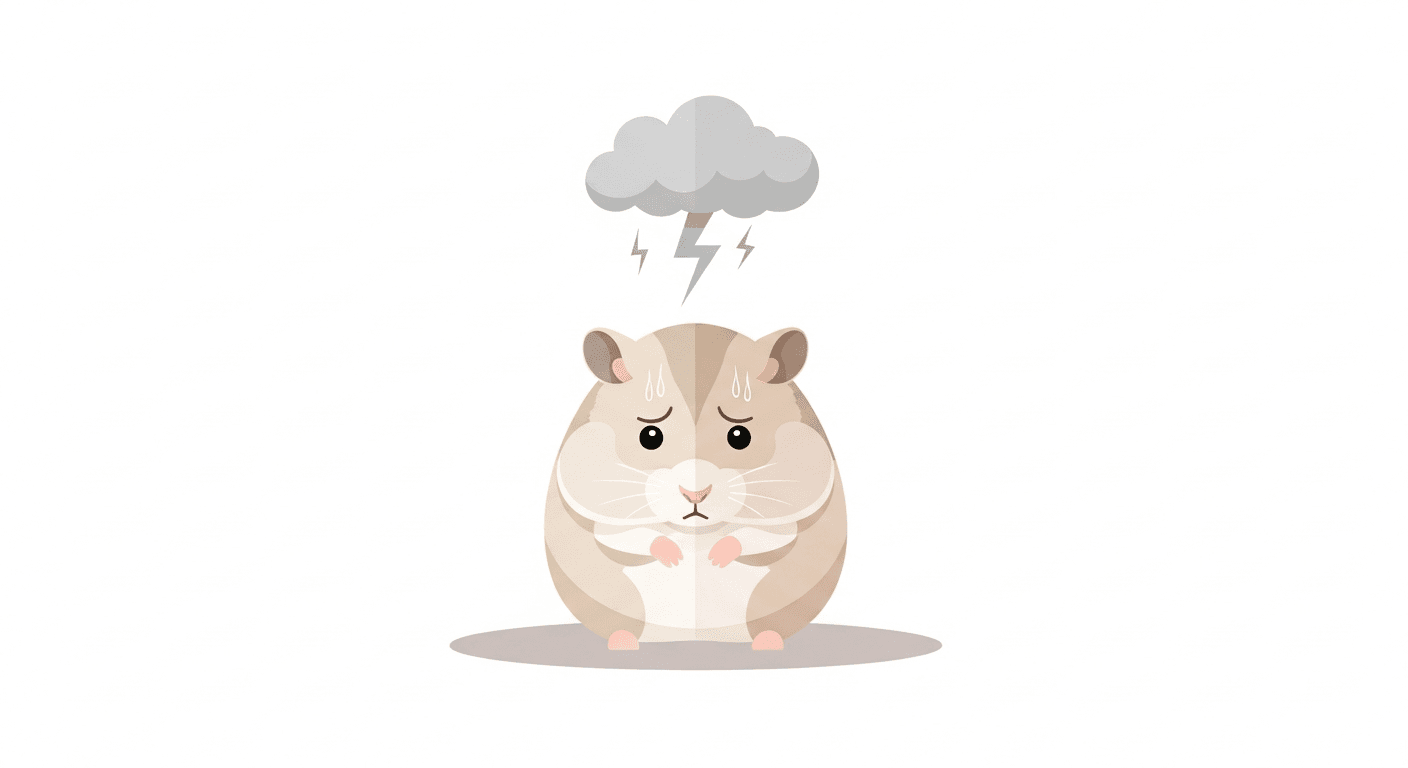
Stress in Hamsters: Signs, Causes, and How to Reduce It
Chronic stress shortens hamsters' lives and suppresses their immune systems. Learn to recognize stress signs and create a calmer, healthier environment.
 🐭 Hamster Health
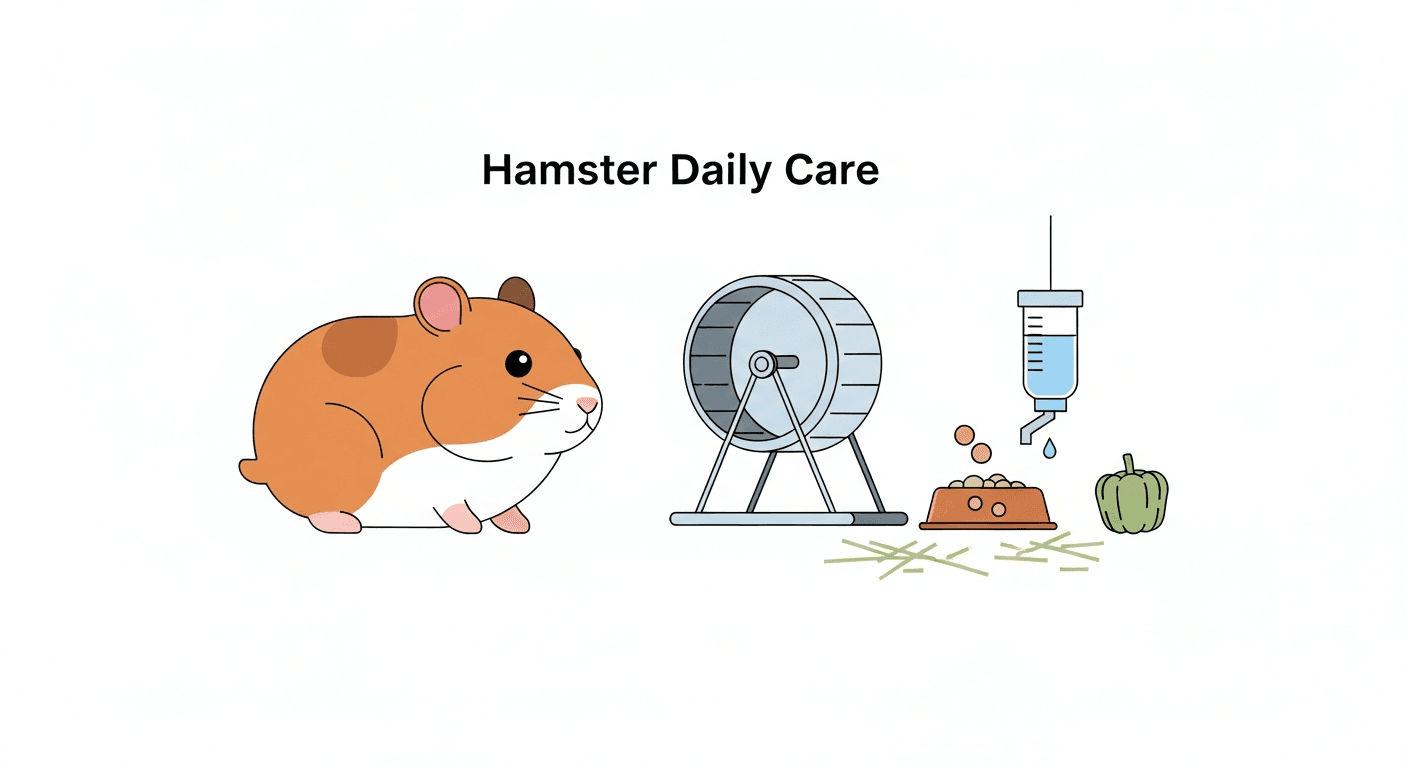
Daily Hamster Care Routine: Health Monitoring Checklist
A consistent daily routine is the best early warning system for hamster health problems. Learn what to check every day and how to build a baseline.