
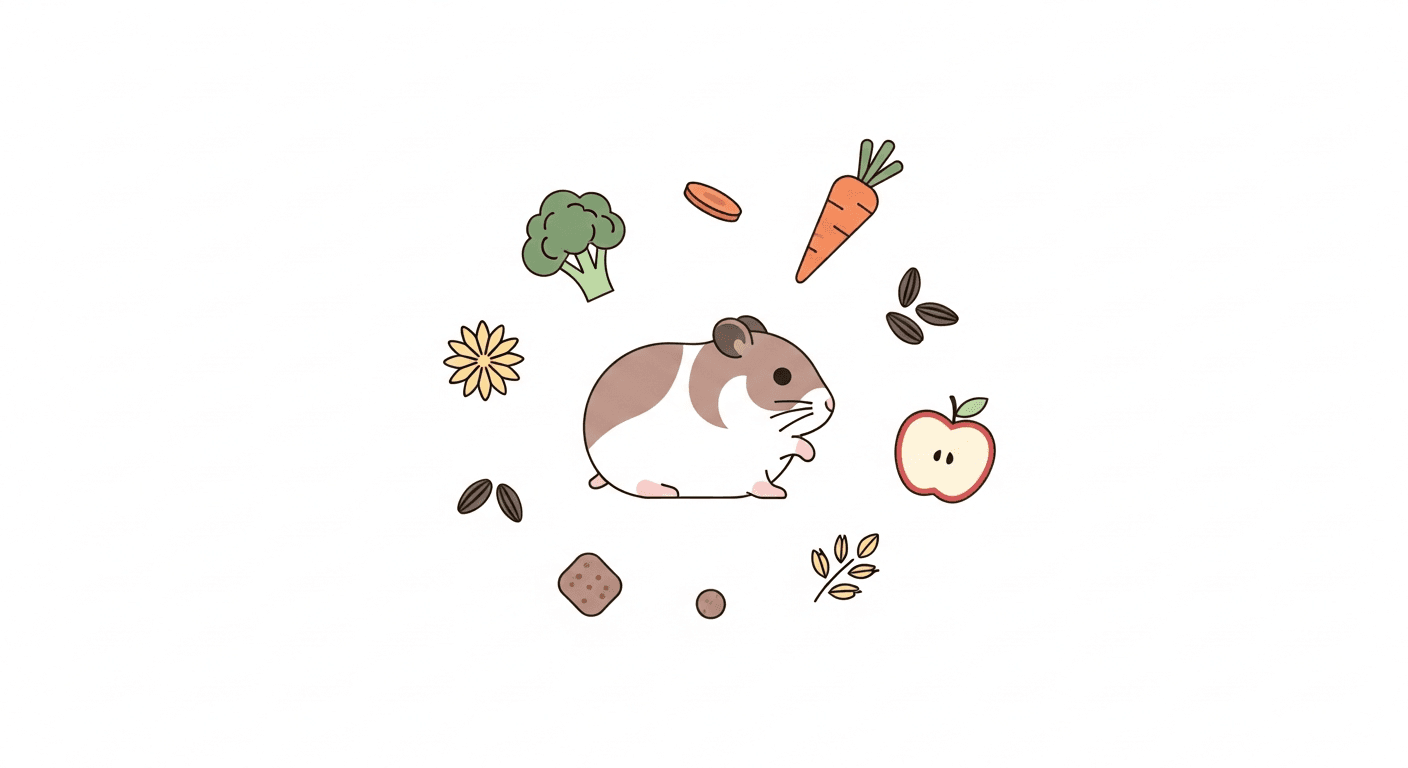
The Ideal Hamster Diet
Hamsters are omnivores — they eat seeds, grains, vegetables, and in the wild, insects and other small protein sources. Their dietary needs differ from rabbits and guinea pigs. The commercial "hamster mixes" with seeds, grains, and sometimes dried fruit and vegetables form a reasonable base, but need supplementation with fresh foods. The primary concern with typical hamster diets is excess sugar — dried fruit, honey sticks, yogurt drops, and sugary treats contribute to obesity and diabetes, particularly in dwarf species.
First 3 Steps to Build an Optimal Diet
- Use a quality hamster mix as the base: Choose a plain mix without excessive dried fruit or colored pieces. Plain seed and grain mixes supplemented with occasional protein are a solid foundation. Pellet-based diets are an alternative — they prevent selective eating (choosing only favorite seeds) but offer less environmental enrichment than scatter feeding a mix.
- Offer fresh vegetables several times per week: Safe options include broccoli, cucumber, carrot (small amounts due to sugar), zucchini, romaine lettuce, and spinach. Introduce new vegetables gradually. Always offer in small quantities — large amounts of watery vegetables cause diarrhea.
- Provide protein sources 2–3 times per week: Plain cooked chicken, a tiny piece of hard-boiled egg, or plain mealworms (live or dried, from a reputable source) provide important animal protein that supports muscle maintenance.
Foods to Avoid
- Citrus fruits — too acidic, cause digestive upset
- Onions, garlic, leeks — toxic
- Chocolate, caffeine, alcohol — obviously toxic
- Sugary treats (honey sticks, yogurt drops) — cause obesity and diabetes
- Sticky or very chewy foods (gummy treats, sticky rice) — impact cheek pouches
- Raw beans and potatoes — contain harmful compounds when uncooked
Track Diet with TailRounds
Log fresh foods offered and any new introductions in the TailRounds Daily Log.
Book a Vet Appointment
For personalized dietary advice for a hamster with a specific condition, book a nutrition consultation at Happy Paws.
Summary for Your Clinic Visit
Bring the mix packaging, describe fresh foods given, and tell your vet about any treats provided. The current diet is often the key to understanding chronic health problems.
Continue Reading
 🐭 Hamster Health
Hamster Diabetes: Which Breeds Are Affected and How It's Managed
Chinese and Russian Dwarf hamsters are prone to diabetes. Learn the signs, how diabetes is diagnosed and managed, and what dietary changes help.
 🐭 Hamster Health
Hamster Dental Problems: Overgrown Teeth and Cheek Pouch Issues
Hamsters have continually growing teeth and large cheek pouches that can develop serious problems. Learn the signs and how dental disease is treated.
 🐭 Hamster Health
Hamster Weight Loss: Causes and How to Monitor Effectively
Weight loss in hamsters is a serious sign — their small size means even small losses are significant. Learn to detect and respond to weight loss early.
 🐭 Hamster Health
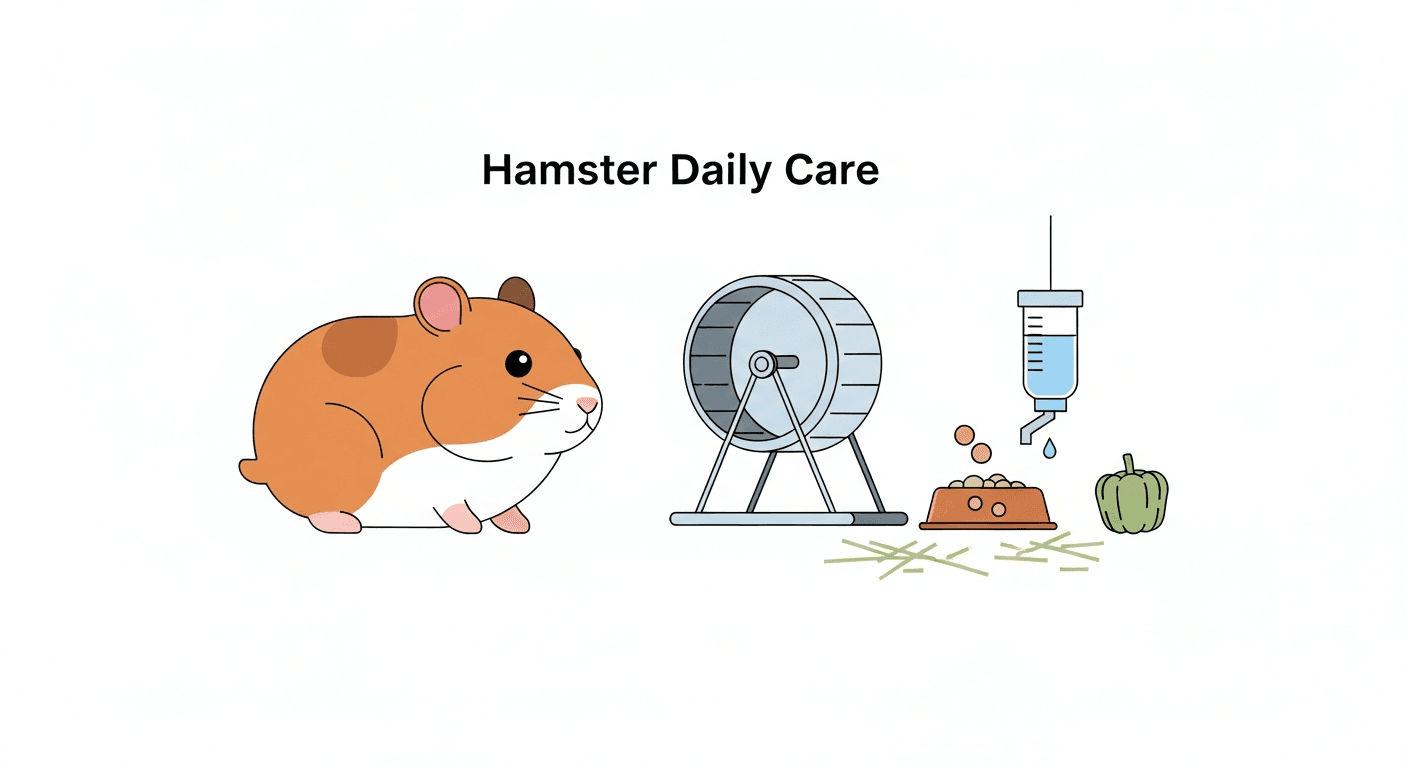
Daily Hamster Care Routine: Health Monitoring Checklist
A consistent daily routine is the best early warning system for hamster health problems. Learn what to check every day and how to build a baseline.