
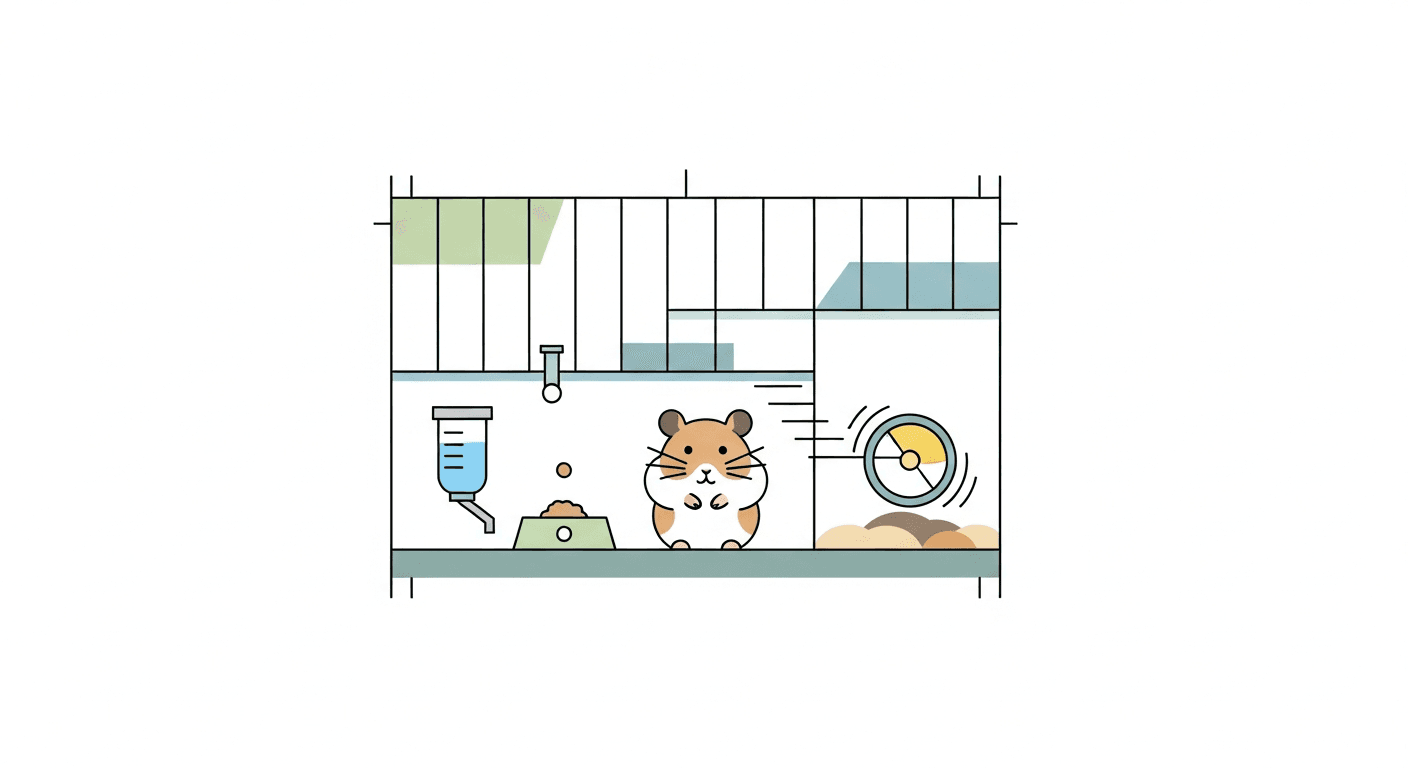
Why Most Commercial Hamster Cages Are Inadequate
The majority of cages sold specifically as "hamster cages" in pet stores provide far less space than hamsters actually need. Wild Syrian hamsters run up to 9km per night. German welfare guidelines require a minimum floor space of 0.5 square meters for hamsters — far exceeding the 30cm × 50cm cages sold in most pet shops. Inadequate space causes stereotypic behaviors (bar chewing, repeated pacing), stress-related illness, and significantly reduced lifespan.
What Hamsters Actually Need
- Floor space: Minimum 80cm × 50cm for a single Syrian hamster; larger for dwarf species in groups
- Bedding depth: Minimum 20–30cm of loose bedding — hamsters are natural burrowers and deep bedding is essential for psychological health. Shallow bedding is one of the most common causes of stress in captive hamsters.
- Wheel: Minimum 28cm diameter for Syrian hamsters (smaller causes spinal curvature), 22cm for dwarf species. Solid surface (not wire/mesh), which prevents leg entrapment.
- Nesting material: Soft paper strips or unscented tissue for nest building — hamsters construct complex nests and this behavior is important for their wellbeing.
First 3 Steps to Improve Housing
- Upgrade the enclosure size: Deep plastic storage bins (80L+) or large glass terrariums make excellent hamster enclosures and are typically more affordable than specialty "hamster cages" that are often too small.
- Increase bedding depth: Use paper-based bedding (Carefresh, Back 2 Nature, or similar), aspen shavings, or hemp bedding. Minimum 20cm deep — more is always better. Never use cedar or pine shavings.
- Provide a large, solid-surface wheel: If the hamster's back curves during running, the wheel is too small. Replace it with a larger option immediately — spinal damage from a small wheel is irreversible.
When to See the Vet
- Bar chewing, repetitive pacing, or other stereotypic behaviors — housing improvements must happen before behavioral medications are considered
- Any health condition that has developed in the context of poor housing
Track Behavior and Health with TailRounds
Log daily activity observations and any stereotypic behaviors in the TailRounds Daily Log. Behavioral improvements after housing upgrades are worth recording.
Book a Vet Appointment
For housing-related health conditions, book at Happy Paws for treatment and specific housing recommendations.
Summary for Your Clinic Visit
Describe the current enclosure size, bedding type and depth, enrichment provided, and any behavioral abnormalities observed in the hamster.
Continue Reading
 🐭 Hamster Health
Daily Hamster Care Routine: Health Monitoring Checklist
A consistent daily routine is the best early warning system for hamster health problems. Learn what to check every day and how to build a baseline.
 🐭 Hamster Health
Stress in Hamsters: Signs, Causes, and How to Reduce It
Chronic stress shortens hamsters' lives and suppresses their immune systems. Learn to recognize stress signs and create a calmer, healthier environment.
 🐭 Hamster Health
Hamster Diet Guide: What to Feed for Optimal Health
The right diet prevents common hamster diseases. Learn which foods are safe, which cause diabetes and obesity, and how to provide variety safely.
 🐭 Hamster Health
Lethargic Hamster: Hibernation, Illness, or Torpor?
A hamster that won't move may be sleeping normally, entering torpor from cold, or seriously ill. Learn how to tell the difference and when to act.