
Common Skin Conditions in Hamsters
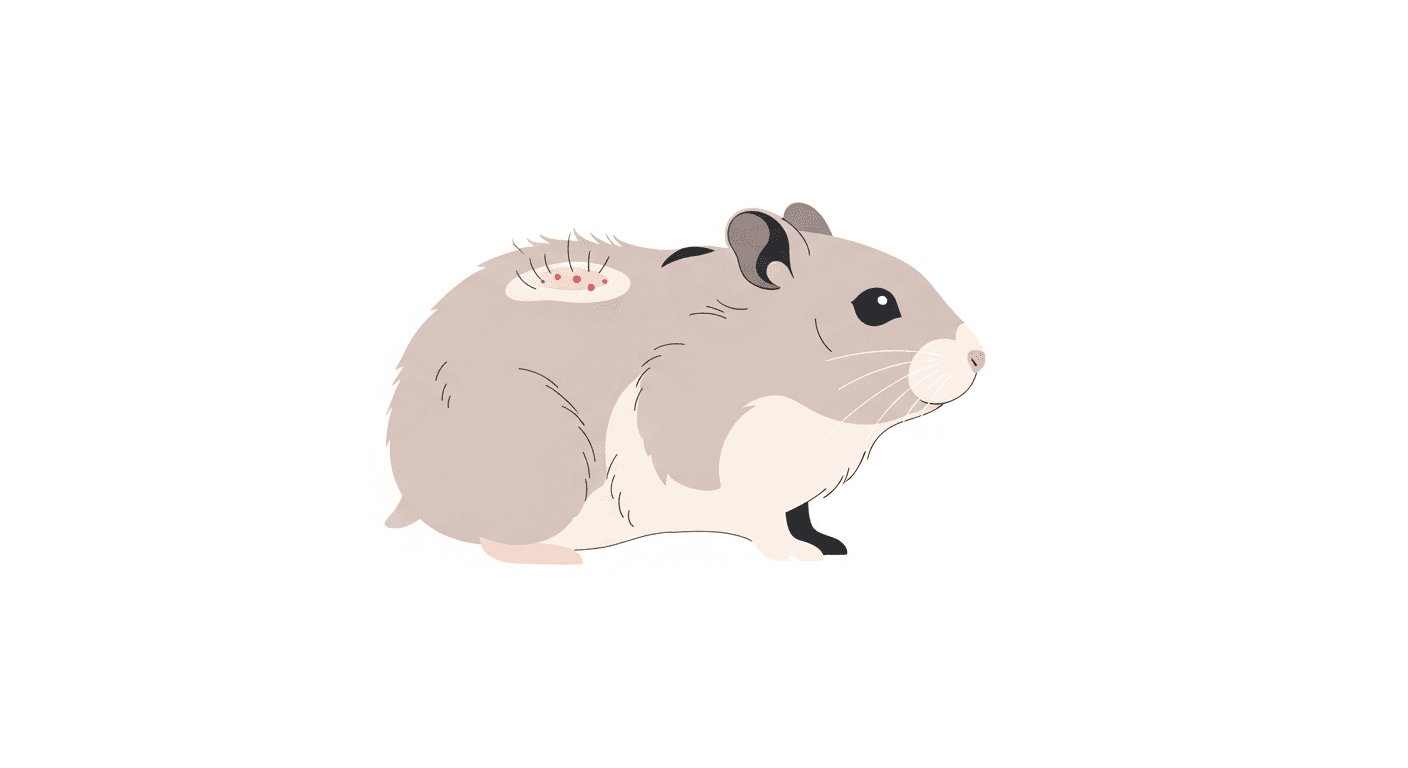
Hamsters can develop several skin conditions. Demodex mange (Demodex criceti or D. aurati) is the most common — these mites live in the hair follicles and cause dry, flaky skin and hair loss, usually beginning over the rump and lower back. It tends to flare in older or immunocompromised hamsters. Ringworm (Trichophyton) causes circular, scaly patches of hair loss that can spread to humans. Abscesses form from bite wounds or tooth problems. Hamsters also occasionally develop melanomas and other skin tumors, especially as they age.
First 3 Steps to Take at Home
- Note the hair loss pattern and skin appearance: Demodex typically starts over the rump and extends forward, with dry, flaky skin. Ringworm produces circular, crusty patches. Abscesses are localized swellings, often on the face or cheek pouches.
- Check for itching severity: Mild Demodex may cause little itching. Ringworm causes variable itching. An abscess will be painful when touched. The behavior of the affected hamster gives clues to the diagnosis.
- Practice good hygiene if ringworm is suspected: Ringworm is transmissible to humans. Wear gloves when handling the hamster and wash hands thoroughly afterward until diagnosis is confirmed.
When to Go to the Vet Immediately
- Rapid hair loss over large areas of the body
- Skin that is red, wet, or showing open sores
- Facial swelling or swelling near the cheek pouch area (abscess)
- Any skin change in an older hamster — tumors are common and early removal improves outcomes
Follow-Up Care Checklist
- Demodex treatment: ivermectin (injected or topical) prescribed by a vet — 2–3 treatments needed
- Ringworm: antifungal medication for 4–6 weeks plus environmental decontamination
- Abscesses: surgical drainage and antibiotic therapy under anesthesia
Track Skin Changes with TailRounds
Photograph affected areas weekly and log changes in the TailRounds Daily Log. Track treatment response objectively.
Book a Vet Appointment
Skin disease in hamsters requires proper diagnosis — each condition needs different treatment. Book at Happy Paws with our exotic team for skin assessment.
Summary for Your Clinic Visit
Describe the location and pattern of hair loss, whether the skin is dry or moist, the hamster's age, and whether any circular patterns are present. Note if any household members have skin lesions.
Continue Reading
 🐭 Hamster Health
Hamster Not Eating: Causes and What to Do
A hamster that stops eating quickly loses dangerous weight. Learn the common causes of appetite loss and when to seek urgent veterinary care.
 🐭 Hamster Health
Daily Hamster Care Routine: Health Monitoring Checklist
A consistent daily routine is the best early warning system for hamster health problems. Learn what to check every day and how to build a baseline.
 🐭 Hamster Health
Hamster Housing Guide: Cage Size, Bedding, and Enrichment
Most commercial hamster cages are too small and cause chronic stress. Learn what hamsters actually need for space, bedding depth, and environmental enrichment.
 🐭 Hamster Health
Hamster Diet Guide: What to Feed for Optimal Health
The right diet prevents common hamster diseases. Learn which foods are safe, which cause diabetes and obesity, and how to provide variety safely.