
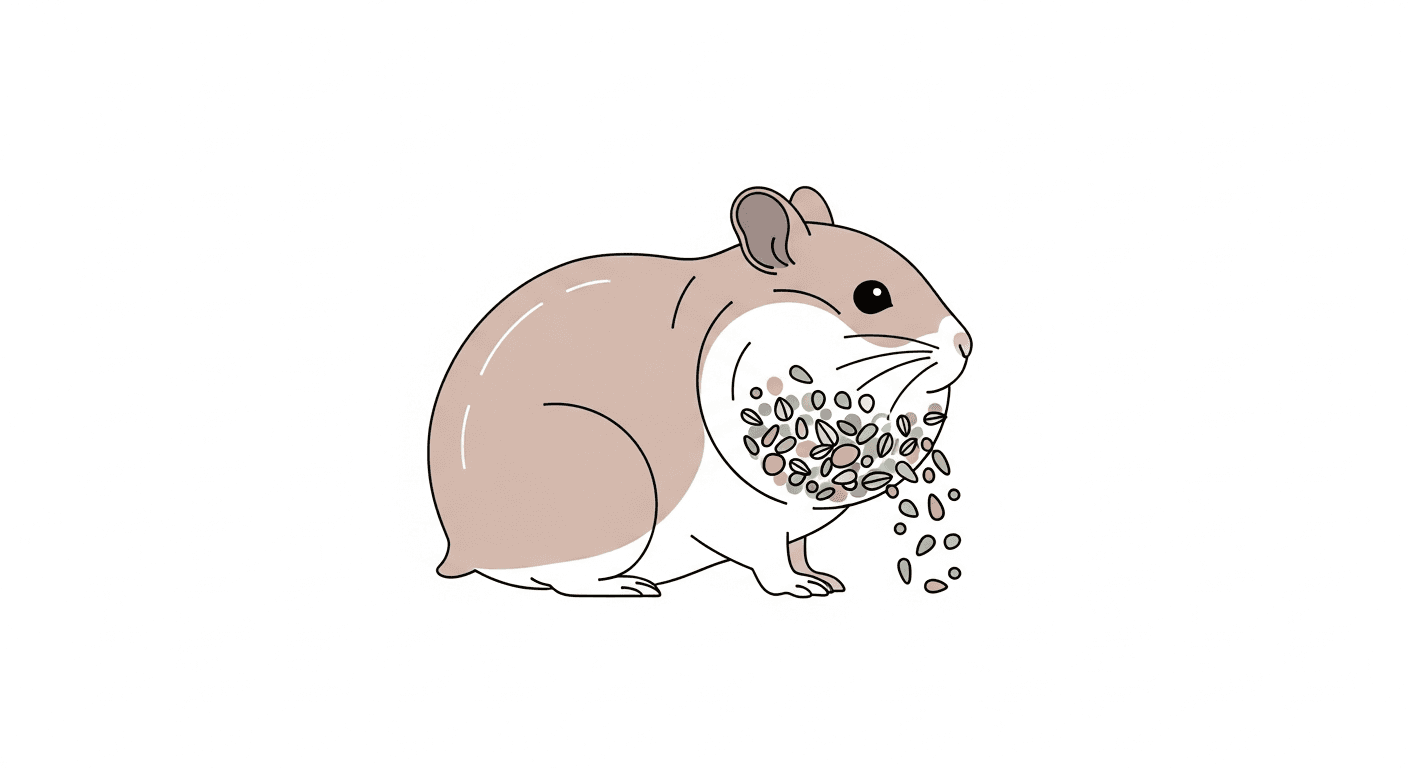
What Is Cheek Pouch Impaction?
Hamster cheek pouches extend from the cheeks all the way back to the shoulder. They're used to transport food to the nest for caching. Impaction occurs when food material becomes sticky and firmly lodged, unable to be emptied by the hamster. Common causes include feeding sticky or moist foods (soft cheese, peanut butter, pieces of bread, gummy treats), foods that expand when wet (dry pasta, rice), or food contaminated with debris from the enclosure. The impacted pouch swells, becomes firm, and may begin to smell as the trapped material ferments and becomes infected.
First 3 Steps to Take at Home
- Identify the impaction: Does one or both cheeks appear permanently full and firm, even hours after the hamster was last seen eating? Is the hamster making pawing motions at its face? These suggest impaction rather than normal food storage.
- Do not attempt to empty the pouch at home forcibly: Grabbing the hamster and attempting to squeeze out an impacted pouch can cause the pouch to tear internally. This is a veterinary procedure done under sedation.
- Remove all sticky or potentially impacting foods immediately: Examine what the hamster has been eating. Remove peanut butter, soft cheese, wet cat or dog food pieces, sticky treats, or any food that could stick and clump in the pouch.
When to Go to the Vet Immediately
- Pouch has been swollen and firm for more than 24 hours
- Odor coming from the pouch area (infected impaction)
- Hamster not eating due to discomfort
- Visible redness or discharge around the pouch opening
Follow-Up Care Checklist
- After professional emptying, avoid all sticky foods permanently
- If the pouch lining was damaged, antibiotic treatment may be prescribed
- In recurrent impaction, surgical pouch removal (pouchodectomy) may be recommended — hamsters adapt well without their pouches
Track Pouch Health with TailRounds
Log observations about pouch size and food storage behavior in the TailRounds Daily Log. An abnormally persistent puffed cheek is the key sign.
Book a Vet Appointment
Any pouch that has been full and firm for 24+ hours needs veterinary assessment. Book at Happy Paws with our exotic animal team for safe pouch emptying under sedation.
Summary for Your Clinic Visit
Tell your vet which pouch is affected, how long it's been swollen, any odor or discharge, what foods the hamster has recently been eating, and whether there are any other symptoms.
Continue Reading
 🐭 Hamster Health
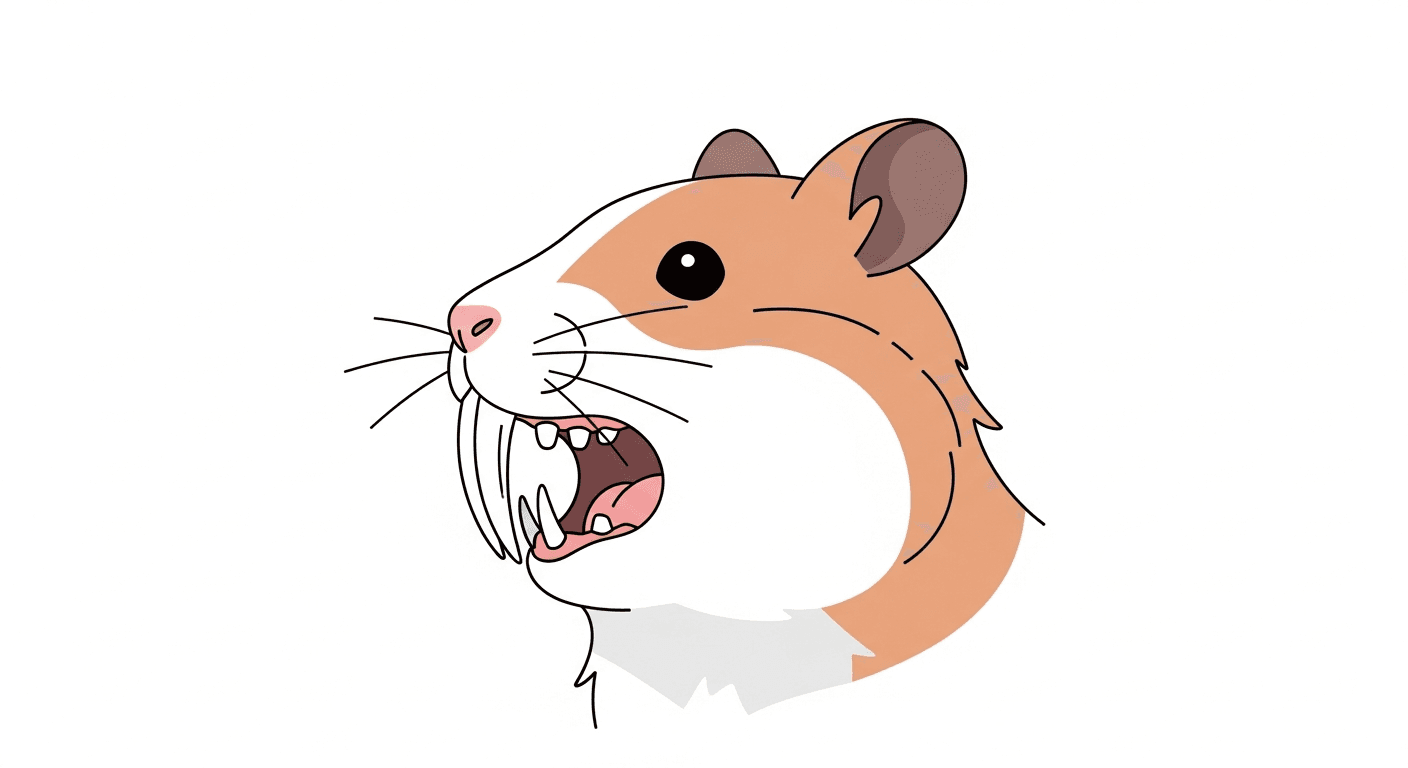
Hamster Dental Problems: Overgrown Teeth and Cheek Pouch Issues
Hamsters have continually growing teeth and large cheek pouches that can develop serious problems. Learn the signs and how dental disease is treated.
 🐭 Hamster Health
Hamster Not Eating: Causes and What to Do
A hamster that stops eating quickly loses dangerous weight. Learn the common causes of appetite loss and when to seek urgent veterinary care.
 🐭 Hamster Health
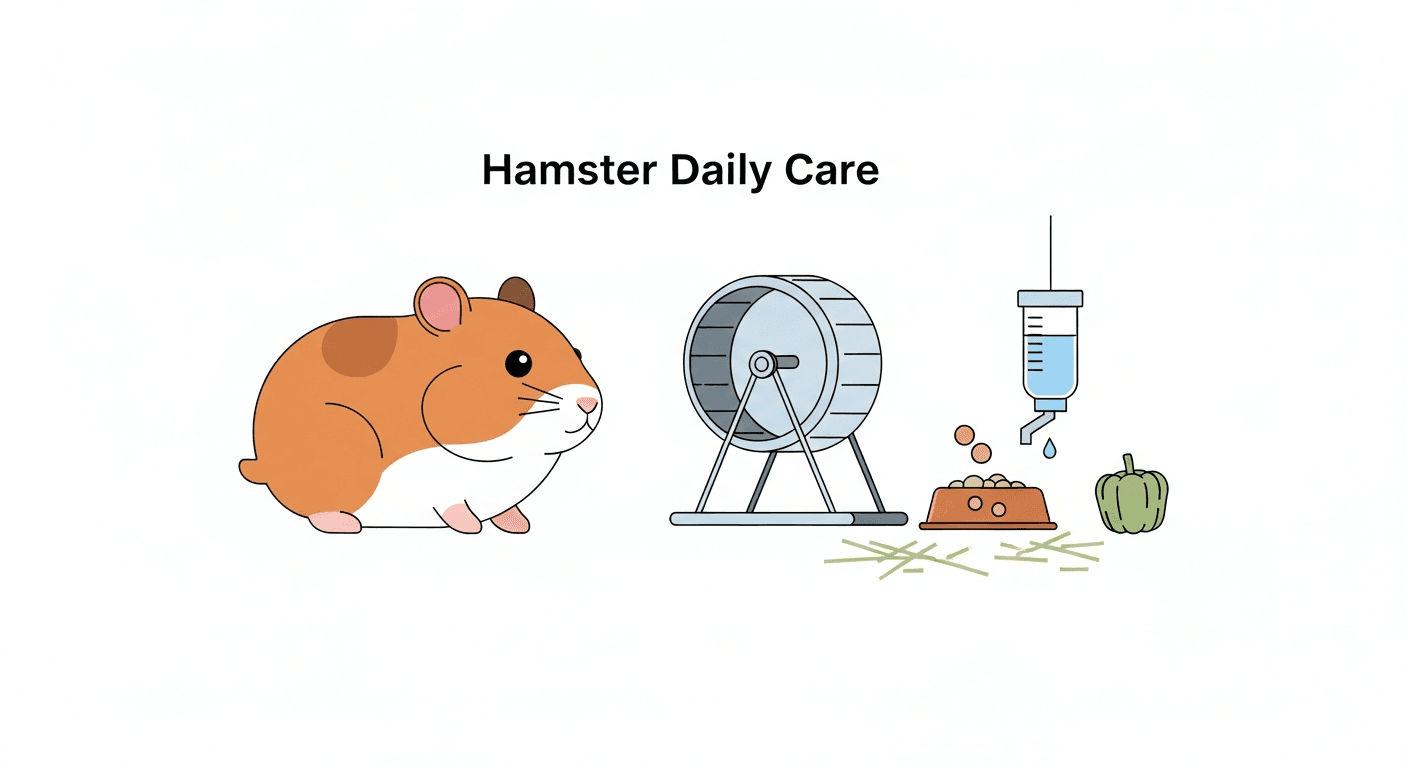
Daily Hamster Care Routine: Health Monitoring Checklist
A consistent daily routine is the best early warning system for hamster health problems. Learn what to check every day and how to build a baseline.
 🐭 Hamster Health
Hamster Diet Guide: What to Feed for Optimal Health
The right diet prevents common hamster diseases. Learn which foods are safe, which cause diabetes and obesity, and how to provide variety safely.