
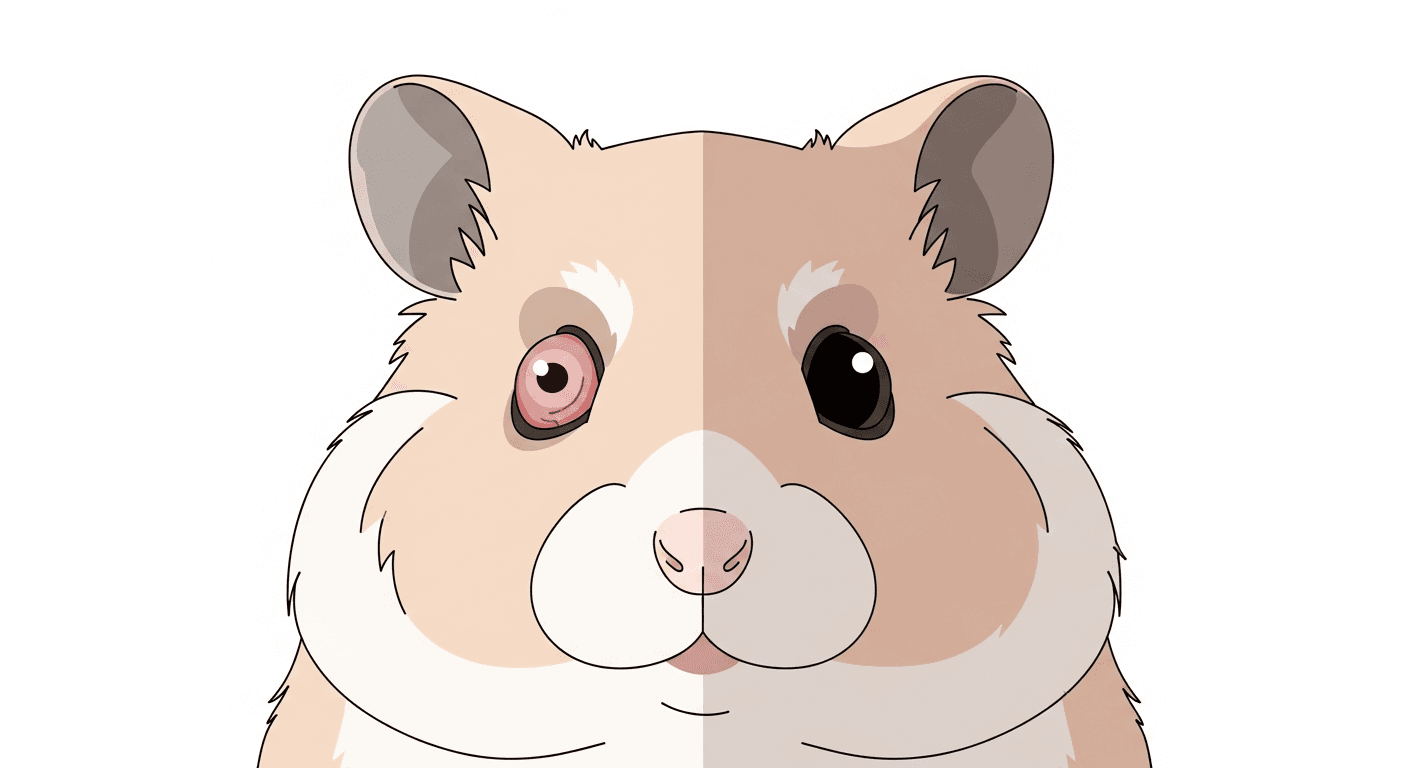
Common Eye Conditions in Hamsters
Hamsters are prone to several eye conditions. Sticky eye is common in young hamsters and older hamsters — the eyelids become sealed shut with dried discharge. This is often secondary to an upper respiratory infection or environmental irritants (dusty bedding). Eye infections (conjunctivitis) cause redness, discharge, and squinting. Cataracts (clouding of the lens) are common in older hamsters and develop rapidly in diabetic hamsters. Exophthalmos (bulging eye) can result from abscesses behind the eye, dental problems, or trauma.
First 3 Steps to Take at Home
- Gently clean sealed eyelids: For sticky eye, soak a cotton ball in warm water and hold gently against the sealed eye for 30–60 seconds. The dried discharge softens and the eye can often be gently opened. Repeat 2–3 times daily. If the eye doesn't open or there's obvious discharge inside, veterinary eye medication is needed.
- Assess the eye once open: Is the eye clear or cloudy? Is there ongoing discharge? Is the hamster squinting? A clean, open eye after treatment may need only continued gentle cleaning. Persistent discharge or cloudiness requires veterinary eye medication.
- Review the bedding: Dusty or fine-particle bedding (cedar shavings, pine shavings, dusty paper bedding) causes eye irritation that leads to sticky eye. Switch to dust-extracted or larger-particle bedding.
When to Go to the Vet Immediately
- Eye that cannot be opened despite gentle warm water treatment
- Visibly bulging or swollen eye
- Cloudy eye in a young hamster (not expected at a young age)
- Eye discharge that is yellow or green
Follow-Up Care Checklist
- Apply prescribed eye drops at the correct frequency — timing matters for eye treatment
- Switch to dust-free, paper-based bedding to reduce recurrence
- For diabetic cataracts: manage blood sugar as the primary intervention
Track Eye Health with TailRounds
Log eye condition daily during treatment using the TailRounds Daily Log. This confirms improvement is occurring as expected.
Book a Vet Appointment
Any eye condition that doesn't resolve with gentle cleaning within 24–48 hours needs veterinary eye medication. Book at Happy Paws for eye assessment.
Summary for Your Clinic Visit
Describe the eye condition (sealed, cloudy, bulging, discharging), how long it's been present, the current bedding type, and whether the hamster is showing other symptoms.
Continue Reading
 🐭 Hamster Health
Hamster Diabetes: Which Breeds Are Affected and How It's Managed
Chinese and Russian Dwarf hamsters are prone to diabetes. Learn the signs, how diabetes is diagnosed and managed, and what dietary changes help.
 🐭 Hamster Health
Daily Hamster Care Routine: Health Monitoring Checklist
A consistent daily routine is the best early warning system for hamster health problems. Learn what to check every day and how to build a baseline.
 🐭 Hamster Health
Hamster Not Eating: Causes and What to Do
A hamster that stops eating quickly loses dangerous weight. Learn the common causes of appetite loss and when to seek urgent veterinary care.
 🐭 Hamster Health
Hamster Diet Guide: What to Feed for Optimal Health
The right diet prevents common hamster diseases. Learn which foods are safe, which cause diabetes and obesity, and how to provide variety safely.