
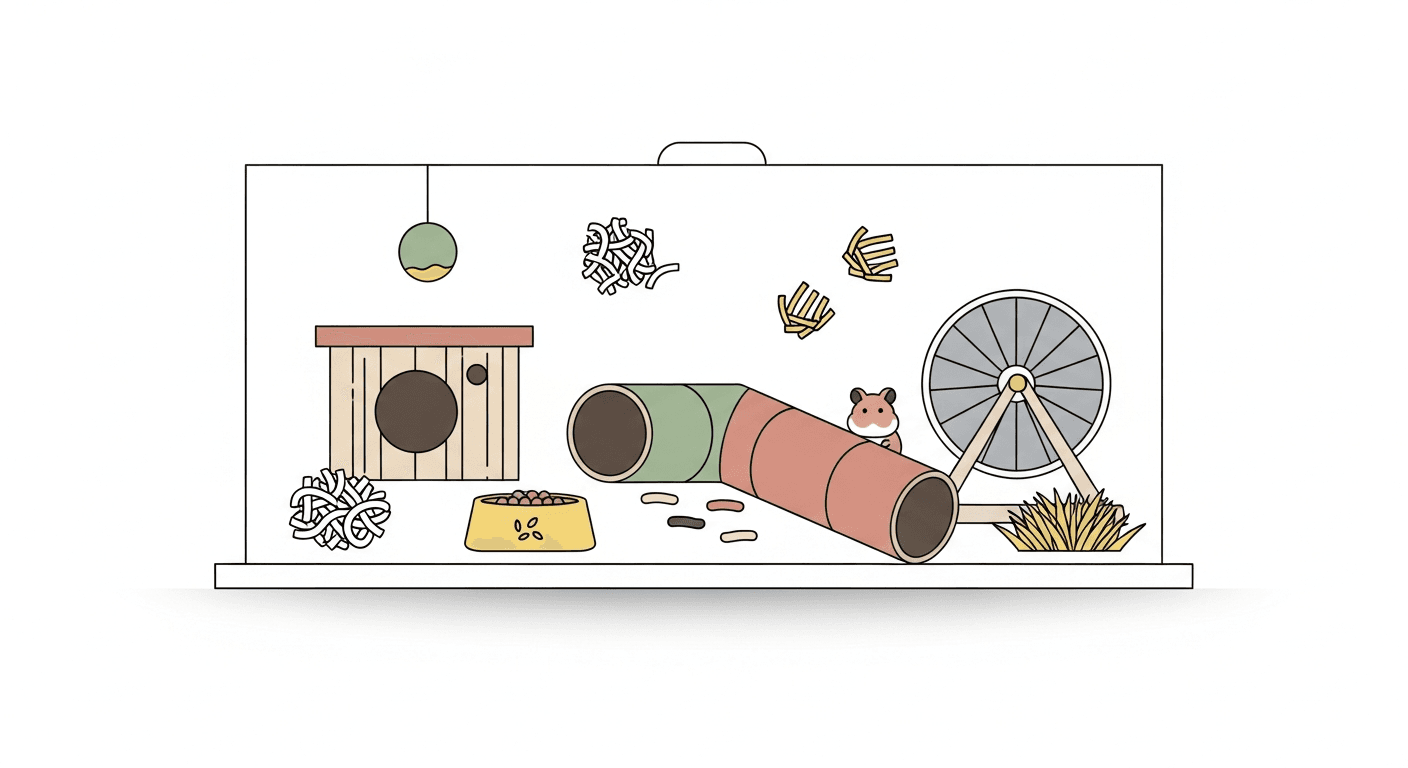
Why Enrichment Is a Medical Issue for Hamsters
A bored hamster is a sick hamster. Hamsters denied adequate space, burrowing material, and stimulation develop stress behaviors — repetitive bar chewing, stereotypic pacing, excessive grooming, and aggression — that have direct physiological consequences including immune suppression, gut problems, and shortened lifespan.
Wild Syrian hamsters travel up to 9 kilometers per night foraging. The minimum cage size recommended by modern exotic veterinary associations is 100x50cm floor space (about 5,000 cm²) — most pet store cages do not meet this standard.
First 3 Steps at Home
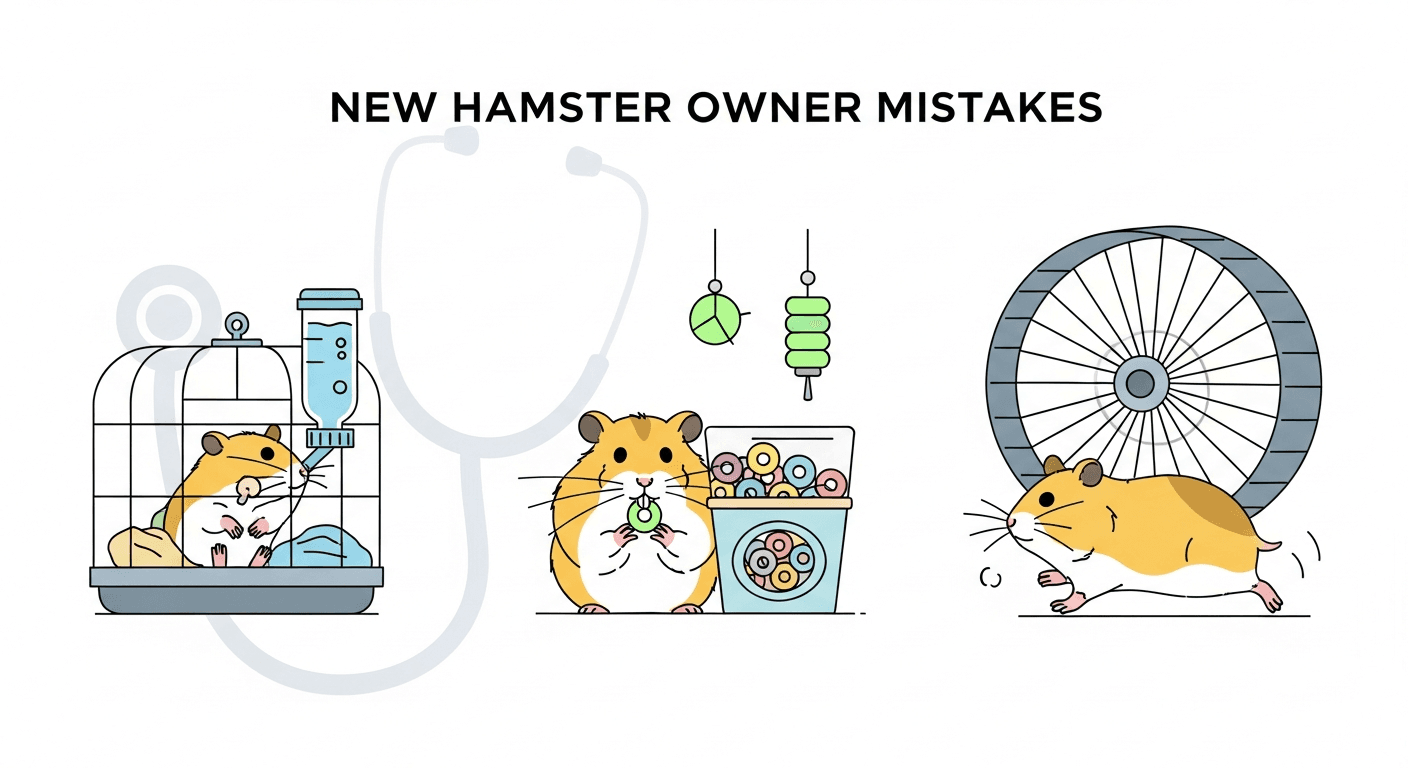
- Audit your wheel: The wheel must be large enough for the hamster to run with a flat back — no arching. For a Syrian hamster, this means at minimum 28–30cm diameter. A too-small wheel causes spinal stress and is a common source of pain and bar-chewing behavior.
- Increase bedding depth: Hamsters need at minimum 30cm of bedding to burrow and build multi-chamber tunnel systems. Deep bedding — paper-based or chemical-free wood fiber — reduces stress dramatically and supports natural behavior.
- Add foraging opportunities: Scatter feed some of the daily ration through the bedding rather than using only a dish. This activates natural foraging behavior and extends the time the hamster spends engaged in purposeful activity.
When to Go to the Vet Immediately
- Repetitive, compulsive behaviors that don't reduce even with environmental improvement — possible OCD-like condition requiring assessment
- Self-injuring behaviors: chewing feet, tail biting
- Bar chewing that has worn teeth down or caused mouth injury
- Any behavioral change accompanied by reduced eating or weight loss
Follow-Up Care Checklist
- Upgrade to a minimum 100x50cm floor space enclosure if not already at this size
- Provide sand bath 2–3 times weekly for skin and coat maintenance
- Rotate toys and rearrange the cage layout periodically to maintain novelty
- Offer wooden chews, cork bark, and hide boxes for natural behavior
- Handle daily to build trust and provide social interaction — hamsters can bond with owners even though they are solitary with other hamsters
Track Behavior with TailRounds
Note activity levels, behaviors observed, and any stereotypic movements daily in the TailRounds Daily Log. This creates a record of whether enrichment improvements are having the expected positive effect.
Book a Vet Appointment
If stereotypic behaviors persist after environmental upgrades, book an assessment. Book at Happy Paws — our team can assess for underlying pain or anxiety contributing to the behaviors.
Summary for Your Clinic Visit
Describe the specific behaviors observed, cage size and setup, bedding depth, wheel diameter, and whether behaviors have changed since any recent environmental modifications.
Continue Reading
 🐭 Hamster Health
Hamster Housing Guide: Cage Size, Bedding, and Enrichment
Most commercial hamster cages are too small and cause chronic stress. Learn what hamsters actually need for space, bedding depth, and environmental enrichment.
 🐭 Hamster Health
Stress in Hamsters: Signs, Causes, and How to Reduce It
Chronic stress shortens hamsters' lives and suppresses their immune systems. Learn to recognize stress signs and create a calmer, healthier environment.
 🐭 Hamster Health
Daily Hamster Care Routine: Health Monitoring Checklist
A consistent daily routine is the best early warning system for hamster health problems. Learn what to check every day and how to build a baseline.
 🐭 Hamster Health
New Hamster Owner Mistakes to Avoid: A Practical Guide
Many well-intentioned new hamster owners unknowingly make choices that harm their hamster's health. Learn the most common mistakes and how to avoid them from day one.