
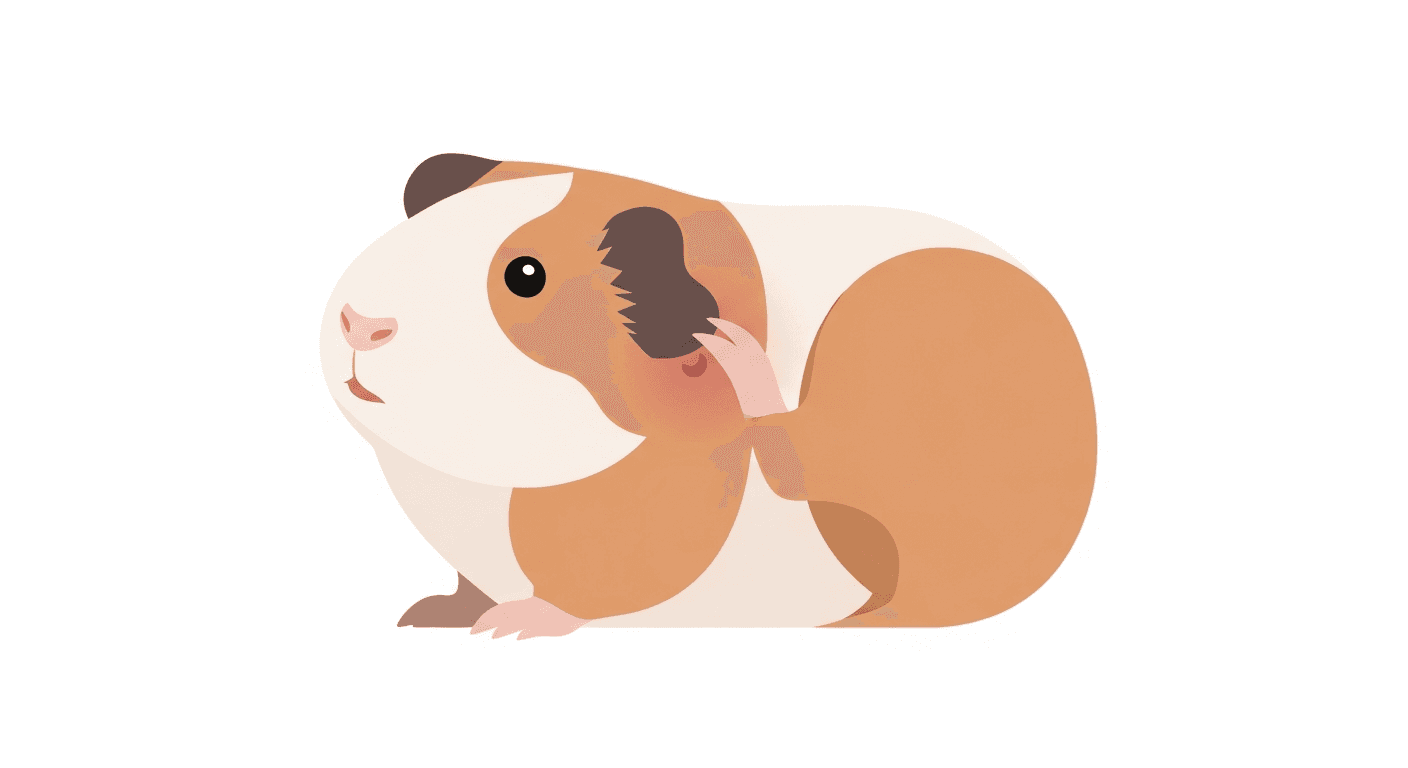
Common Skin Problems in Guinea Pigs
Guinea pigs are susceptible to several skin conditions. The most common is Trixacarus caviae, a burrowing mite that causes intense, almost convulsive itching — so severe that affected guinea pigs can seizure from the pain and stress. Ringworm (Trichophyton mentagrophytes) is a fungal infection causing circular patches of hair loss with scaly skin — importantly, it's transmissible to humans. Lice (Gliricola porcelli) are less clinically significant but cause itching and hair loss. Sebaceous cysts and abscesses also occur.
First 3 Steps to Take at Home
- Assess the severity of itching: Trixacarus mite infestation causes violent, sustained scratching that may result in self-injury. This is a veterinary emergency. Milder itching with patchy hair loss suggests lice or ringworm — still requiring treatment but less immediately urgent.
- Check for circular patches of hair loss: Ringworm produces well-defined, circular or irregular patches with slight scaling and hair loss at the edges. If you notice these on yourself or family members alongside the guinea pig having skin problems, ringworm is very likely.
- Do not share guinea pig bedding or handle without washing hands: Ringworm and some mites can spread between guinea pigs and to humans. Practice good hygiene until diagnosis and treatment are completed.
When to Go to the Vet Immediately
- Guinea pig scratching so violently it is injuring itself or appears to be seizing
- Any skin problem in a guinea pig that is also not eating or is lethargic
- Skin lesions spreading rapidly over multiple days
Follow-Up Care Checklist
- Complete prescribed mite treatment (typically ivermectin-based, 2–3 doses 10–14 days apart)
- For ringworm: antifungal treatment for 4–6 weeks; clean and disinfect the enclosure as spores persist in the environment
- Treat all guinea pigs in the household simultaneously — asymptomatic carriers exist
Track Skin Conditions with TailRounds
Log itching severity, affected areas, and treatment dates in the TailRounds Daily Log. Photograph lesions weekly to track treatment response.
Book a Vet Appointment
Skin disease in guinea pigs requires proper diagnosis before treatment — different conditions need different medications. Book at Happy Paws for a skin scraping and fungal assessment.
Summary for Your Clinic Visit
Describe the itching severity, areas of hair loss, whether circular patches are present, whether any humans in the household have developed skin lesions, and the guinea pig's diet and housing setup.
Continue Reading
 🐹 Guinea Pig Health
Guinea Pig Not Eating: Causes and When to Act
Like rabbits, guinea pigs cannot safely skip meals. Learn the common causes of appetite loss and how quickly you need to respond.
 🐹 Guinea Pig Health
Daily Guinea Pig Care Routine: Essential Health Monitoring
A consistent daily care routine is the best protection against common guinea pig diseases. This checklist keeps you and your guinea pig on track every day.
 🐹 Guinea Pig Health
Guinea Pig Scurvy: Vitamin C Deficiency Signs and Treatment
Guinea pigs cannot make their own vitamin C. Deficiency causes scurvy — painful, debilitating, and entirely preventable. Learn the signs and correct daily dose.
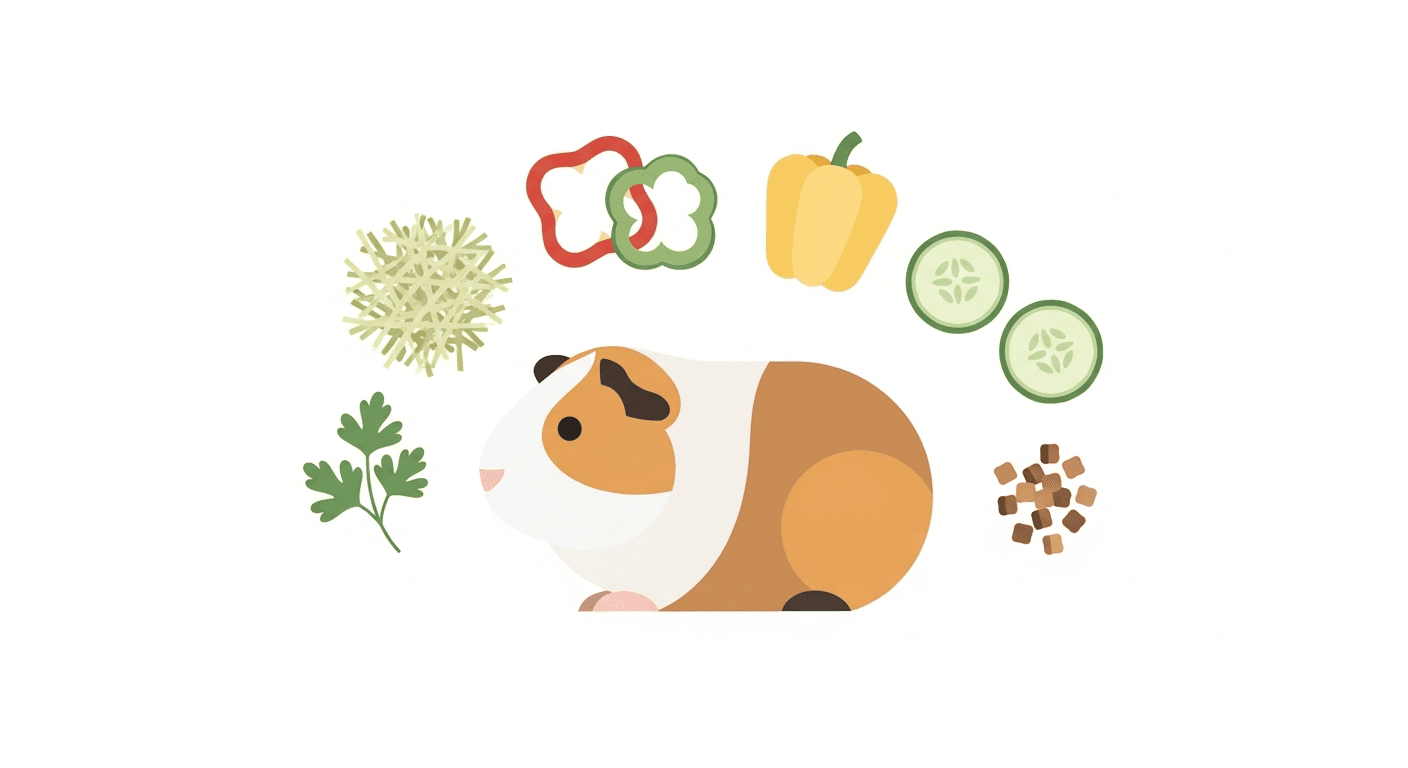 🐹 Guinea Pig Health
Complete Guinea Pig Diet Guide: What to Feed for Optimal Health
The right diet prevents most common guinea pig diseases. Learn the correct proportions of hay, vegetables, vitamin C sources, and pellets for healthy guinea pigs.