
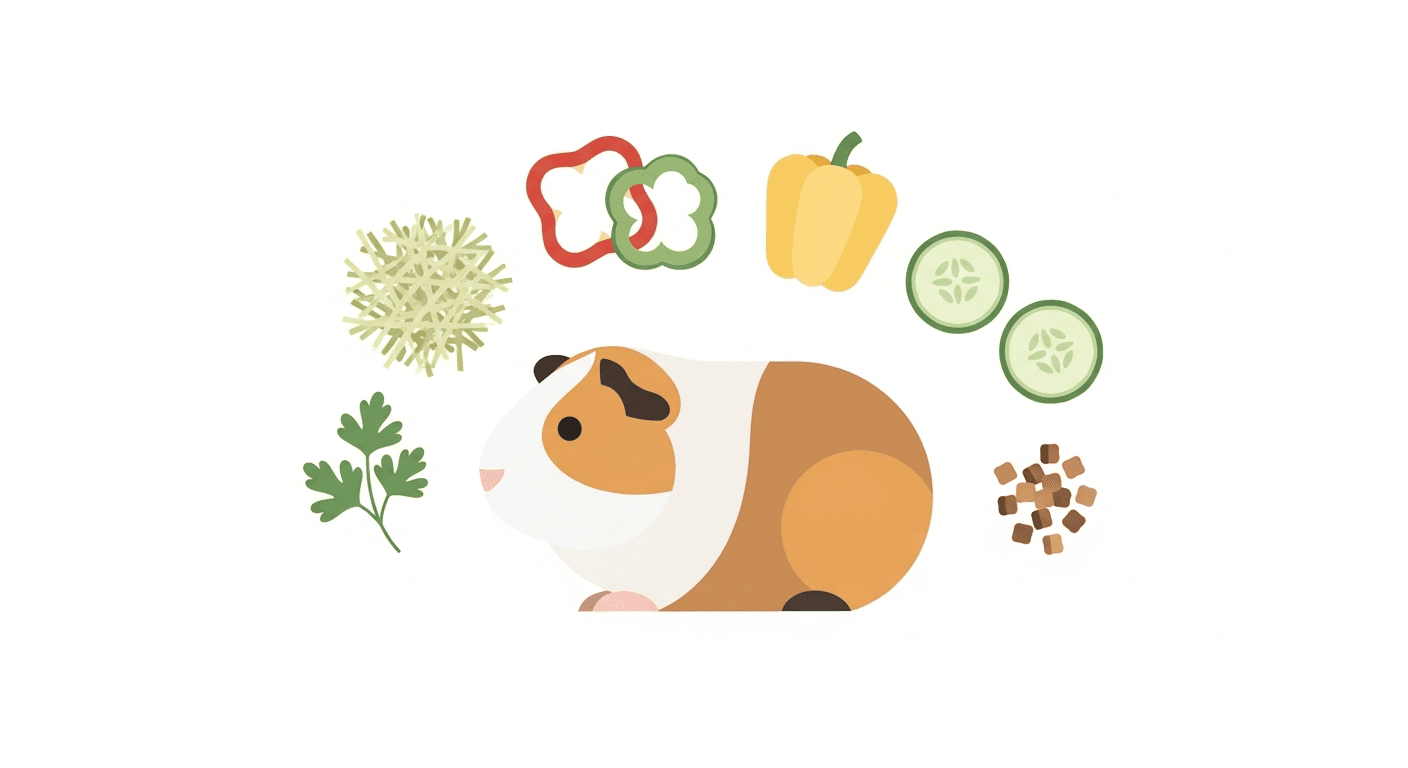
The Ideal Guinea Pig Diet
Guinea pig nutritional needs differ from rabbits in one critical way: the daily vitamin C requirement. Otherwise, the dietary philosophy is similar — hay-based, supplemented with fresh vegetables, with pellets as a small addition. A properly fed guinea pig has a dramatically lower risk of dental disease, urinary disease, vitamin C deficiency, and GI problems. Unfortunately, the diet most commonly provided — pellets as the primary food — is the diet most likely to cause these conditions.
First 3 Steps to Build an Optimal Diet
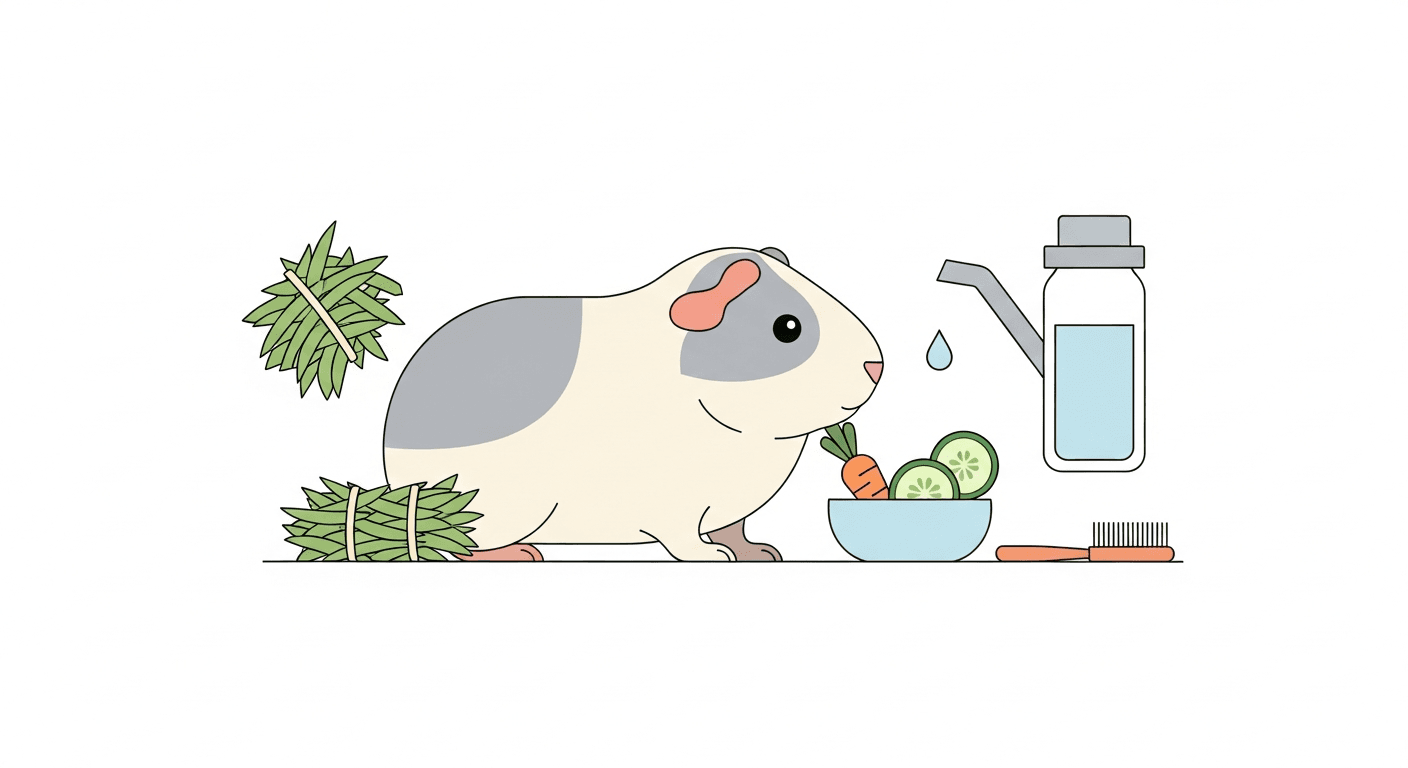
- Ensure unlimited timothy hay: Timothy, orchard grass, or meadow hay should always be available. Hay drives dental wear, provides fiber for gut health, and reduces obesity. Alfalfa hay is appropriate only for guinea pigs under 6 months or pregnant/nursing sows — it's too high in calcium for adult maintenance.
- Provide daily vitamin C-rich vegetables: Bell pepper is the gold standard (one thin strip of any color per guinea pig daily provides substantial vitamin C). Supplement with romaine lettuce, cilantro, parsley, dill, and other leafy greens. Total vegetable allowance is approximately 1 cup per guinea pig daily.
- Limit pellets to a small measured portion: Plain guinea pig pellets (not mixes with seeds or colored pieces) provide additional nutrients but should not be the diet foundation. 1–2 tablespoons per guinea pig daily is sufficient for adults.
Foods to Avoid
- Cabbage, cauliflower, broccoli — cause gas and GI problems in excess
- Potato, corn, beans — too high in starch
- Dairy, meat, any processed human food
- Iceberg lettuce — causes diarrhea, no nutrition
- Large amounts of fruit — too high in sugar for daily feeding
When to See the Vet
- After any dietary change that causes soft stools or GI upset
- If vitamin C deficiency is suspected despite apparent dietary provision
Track Diet with TailRounds
Log daily vitamin C foods, hay availability, and any new foods introduced in the TailRounds Daily Log.
Book a Vet Appointment
For a personalized diet plan for a guinea pig with a specific health condition, book a nutrition consultation at Happy Paws.
Summary for Your Clinic Visit
Tell your vet the complete diet — hay type and availability, vegetable types and amounts, pellet brand and portion, and any treats or extras given.
Continue Reading
 🐹 Guinea Pig Health
Guinea Pig Scurvy: Vitamin C Deficiency Signs and Treatment
Guinea pigs cannot make their own vitamin C. Deficiency causes scurvy — painful, debilitating, and entirely preventable. Learn the signs and correct daily dose.
 🐹 Guinea Pig Health
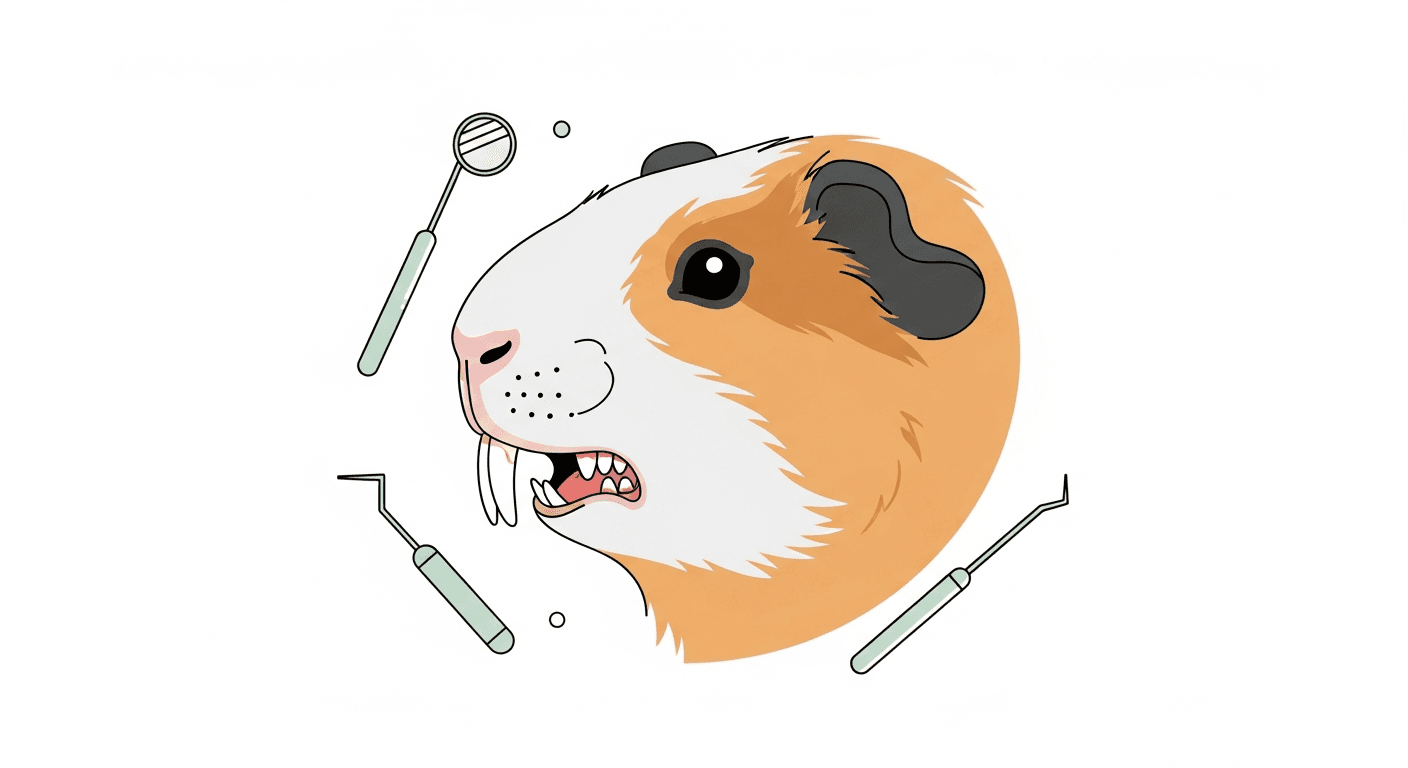
Guinea Pig Dental Disease: Malocclusion and Tooth Spurs
Dental disease is the leading health problem in guinea pigs. Learn how it develops, what symptoms look like, and why regular dental checks are essential.
 🐹 Guinea Pig Health
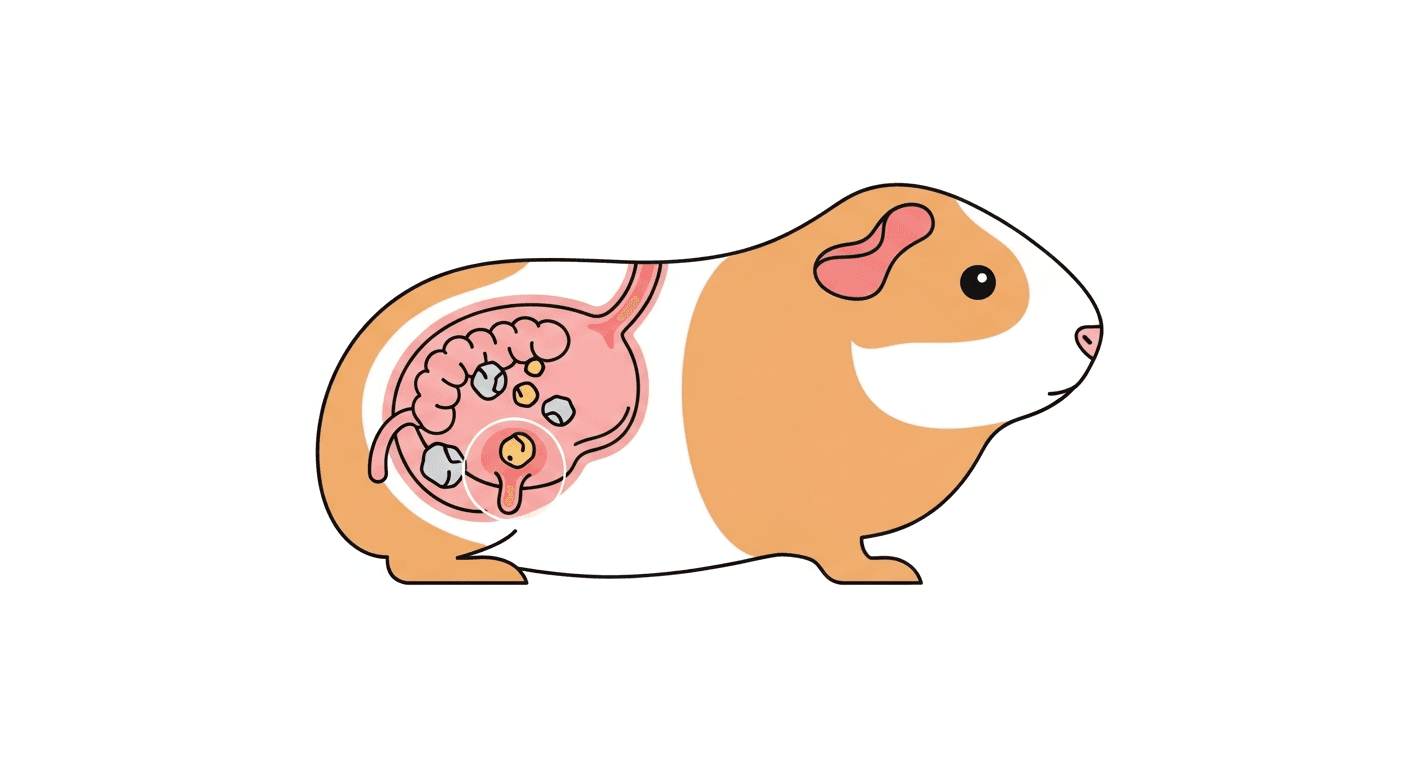
Bladder Stones in Guinea Pigs: Signs and Surgical Treatment
Calcium oxalate and calcium carbonate stones in guinea pig bladders cause severe pain and can be life-threatening. Learn the signs and what treatment involves.
 🐹 Guinea Pig Health
Daily Guinea Pig Care Routine: Essential Health Monitoring
A consistent daily care routine is the best protection against common guinea pig diseases. This checklist keeps you and your guinea pig on track every day.