
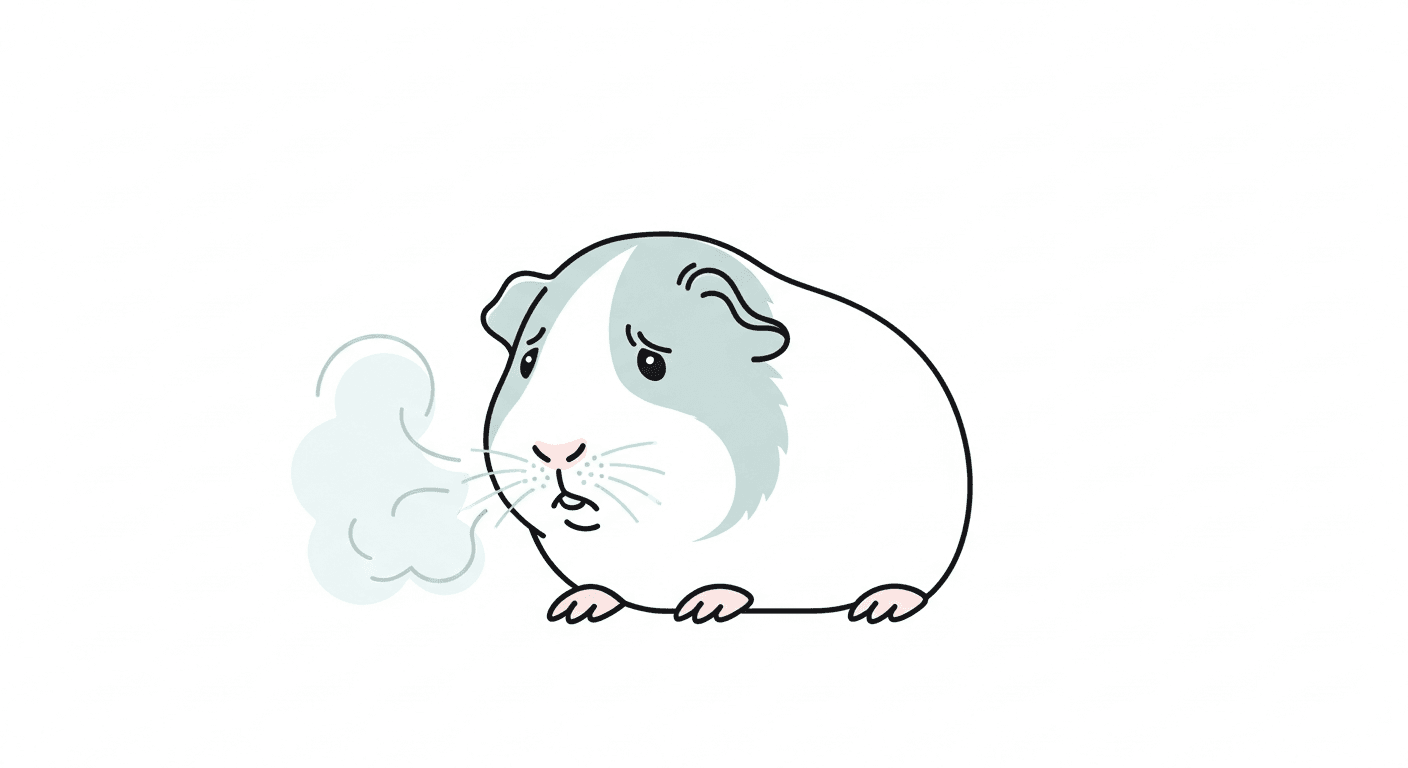
Why Are Respiratory Infections So Dangerous in Guinea Pigs?
Guinea pigs are obligate nasal breathers and have small, relatively inflexible lung volumes. Respiratory infections progress rapidly from upper respiratory tract to pneumonia, and guinea pigs deteriorate fast once pneumonia establishes. Bordetella bronchiseptica (carried by many healthy rabbits and dogs without causing them disease) is one of the most dangerous bacteria for guinea pigs and can be transmitted between species. Guinea pigs should never be housed with rabbits for this reason. Streptococcus pneumoniae and Pasteurella multocida are also common pathogens.
First 3 Steps to Take at Home
- Recognize early signs immediately: Early URI signs include sneezing, nasal discharge (even small amounts), reduced activity, and slightly reduced appetite. At this stage, a same-day vet visit can prevent progression to pneumonia.
- Keep the guinea pig warm: Maintain temperature at 22–24°C. Sick guinea pigs lose heat rapidly, and hypothermia combined with respiratory infection is frequently fatal. A heat pad on low under half the enclosure allows the guinea pig to self-regulate.
- Separate from other guinea pigs: Respiratory infections in guinea pigs spread readily through a group. Isolate the sick animal and monitor all companions closely.
When to Go to the Vet Immediately
- Any nasal discharge — even clear — alongside reduced activity
- Labored, rapid breathing or open-mouth breathing
- Blue tinge to the lips or gums
- Complete food refusal with respiratory signs
- Any sneezing in a guinea pig that shares a room with a rabbit or dog
Follow-Up Care Checklist
- Complete the full antibiotic course — respiratory infections in guinea pigs require extended treatment (2–4 weeks)
- Nebulization may be recommended by your vet for severe cases
- Supportive care: warmth, syringe feeding if not eating voluntarily, vitamin C supplementation
- Recheck in 1 week to assess treatment response
Track Respiratory Symptoms with TailRounds
Log respiratory rate, sneezing frequency, discharge character, and appetite daily during illness using the TailRounds Daily Log.
Book a Vet Appointment
Respiratory infections in guinea pigs are always urgent. Book at Happy Paws today — don't wait to see if symptoms resolve on their own.
Summary for Your Clinic Visit
Tell your vet when symptoms started, the character of any discharge, the guinea pig's housing companions (especially rabbits or dogs), current temperature of the environment, and eating status.
Continue Reading
 🐹 Guinea Pig Health
Guinea Pig Not Eating: Causes and When to Act
Like rabbits, guinea pigs cannot safely skip meals. Learn the common causes of appetite loss and how quickly you need to respond.
 🐹 Guinea Pig Health
Lethargic Guinea Pig: When Tiredness Becomes a Medical Problem
Guinea pigs are naturally active and social. Sudden or progressive lethargy is always worth investigating. Learn the common causes and when to act.
 🐹 Guinea Pig Health
Guinea Pig Dehydration: Signs and How to Improve Hydration
Dehydrated guinea pigs deteriorate quickly. Learn to assess hydration at home and how to encourage water intake effectively.
 🐹 Guinea Pig Health
Daily Guinea Pig Care Routine: Essential Health Monitoring
A consistent daily care routine is the best protection against common guinea pig diseases. This checklist keeps you and your guinea pig on track every day.