
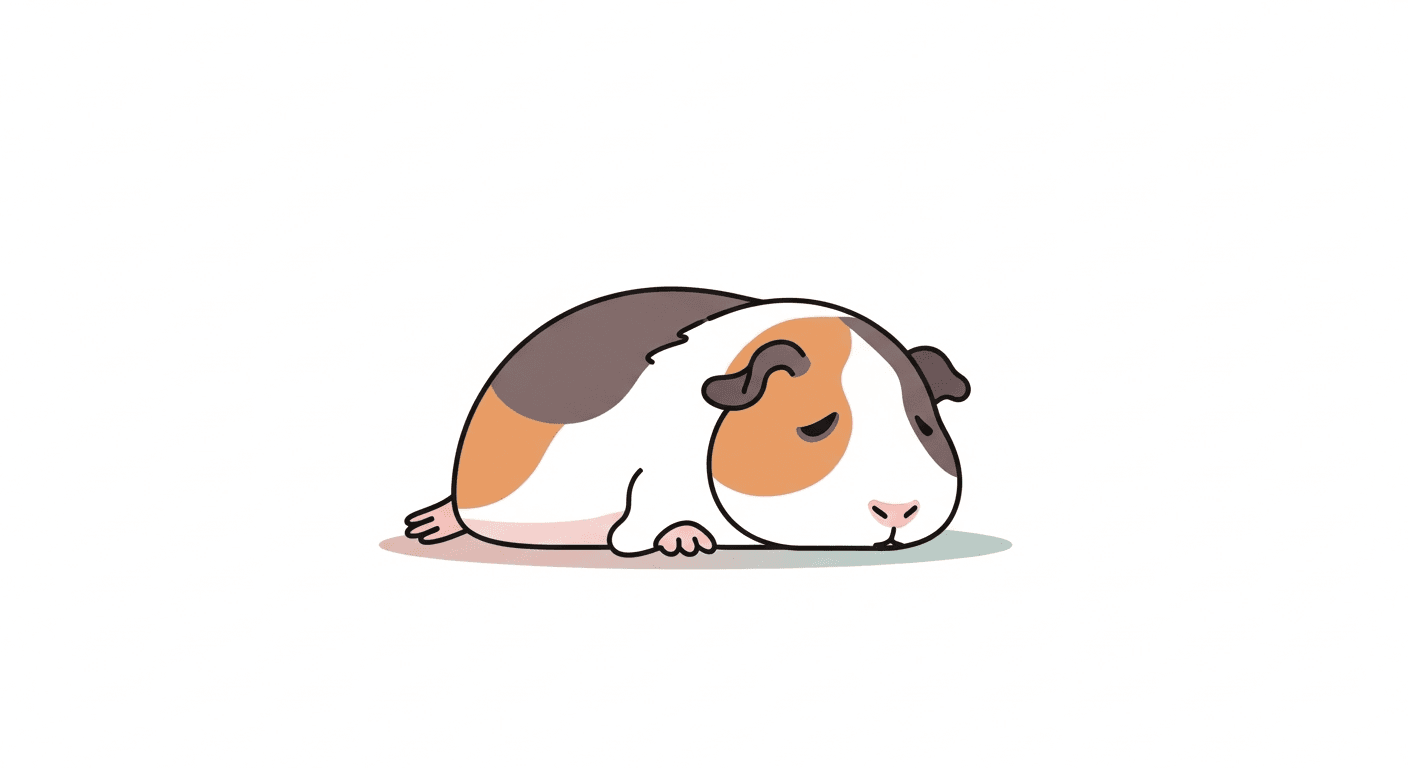
What Does Lethargy Mean in a Guinea Pig?
A healthy guinea pig is active, curious, and responsive. It should approach the enclosure wall when you come near, vocalize enthusiastically at feeding time, and explore when given floor time. A lethargic guinea pig sits hunched, doesn't respond to normal stimuli, shows little interest in food or companionship, and may sit in an unusual location. Because guinea pigs hide illness instinctively, visible lethargy often means the problem has already been present for some time.
Common causes include respiratory infection, vitamin C deficiency, dental pain, ovarian cysts (extremely common in middle-aged unspayed females), bladder stones, anemia, heart disease, and cancer.
First 3 Steps to Take at Home
- Assess hydration and gum color: Pink, moist gums and normal skin turgor suggest the guinea pig is hydrated. Pale gums indicate anemia. White, blue, or tacky gums are emergency signs. Check immediately.
- Offer preferred foods: Fresh bell pepper, leafy herbs, or other high-value foods. A guinea pig that accepts its favorite food with interest is less urgently ill than one that shows no response whatsoever.
- Take the temperature if possible: Normal guinea pig temperature is 37.2–39.5°C (99–103°F). Below 37°C indicates hypothermia — begin warming immediately while preparing to transport to the vet.
When to Go to the Vet Immediately
- Pale or white gums (anemia)
- Temperature below 37°C
- Lethargy combined with not eating for more than 8 hours
- Any respiratory symptoms alongside lethargy
- Sudden onset in a previously active guinea pig
Follow-Up Care Checklist
- Maintain warmth during any illness — 22–24°C minimum, heat pad on low under half the enclosure
- Syringe feed critical care if the guinea pig isn't eating voluntarily
- Ensure vitamin C intake is being met during illness — requirements increase when sick
Track Energy Level with TailRounds
Rate daily energy level on a 1–10 scale in the TailRounds Daily Log. A declining trend over days helps your vet understand the timeline and severity.
Book a Vet Appointment
Lethargy lasting more than a few hours in a guinea pig needs same-day veterinary evaluation. Book at Happy Paws urgently.
Summary for Your Clinic Visit
Tell your vet when lethargy started, what other symptoms are present, the guinea pig's age, diet, and gum color observation.
Continue Reading
 🐹 Guinea Pig Health
Guinea Pig Not Eating: Causes and When to Act
Like rabbits, guinea pigs cannot safely skip meals. Learn the common causes of appetite loss and how quickly you need to respond.
 🐹 Guinea Pig Health
Guinea Pig Respiratory Infections: Signs and Treatment
Respiratory infections are a leading cause of death in guinea pigs. Learn to recognize the early signs and get treatment before the condition becomes critical.
 🐹 Guinea Pig Health
Guinea Pig Scurvy: Vitamin C Deficiency Signs and Treatment
Guinea pigs cannot make their own vitamin C. Deficiency causes scurvy — painful, debilitating, and entirely preventable. Learn the signs and correct daily dose.
 🐹 Guinea Pig Health
Daily Guinea Pig Care Routine: Essential Health Monitoring
A consistent daily care routine is the best protection against common guinea pig diseases. This checklist keeps you and your guinea pig on track every day.