
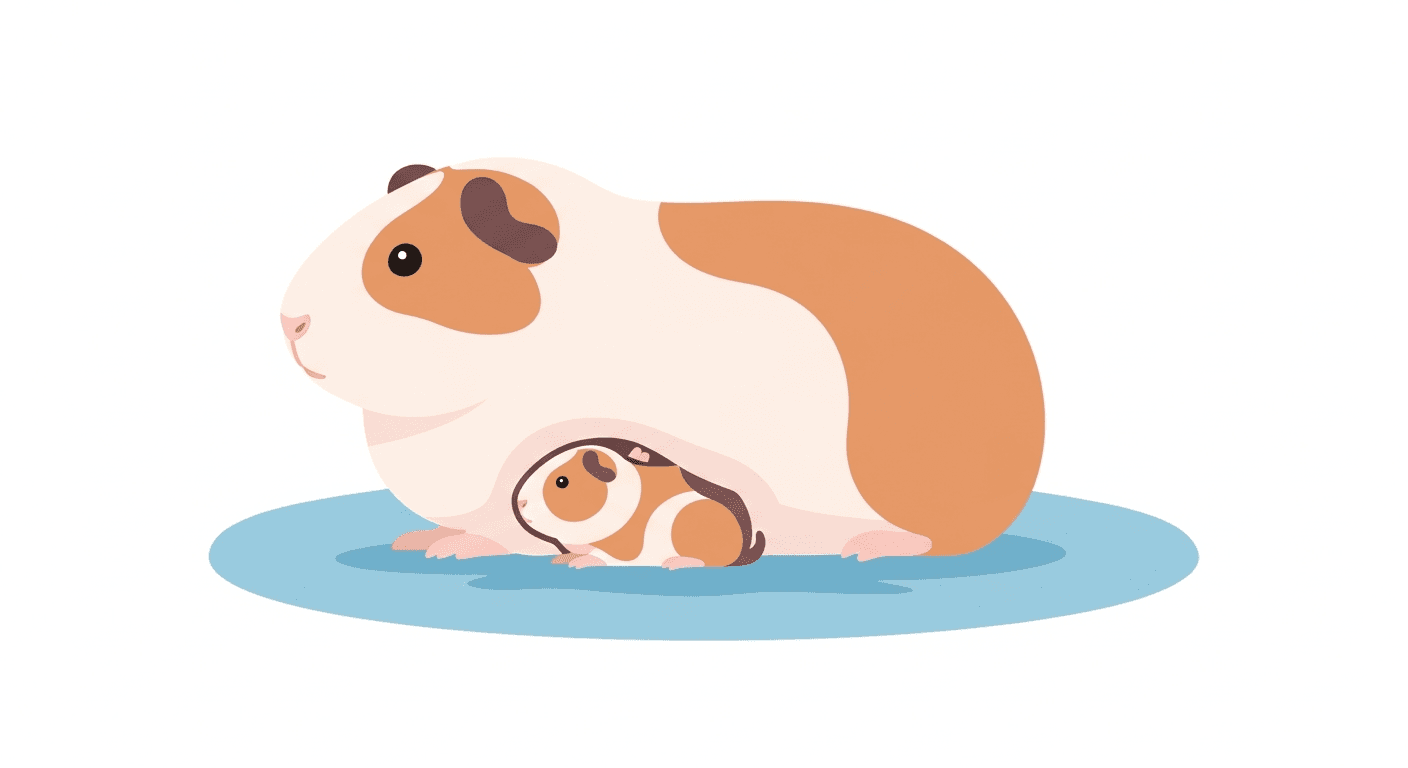
Guinea Pig Pregnancy: Unique Risks to Know
Guinea pig pregnancy carries significant risks that owners must understand. The gestation period is long — 59–72 days — and guinea pig fetuses are large and well-developed at birth. Two major complications are common. Pregnancy toxemia (a metabolic crisis in the last 2–3 weeks of pregnancy) occurs when calorie demands of the fetuses exceed the mother's intake — it's fatal if not caught early. Dystocia (difficult birth) is common because the pubic symphysis (the joint between the pelvic bones) must separate to allow birth — if a female has never given birth before and is over 6–7 months old when she first becomes pregnant, this joint may not separate adequately, causing an obstruction that is almost always fatal without immediate cesarean section.
First 3 Steps for a Pregnant Guinea Pig
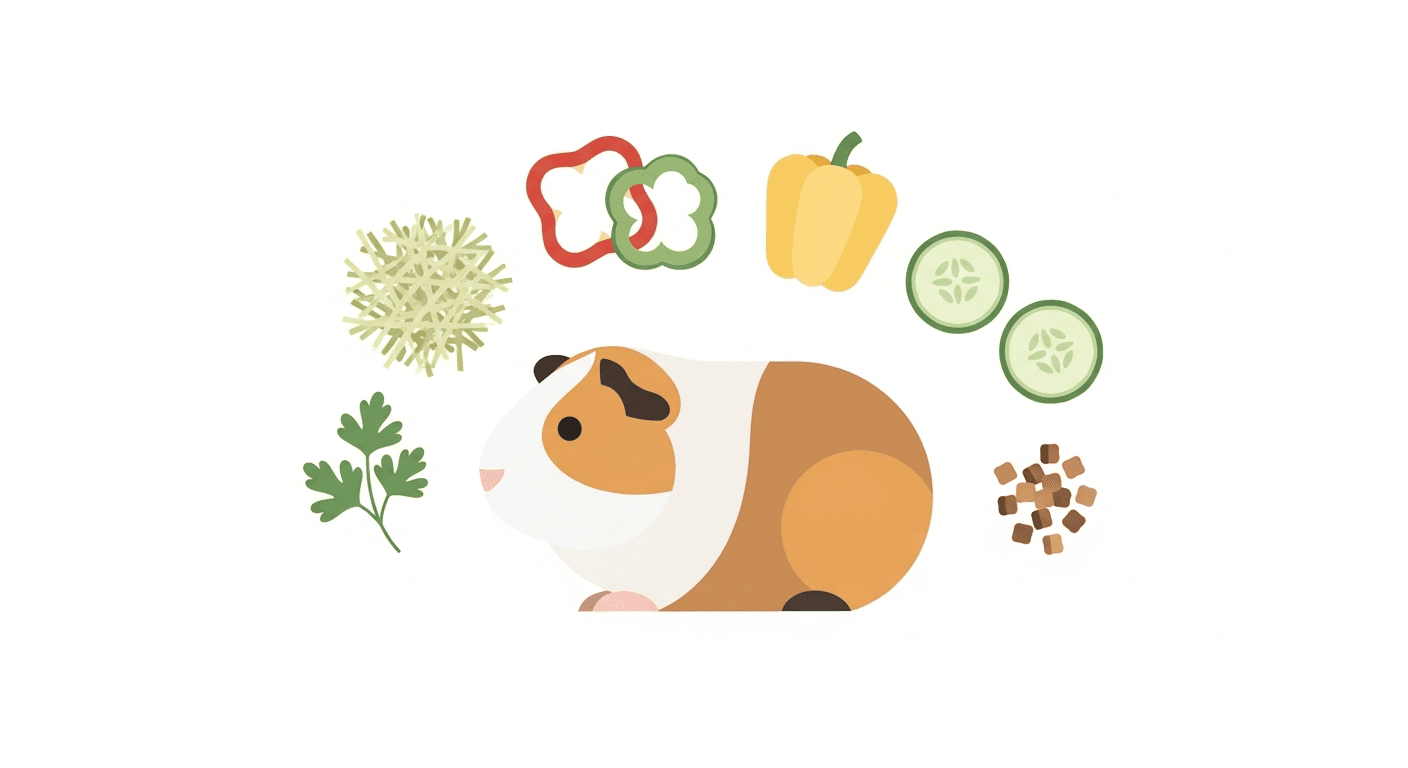
- Provide unlimited high-quality food: Caloric needs increase by 30–50% in late pregnancy. Unlimited timothy hay, larger portions of fresh vegetables, and increased pellet ration are all appropriate. Vitamin C requirements increase — ensure daily bell pepper and fresh greens are available.
- Minimize handling and stress: Keep the environment calm and predictable. Move the guinea pig gently and minimize unnecessary handling, especially in the last 2 weeks.
- Know the warning signs of pregnancy toxemia: Sudden lethargy, loss of appetite, uncoordinated movement, muscle tremors, or convulsions in the last 3 weeks of pregnancy indicate pregnancy toxemia — a veterinary emergency requiring immediate glucose supplementation and supportive care.
When to Go to the Vet Immediately
- First pregnancy in a female over 6 months old — high dystocia risk; discuss with vet in advance
- Any lethargy, tremors, or not eating in the last 3 weeks of pregnancy (pregnancy toxemia)
- Active labor for more than 30 minutes without a pup delivered
- Any pup that appears stuck in the birth canal
Follow-Up Care Checklist
- After birth, ensure all pups are nursing within 1–2 hours — guinea pig pups are precocial (born fully furred and open-eyed) but still need mother's milk
- Separate male guinea pigs from the female immediately after birth — females can become pregnant again within hours of giving birth
- Continue increased nutrition throughout the nursing period (up to 3 weeks)
Track Pregnancy Progress with TailRounds
Log weekly weight gain, appetite, and any behavioral changes in the TailRounds Daily Log. Sudden weight loss in late pregnancy is a warning sign.
Book a Vet Appointment
Pre-natal veterinary assessment is essential, especially for a first-time or older guinea pig. Book at Happy Paws with our exotic animal team as soon as pregnancy is suspected.
Summary for Your Clinic Visit
Tell your vet the female's age, whether she has had previous pregnancies, estimated date of breeding, current diet, and any symptoms observed.
Continue Reading
 🐹 Guinea Pig Health
Guinea Pig Not Eating: Causes and When to Act
Like rabbits, guinea pigs cannot safely skip meals. Learn the common causes of appetite loss and how quickly you need to respond.
 🐹 Guinea Pig Health
Guinea Pig Scurvy: Vitamin C Deficiency Signs and Treatment
Guinea pigs cannot make their own vitamin C. Deficiency causes scurvy — painful, debilitating, and entirely preventable. Learn the signs and correct daily dose.
 🐹 Guinea Pig Health
Daily Guinea Pig Care Routine: Essential Health Monitoring
A consistent daily care routine is the best protection against common guinea pig diseases. This checklist keeps you and your guinea pig on track every day.
 🐹 Guinea Pig Health
Complete Guinea Pig Diet Guide: What to Feed for Optimal Health
The right diet prevents most common guinea pig diseases. Learn the correct proportions of hay, vegetables, vitamin C sources, and pellets for healthy guinea pigs.