
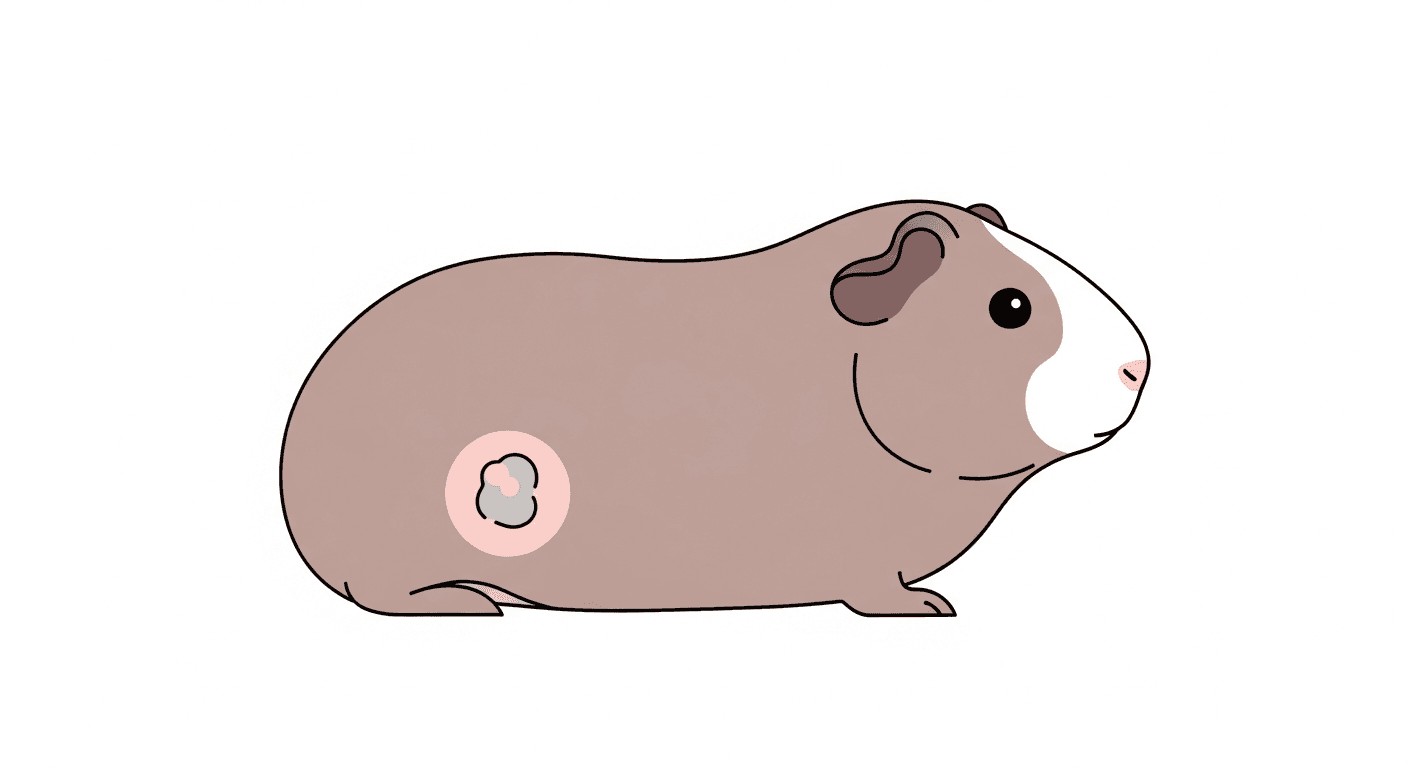
Why Are Ovarian Cysts So Common in Guinea Pigs?
Ovarian cysts are one of the most common health problems in unspayed female guinea pigs (sows). Studies suggest over 75% of females develop them by age 2–3. The cysts are fluid-filled structures that develop from follicles that fail to ovulate. As they grow, they press on surrounding organs, cause hormonal imbalances, and cause significant discomfort. They can grow to remarkable size in some cases, distending the abdomen noticeably.
Signs of Ovarian Cysts
- Symmetrical hair loss along the flanks: The classic sign — bilateral hair thinning or loss along both sides of the body, caused by excess estrogen from the cysts. This is highly characteristic of ovarian cysts in guinea pigs.
- Enlarged, obviously distended abdomen in advanced cases
- Reduced activity and lethargy
- Reduced appetite and weight loss
- Mammary (nipple) swelling in some females
- Aggression or personality change due to hormonal disruption
First 3 Steps When Ovarian Cysts Are Suspected
- Note the hair loss pattern: The bilateral, symmetrical flank alopecia (hair loss on both sides) pattern is highly diagnostic. If you're seeing this, get your guinea pig examined.
- Book a vet appointment for ultrasound: Ovarian cysts are readily visible on ultrasound, and experienced exotic vets can often palpate them during physical examination. This is a straightforward diagnosis.
- Discuss treatment options: Options include surgical removal of the ovaries (OHE — ovariohysterectomy), or hormonal management with GnRH agonist injections (Deslorelin implant) which temporarily suppress cyst activity. The most effective long-term solution is surgical removal.
When to Go to the Vet Immediately
- Severely distended abdomen causing difficulty breathing
- Guinea pig not eating and very lethargic
- Sudden rapid growth of abdominal swelling
Follow-Up Care Checklist
- Post-surgical recovery similar to other guinea pig surgeries — maintain warmth, ensure eating, monitor the incision
- Hair loss from estrogen-driven alopecia typically regrows within 2–3 months of successful treatment
- Annual ultrasound screening for all unspayed females over age 2 is recommended
Track Symptoms with TailRounds
Log hair loss progression, abdominal size, appetite, and energy level monthly in the TailRounds Daily Log. Photographs help track hair regrowth post-treatment.
Book a Vet Appointment
Symmetrical hair loss in a female guinea pig is almost always ovarian cysts. Book at Happy Paws for an ultrasound and treatment consultation.
Summary for Your Clinic Visit
Tell your vet the sow's age, when hair loss started, whether the abdomen appears enlarged, appetite and energy levels, and whether spay has been previously considered.
Continue Reading
 🐹 Guinea Pig Health
Lethargic Guinea Pig: When Tiredness Becomes a Medical Problem
Guinea pigs are naturally active and social. Sudden or progressive lethargy is always worth investigating. Learn the common causes and when to act.
 🐹 Guinea Pig Health
Guinea Pig Not Eating: Causes and When to Act
Like rabbits, guinea pigs cannot safely skip meals. Learn the common causes of appetite loss and how quickly you need to respond.
 🐹 Guinea Pig Health
Guinea Pig Weight Loss: Causes and When to Act
Weight loss in guinea pigs signals underlying disease. Learn to detect it early and which conditions are most likely causing it.
 🐹 Guinea Pig Health
Daily Guinea Pig Care Routine: Essential Health Monitoring
A consistent daily care routine is the best protection against common guinea pig diseases. This checklist keeps you and your guinea pig on track every day.