
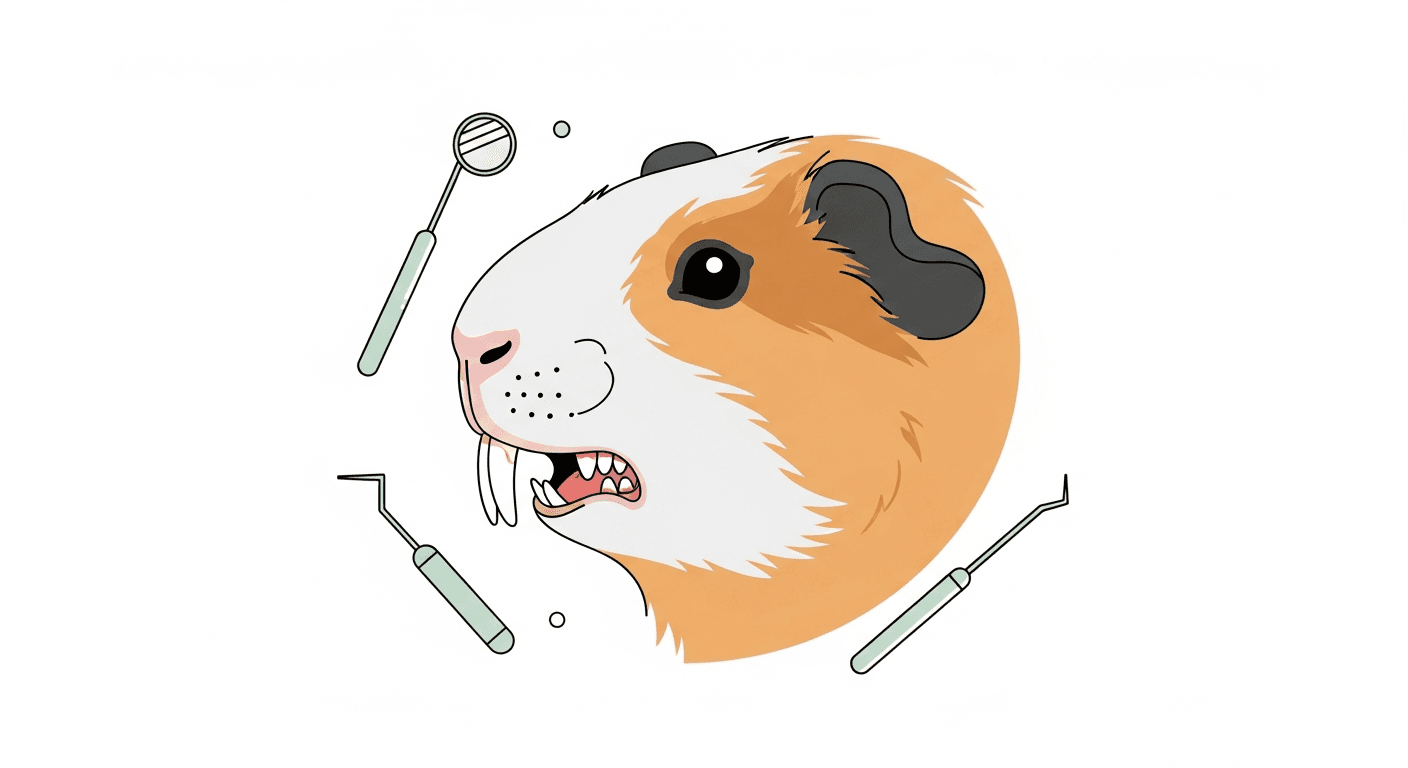
How Do Guinea Pigs Develop Dental Disease?
Guinea pigs have continuously erupting teeth — both incisors and cheek teeth (premolars and molars) grow throughout life. Proper wear depends on the constant lateral grinding motion of eating grass hay. When the diet is low in long-fiber hay and high in pellets or soft foods, the teeth don't wear correctly. Spurs (sharp points) develop on the cheek teeth, lacerating the cheeks and tongue. The pain suppresses eating, teeth wear less, and the cycle accelerates.
Guinea pig dental disease is unique because the cheek teeth are deep in the oral cavity and cannot be seen without sedation and specialist equipment. Many cases are only diagnosed after the guinea pig has been losing weight for weeks — the owner attributing the problem to old age rather than pain.
First 3 Steps to Take at Home
- Watch for these specific signs: Drooling or wet chin fur ("slobbers"), dropping food while eating or showing interest then moving away from food, selective eating (avoiding hay but eating soft foods), and visible weight loss over 2–4 weeks.
- Check the incisors: The front teeth should be a creamy-yellow color (white incisors may indicate metabolic disease) and relatively even. Misaligned incisors are visible and indicate likely cheek tooth problems too. But incisors appearing normal does not rule out cheek tooth disease.
- Increase grass hay provision: The single most preventive measure is unlimited timothy or orchard grass hay. This is the foundation of dental health — and many guinea pigs are fed insufficient hay because owners rely too heavily on pellets.
When to Go to the Vet Immediately
- Any drooling or wet fur under the chin
- Guinea pig dropping food from its mouth
- Weight loss over 2+ weeks
- Not eating hay despite it being available
Follow-Up Care Checklist
- Dental burring under anesthesia is the primary treatment — typically needed every 3–6 months in affected guinea pigs
- Critical care syringe feeding during recovery ensures adequate nutrition
- Transition to an unlimited hay diet to slow disease progression
- Annual dental exams under sedation for all guinea pigs over age 3
Track Dental Symptoms with TailRounds
Log eating behavior, drooling, and weight weekly in the TailRounds Daily Log. The combination of gradual weight loss with selective eating is the earliest dental disease signal.
Book a Vet Appointment
Dental assessment requires sedation and specialist equipment. Book at Happy Paws with our exotic animal team for a complete oral examination.
Summary for Your Clinic Visit
Tell your vet about drooling, eating behavior changes, weight trend, the current diet in detail, and when symptoms first started.
Continue Reading
 🐹 Guinea Pig Health
Guinea Pig Not Eating: Causes and When to Act
Like rabbits, guinea pigs cannot safely skip meals. Learn the common causes of appetite loss and how quickly you need to respond.
 🐹 Guinea Pig Health
Guinea Pig Weight Loss: Causes and When to Act
Weight loss in guinea pigs signals underlying disease. Learn to detect it early and which conditions are most likely causing it.
 🐹 Guinea Pig Health
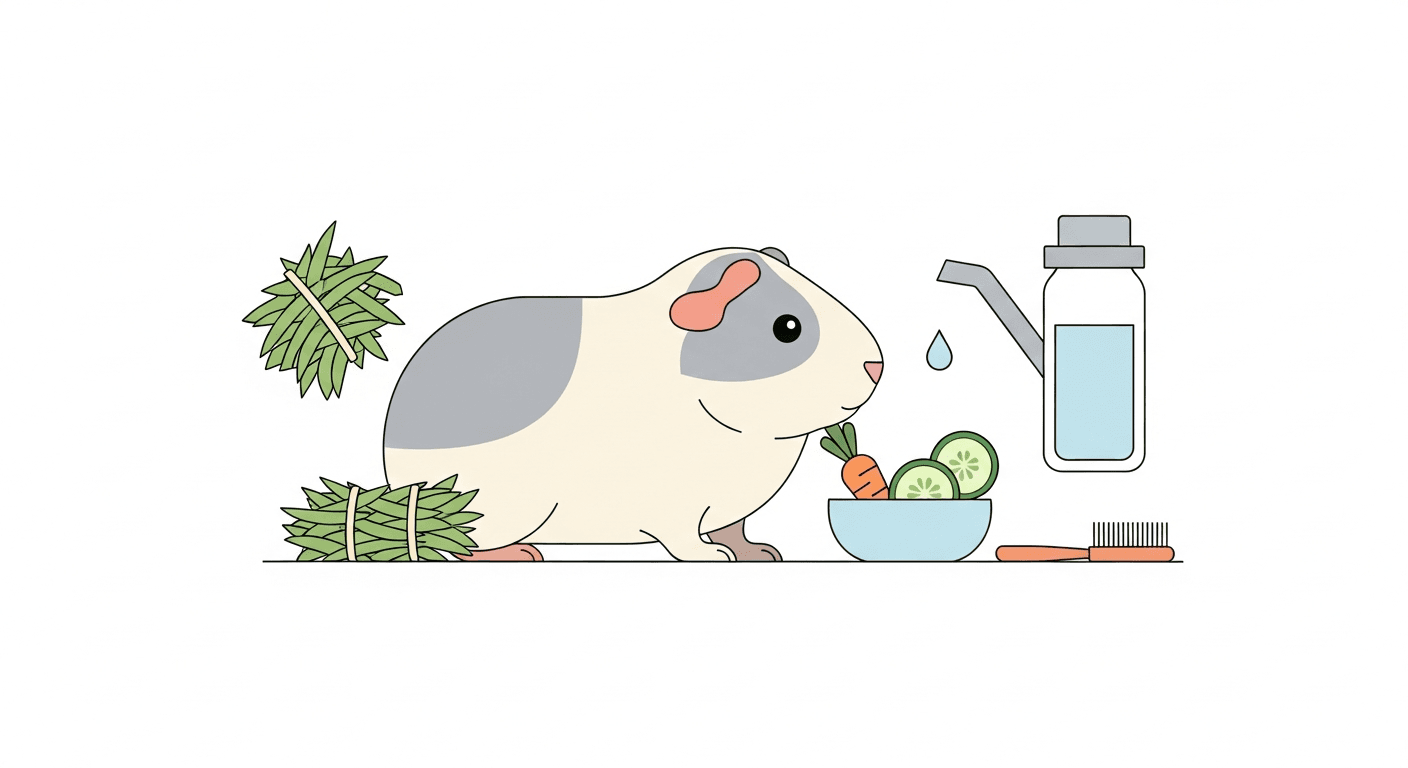
Daily Guinea Pig Care Routine: Essential Health Monitoring
A consistent daily care routine is the best protection against common guinea pig diseases. This checklist keeps you and your guinea pig on track every day.
 🐹 Guinea Pig Health
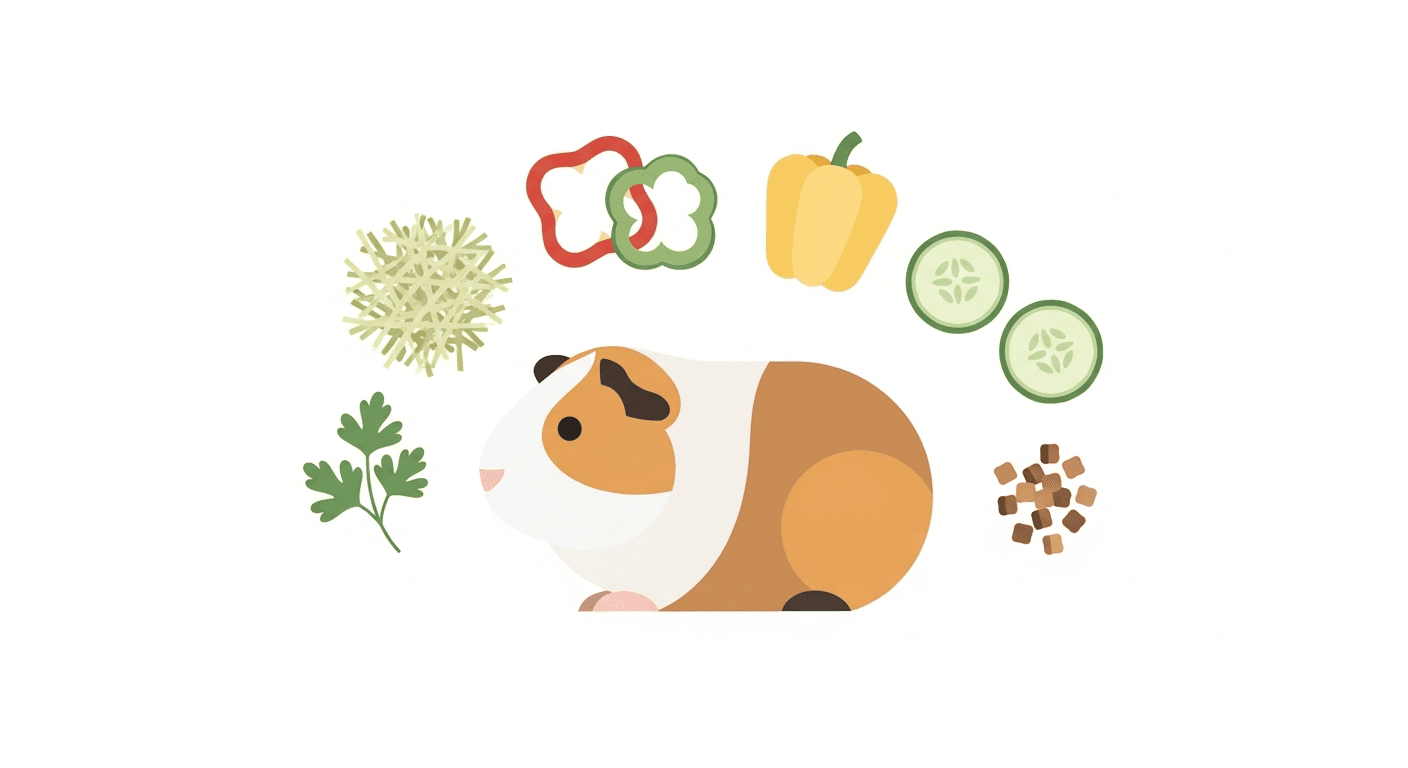
Complete Guinea Pig Diet Guide: What to Feed for Optimal Health
The right diet prevents most common guinea pig diseases. Learn the correct proportions of hay, vegetables, vitamin C sources, and pellets for healthy guinea pigs.