
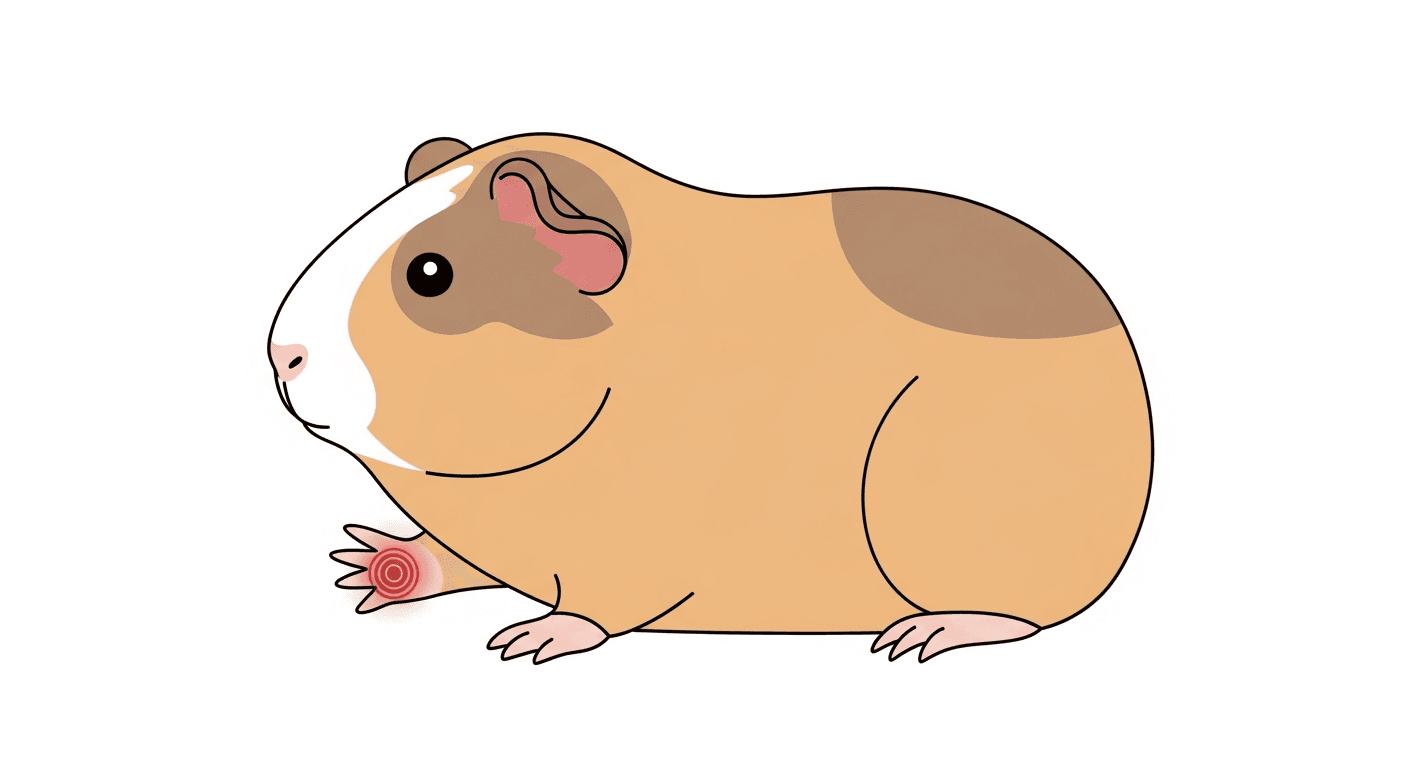
What Is Bumblefoot in Guinea Pigs?
Pododermatitis (bumblefoot) in guinea pigs is a painful inflammation and infection of the foot pads. It starts as redness and swelling of the foot pads, progresses to open sores, and in severe cases penetrates into the underlying bone, causing osteomyelitis. The primary causes are wire or grid flooring that concentrates pressure on small areas of the foot, obesity (excess body weight increases pressure on the feet), and wet or soiled flooring that softens and damages the skin. It's entirely preventable with appropriate housing.
First 3 Steps When Bumblefoot Is Noticed
- Eliminate wire or grid flooring immediately: This is the most critical intervention. Replace with solid, soft flooring — thick fleece over foam tiles, veterinary bedding, or clean towels. Make this change today, regardless of what other treatment is provided.
- Assess the severity: Early-stage (redness and mild swelling, no open sores) can be managed with flooring change and monitoring. Any open sore, ulceration, or swelling of the leg above the foot requires antibiotic treatment and potentially surgical debridement.
- Keep the environment scrupulously clean: Soiled, wet bedding dramatically accelerates bumblefoot progression. Clean the enclosure daily and change bedding every 2–3 days during treatment.
When to Go to the Vet Immediately
- Open sores, ulceration, or crusting on the foot pads
- Swelling extending up the leg
- Guinea pig reluctant to bear weight on the foot
- Signs of systemic infection: lethargy, not eating, fever
Follow-Up Care Checklist
- Long-term antibiotic treatment (weeks to months) required for established infection
- Weight management if obesity is a contributing factor
- Maintain appropriate flooring permanently — this is a permanent management change
- Recheck weekly until healing is confirmed
Track Foot Health with TailRounds
Log weekly foot inspections with photos in the TailRounds Daily Log. Early-stage bumblefoot caught and treated promptly heals much faster than established disease.
Book a Vet Appointment
Any open sore on a guinea pig's foot requires antibiotic therapy. Book at Happy Paws for wound assessment and treatment.
Summary for Your Clinic Visit
Describe the foot condition (redness, swelling, sores), the current flooring, whether the guinea pig is bearing weight normally, and the diet including the guinea pig's estimated weight.
Continue Reading
 🐹 Guinea Pig Health
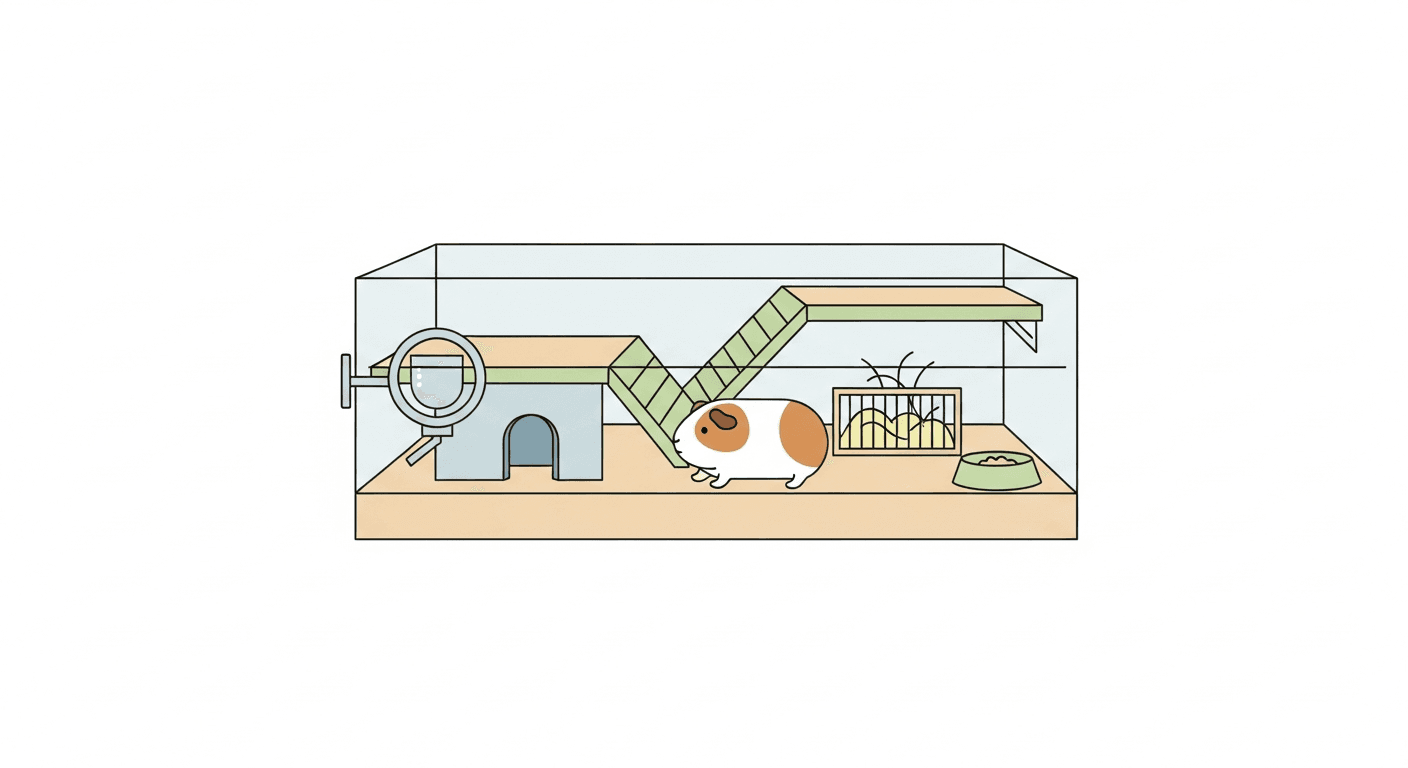
Guinea Pig Housing Guide: Space, Bedding, and Temperature
Proper housing is the foundation of guinea pig health. Learn the minimum space requirements, best bedding types, and environmental conditions guinea pigs need.
 🐹 Guinea Pig Health
Guinea Pig Weight Loss: Causes and When to Act
Weight loss in guinea pigs signals underlying disease. Learn to detect it early and which conditions are most likely causing it.
 🐹 Guinea Pig Health
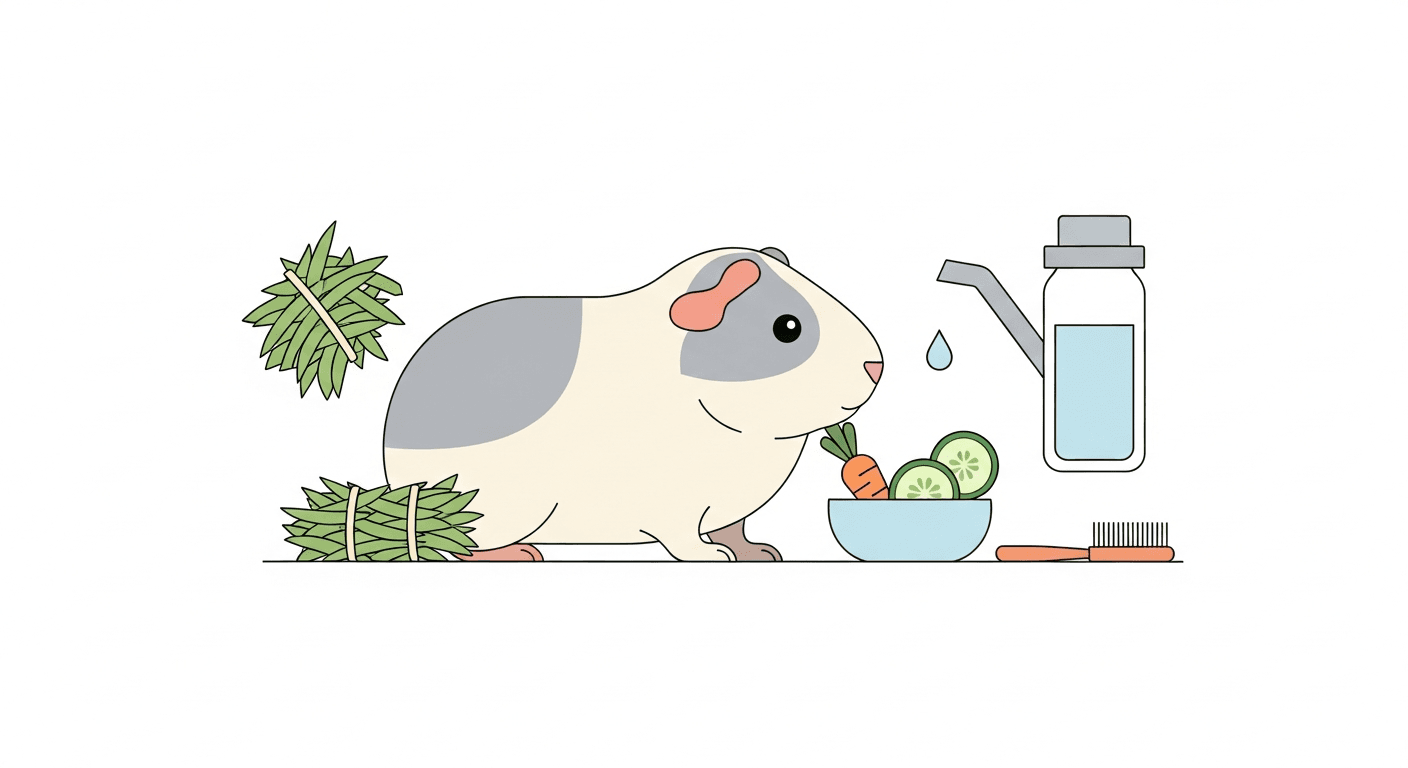
Daily Guinea Pig Care Routine: Essential Health Monitoring
A consistent daily care routine is the best protection against common guinea pig diseases. This checklist keeps you and your guinea pig on track every day.
 🐹 Guinea Pig Health
Lethargic Guinea Pig: When Tiredness Becomes a Medical Problem
Guinea pigs are naturally active and social. Sudden or progressive lethargy is always worth investigating. Learn the common causes and when to act.