
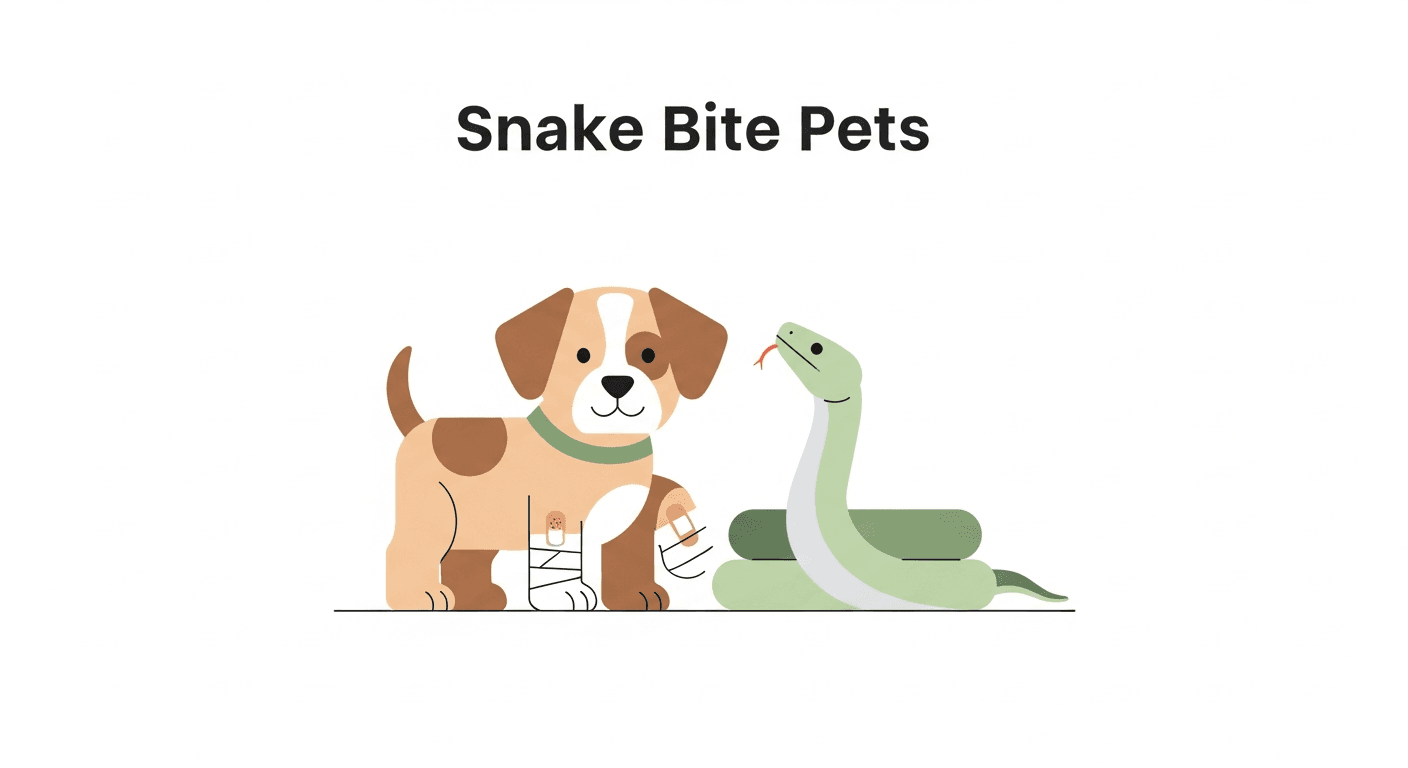
Is Every Snake Bite an Emergency?
The short answer: treat every snake bite as an emergency until proven otherwise. Most snakes are non-venomous, and a non-venomous bite may only cause localized swelling and mild pain. However, determining whether the snake was venomous is often impossible in the field — and the consequences of assuming it wasn't, when it was, can be fatal. Dogs are bitten more commonly than cats, often on the face or legs while investigating or trying to play with the snake.
In areas with venomous snakes, the most commonly encountered species include pit vipers (rattlesnakes, copperheads, cottonmouths in North America), cobras and vipers (in Africa, Asia, and Australia), and adders (in Europe). All are potentially life-threatening to pets.
Signs of a Snake Bite in Pets
- Immediate: Sudden yelp or cry, pawing at face or limb, two small puncture wounds (may be hidden by fur), localized swelling beginning within minutes
- Within 30–60 minutes (venomous): Rapid swelling that spreads, severe pain response, weakness, trembling, vomiting
- Systemic signs (venomous): Pale or white gums, collapse, difficulty breathing, blood in urine, neurological signs (wobbling, muscle paralysis), excessive drooling
- Coagulopathy (some viper venoms): Blood seeping from the bite site, unusual bruising, bleeding from gums or nose — indicates disruption of clotting
In cats, bites are often to the limbs. Cats may show signs more slowly due to their smaller surface area relative to venom dose, but can deteriorate very rapidly once symptoms begin.
Immediate First Aid Steps
- Move your pet away from the snake: Keep yourself safe first. Do not attempt to kill or capture the snake — a dead snake can still inject venom by reflex for up to an hour. Take a photo from a safe distance if possible — it helps with antivenom selection.
- Keep the pet calm and still: Activity increases blood flow and accelerates venom spread. Carry your dog if possible; do not let them walk.
- Keep the bite site below heart level if possible: Position the bitten limb lower than the heart during transport to slow venom absorption.
- Remove any constrictive items: Collars, harnesses, or bandages near a swelling limb can become dangerously tight as swelling progresses.
- Do NOT: Cut and suck the wound, apply a tourniquet, apply ice, use electric shock, or give any medication including aspirin or antihistamines without veterinary instruction.
- Get to a vet immediately: Call ahead so they can prepare antivenom if available in your region.
What the Vet Will Do
Treatment depends on venom type and symptoms. The vet may administer antivenom (most effective when given early), IV fluids to maintain blood pressure, pain management, antibiotics to prevent secondary infection, and in severe coagulopathy cases, plasma transfusions. Recovery can take days to weeks for severe envenomations. Keep monitoring for delayed swelling, tissue necrosis around the bite site, and kidney or liver complications in the days following.
Use TailRounds AI Triage while transporting your pet to assess symptom severity. Log daily observations in the TailRounds Daily Log during the recovery period so your vet can track progress.
Get Your Pet to a Vet Right Now
There is no effective home treatment for a venomous snake bite. The window for antivenom is narrow, and waiting for symptoms to appear before seeking help can be the difference between full recovery and death or permanent injury. Book an emergency vet appointment or find the nearest clinic immediately. Call ahead and say "suspected snake bite" so staff can prepare appropriately.
Continue Reading
 🚑 First Aid
Bee Sting in Pets: From Mild Reaction to Anaphylaxis
What to do when a dog or cat is stung by a bee or wasp — removing the stinger, treating local reactions, and recognizing dangerous allergic responses.
 🚑 First Aid
Pet Poisoning: Signs to Watch For and What to Do Immediately
Learn the warning signs of poisoning in dogs and cats, the most common toxins in the home, and the emergency steps to take right now.
 🚑 First Aid
Stopping Bleeding in Pets: A Practical First Aid Guide
How to control bleeding from cuts, wounds, and injuries in dogs and cats — correct pressure technique, tourniquets, and when to rush to the vet.
 🚑 First Aid
Building a Pet First Aid Kit: Everything You Need and Why
The complete checklist for a home and travel pet first aid kit — what to include, what to avoid, and how to use the kit in a real emergency.