
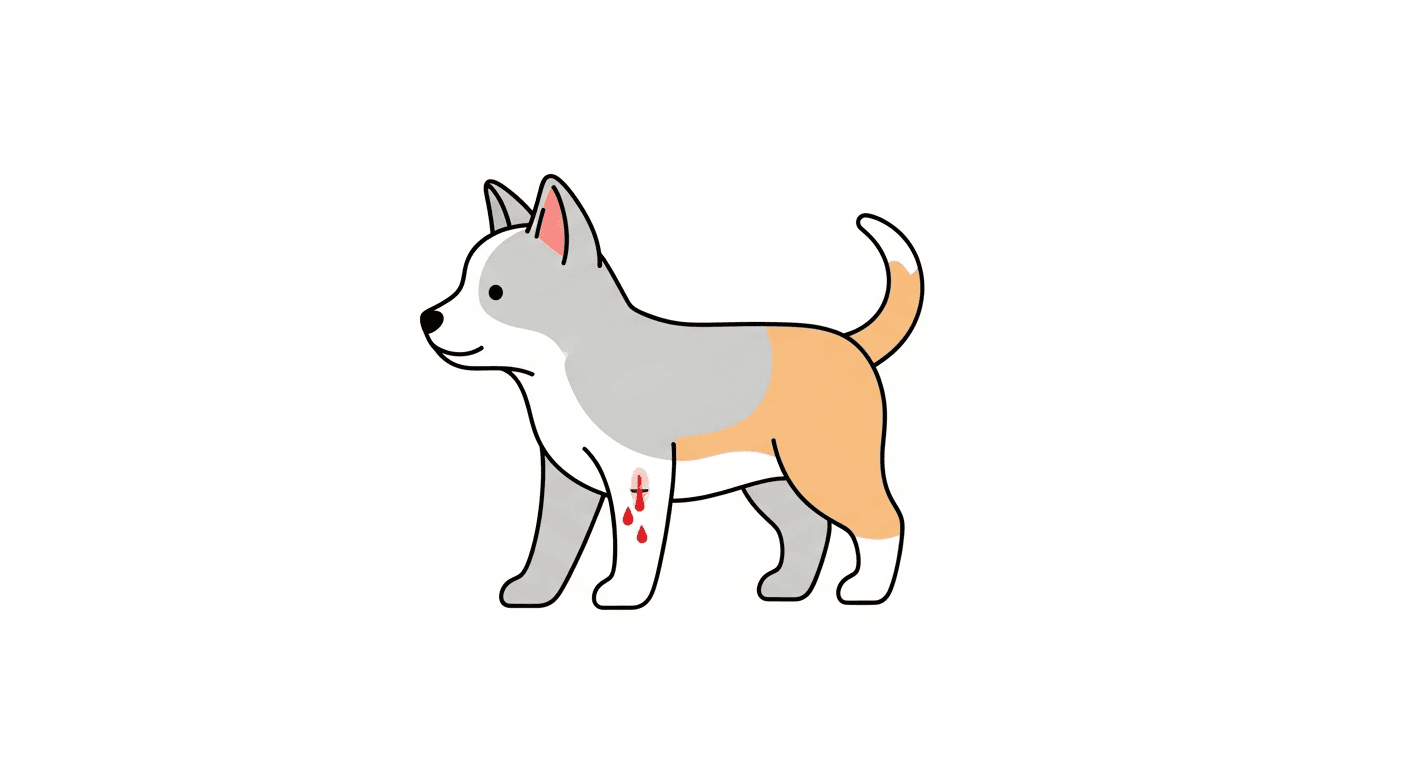
Assessing Bleeding Severity Before Acting
Not all bleeding is the same, and your first job is a quick 5-second assessment before you begin treatment. This tells you which approach is needed:
- Venous bleeding: Dark red blood oozing steadily. This is the most common type from cuts and abrasions. Manageable with direct pressure.
- Arterial bleeding: Bright red blood spurting or pulsing with the heartbeat. This is more serious and requires immediate, firm, sustained pressure. Arterial wounds often need surgical closure.
- Internal bleeding: No visible external wound but signs include pale or white gums, rapid weak pulse, distended abdomen, collapse. This is always a vet emergency — no home treatment possible.
- Capillary bleeding: Superficial oozing from the skin surface. Usually slows quickly with mild pressure and is the least concerning type.
How to Stop External Bleeding: Step by Step
- Stay calm and protect yourself: Injured pets in pain bite even their owners. If possible, muzzle or have someone hold the pet's head while you treat the wound.
- Apply direct pressure with a clean cloth: Use a sterile gauze pad if you have one, otherwise a clean cloth or clothing will do. Press firmly and hold continuously. Do not lift the cloth to check — this disturbs the clot forming underneath. Hold for at least 3–5 minutes before checking.
- If blood soaks through, add more material on top: Do not remove the soaked dressing — this tears the forming clot. Simply add more gauze or cloth on top and maintain pressure.
- Elevate the limb if possible: For wounds on the legs or paws, raising the limb above heart level reduces blood pressure at the wound site and slows bleeding.
- Apply a pressure bandage: Once initial bleeding slows, you can apply a snug (but not cutting-off circulation) bandage to maintain pressure during transport. Ensure you can slip two fingers under the bandage — if not, it's too tight.
- Tourniquets as a last resort only: Only for severe, life-threatening limb bleeding that cannot be controlled with pressure. Place 2–3 inches above the wound, tighten until bleeding stops, note the time it was applied, and get to a vet within 30–60 minutes — prolonged tourniquet use can cause permanent limb damage.
Wound Care After Bleeding Is Controlled
- Gently flush with clean water or saline to remove debris
- Do not probe the wound or remove embedded objects — leave these for the vet
- Apply a clean, non-stick dressing loosely over the wound
- Prevent licking — use an e-collar if available, or carefully bandage the area
- Any wound that is deep, jagged, gaping, or covering more than 1 inch likely needs veterinary suturing
Keep a pet first aid kit stocked with sterile gauze, rolled bandage, and saline solution at home. Log the wound and its progress daily in the TailRounds Daily Log, including photos to track healing.
See a Vet for Any Serious Wound
Home first aid buys you time — it is not a substitute for veterinary care for significant wounds. Wounds that won't stop bleeding, deep punctures, wounds near joints or eyes, and wounds with embedded objects all need professional treatment. Book a vet appointment today or find a clinic near you. Use TailRounds AI Triage to assess whether to go immediately or book a same-day appointment.
Continue Reading
 🚑 First Aid
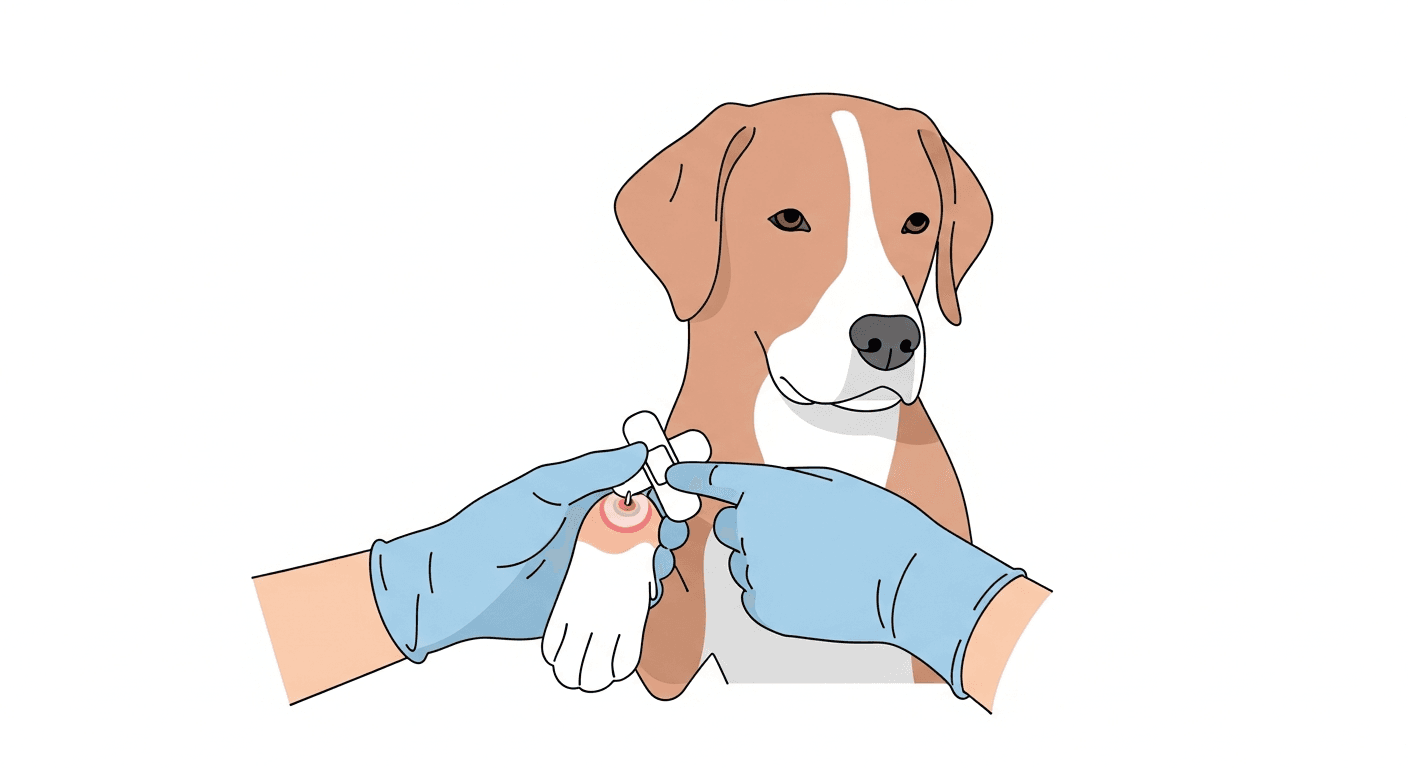
Dog Bite Wound: First Aid Steps for Your Pet
How to clean, assess, and treat a dog bite wound on another pet — first aid steps, signs of infection, and when stitches or antibiotics are needed.
 🚑 First Aid
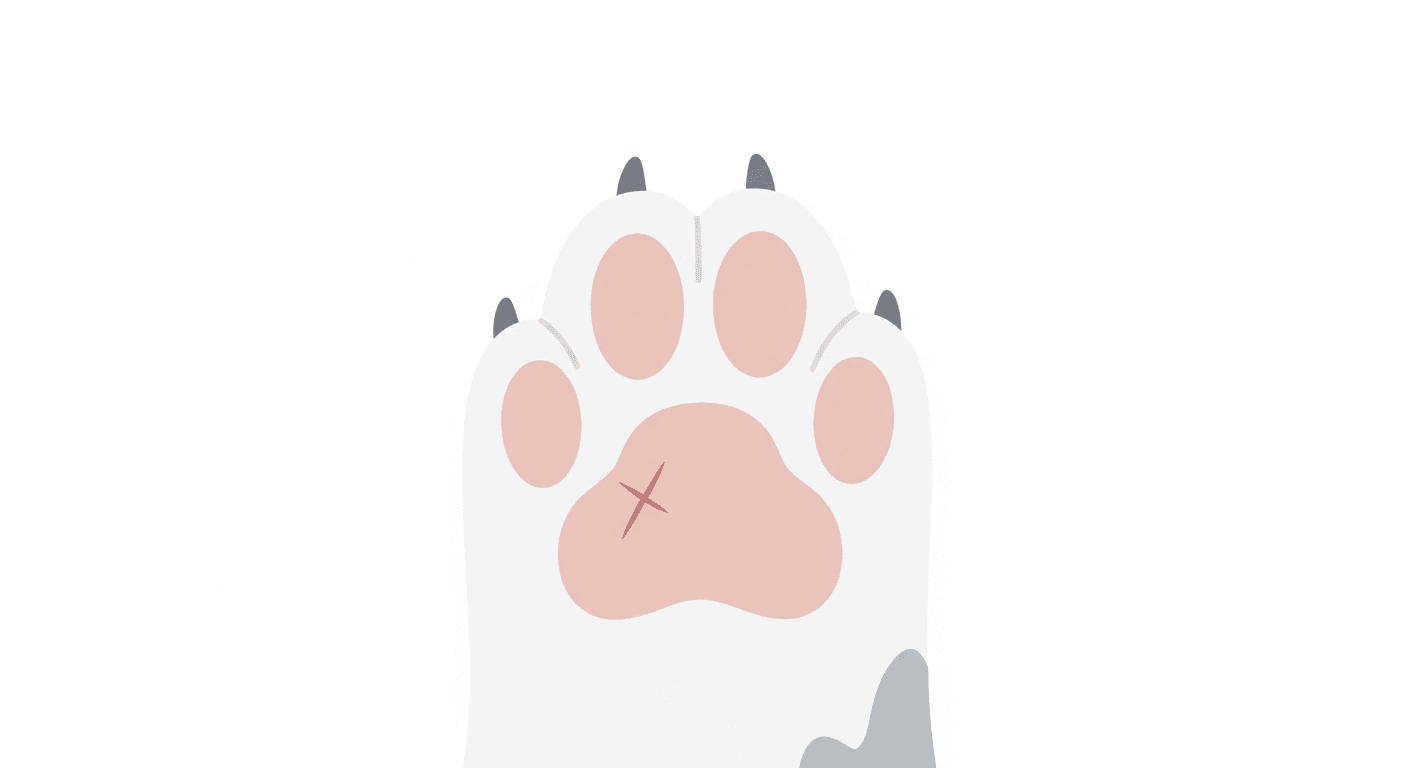
Paw Pad Cuts and Burns: First Aid for Your Pet's Feet
How to clean and treat paw pad cuts, burns, and abrasions in dogs and cats — safe bandaging, signs of infection, and when stitches are needed.
 🚑 First Aid
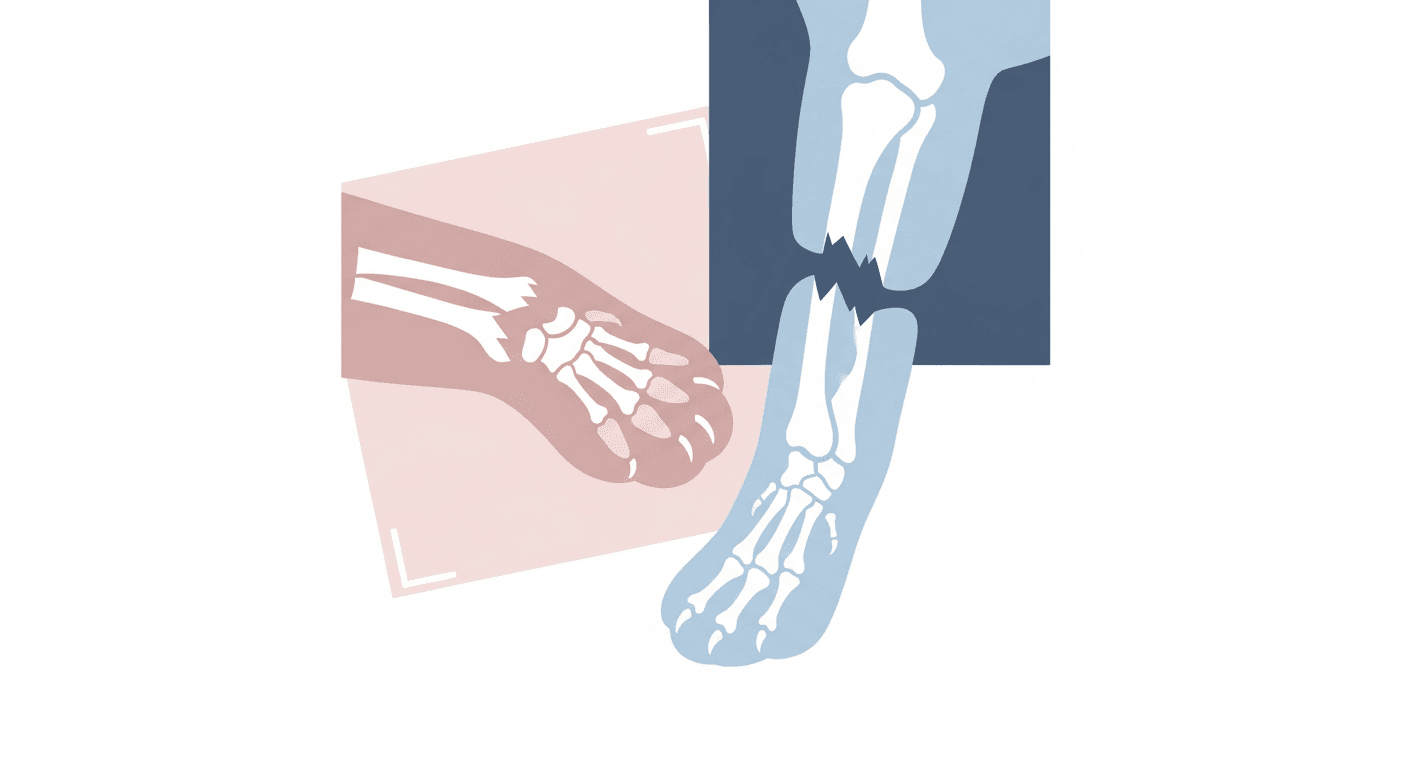
Suspected Broken Bone in a Pet: What to Do Before the Vet
How to identify a possible fracture in a dog or cat, safe handling to prevent further injury, and why improvised splinting often does more harm than good.
 🚑 First Aid
Building a Pet First Aid Kit: Everything You Need and Why
The complete checklist for a home and travel pet first aid kit — what to include, what to avoid, and how to use the kit in a real emergency.