
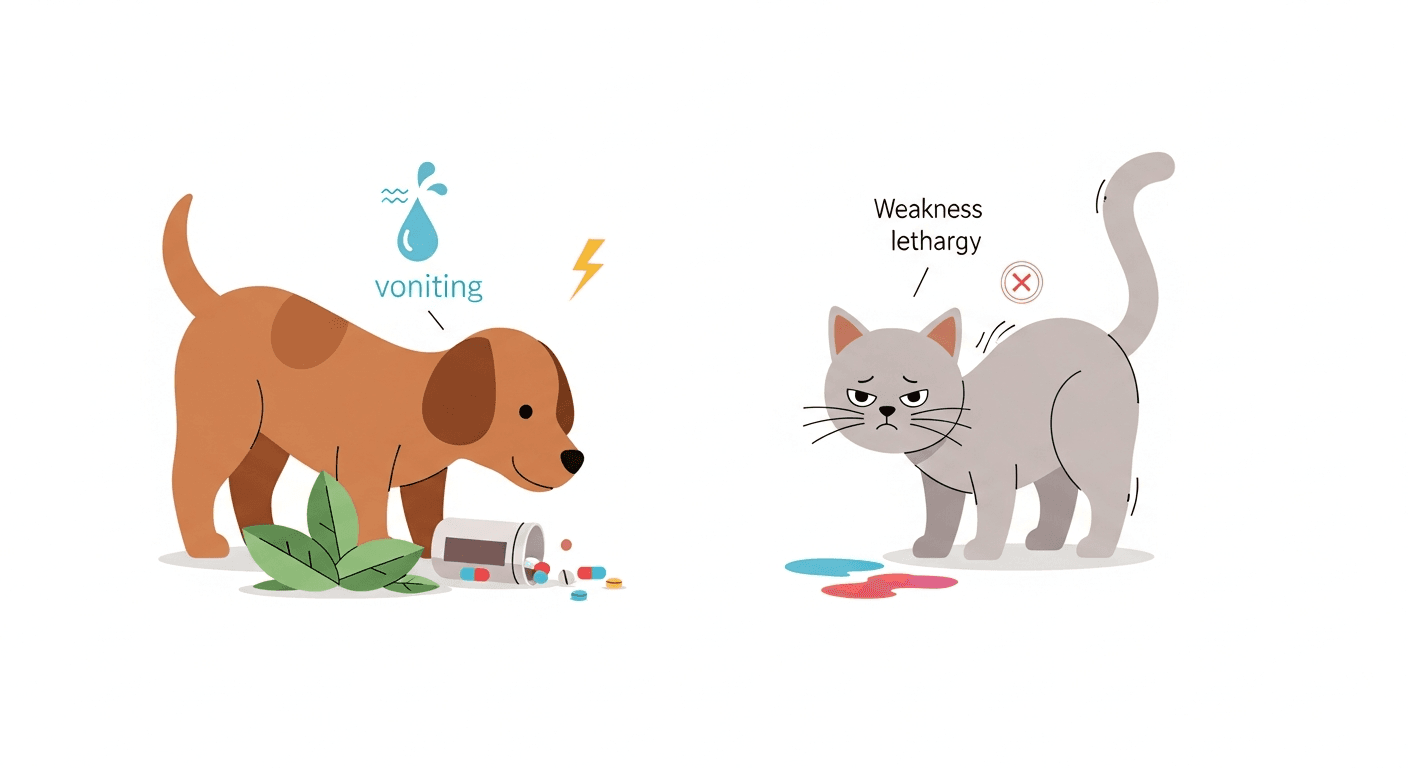
Recognizing Poisoning in Dogs and Cats
Poisoning is one of the most urgent pet emergencies — and one of the trickiest, because symptoms can be delayed by hours or even days depending on the toxin. By the time a pet looks sick, a dangerous amount of poison may already be in the bloodstream. If you have any reason to believe your pet may have consumed something toxic, treat it as an emergency, even if they seem fine at that moment.
Common signs of poisoning include:
- Gastrointestinal: Vomiting (sometimes with blood), diarrhea, drooling, retching
- Neurological: Tremors, muscle twitching, seizures, sudden loss of coordination, staggering
- Cardiovascular: Rapid or irregular heartbeat, collapse, pale or white gums
- Respiratory: Labored breathing, coughing, wheezing
- Behavioral: Sudden extreme agitation or lethargy, hiding, glassy eyes, dilated pupils
- Local signs: Burns or redness around the mouth if a caustic substance was ingested
The onset time varies by poison. Chocolate symptoms may appear in 6–12 hours. Xylitol (artificial sweetener) can drop blood sugar within 30 minutes. Rat poison (rodenticides) may take 3–5 days before bleeding signs appear. Grape/raisin toxicity in dogs can lead to kidney failure over 24–72 hours.
Most Common Household Poisons for Pets
You may be surprised how many everyday items are dangerous to pets:
- Foods: Chocolate, grapes and raisins, onions and garlic, xylitol (sugar-free gum, peanut butter, baked goods), macadamia nuts, alcohol, avocado (especially the skin/pit), raw yeast dough
- Plants: Lilies (extremely toxic to cats — all parts), sago palm, tulip bulbs, azalea, oleander, ivy, daffodil bulbs
- Medications: Ibuprofen, acetaminophen (Paracetamol — toxic to both dogs and cats), antidepressants, ADD medications, sleep aids, vitamins with xylitol or iron
- Household chemicals: Antifreeze (ethylene glycol — sweet taste attracts pets), rat poison, slug bait, weed killers, bleach and cleaning products, batteries
- Pest control: Organophosphate insecticides, permethrin (highly toxic to cats even in small amounts — check dog flea products carefully)
Emergency Steps: What to Do Right Now
- Remove your pet from the source of poison immediately — if it's a chemical on the skin or fur, prevent further licking by putting an Elizabethan collar on if you have one.
- Do NOT induce vomiting unless specifically instructed by a vet. Some toxins (corrosives, petroleum products) cause more damage coming back up. Many pet owners make this mistake and it can worsen the situation dramatically.
- Identify the substance: Grab the packaging, the plant, or whatever your pet got into. The exact product name, ingredients, and amount ingested are critical for poison control to advise you correctly.
- Call poison control or your vet immediately: In the US, the ASPCA Poison Control Center is available 24/7: (888) 426-4435 (a consultation fee may apply). The Pet Poison Helpline is another option: (800) 213-6680. In other countries, contact your national veterinary emergency line.
- Head to an emergency vet: Don't wait for symptoms to worsen. Time is critical with many toxins. Bring the packaging and any vomit samples if possible.
- If the poison is on the skin or fur: Wash the area thoroughly with mild soap and warm water. Wear gloves to protect yourself. Prevent the pet from licking the area.
What the Vet Will Do
Depending on the toxin and how recently it was ingested, the vet may induce vomiting (safely, using correct medications), administer activated charcoal to bind the poison in the gut, start IV fluids to support the kidneys and circulation, give specific antidotes (e.g. Vitamin K for rodenticide poisoning, ethanol for antifreeze), or provide supportive care including seizure control medications.
Use TailRounds AI Triage if you need help deciding urgency level — describe what your pet may have eaten and get guidance on next steps. And track any symptoms in the TailRounds Daily Log so you have an accurate timeline to share with your vet.
Book Emergency Vet Care Now
Poisoning cases should never be "wait and see." Most toxins are significantly more treatable in the first 1–2 hours after ingestion than after symptoms appear. Book a vet appointment immediately, or find a 24-hour emergency clinic near you. When in doubt, always err on the side of going in — vets would rather see a pet that turns out to be fine than miss a critical poisoning window.
Continue Reading
 🚑 First Aid
My Pet Swallowed Something: What to Do When a Pet Eats a Foreign Object
What happens when a pet swallows something it shouldn't — which objects are most dangerous, signs of obstruction, and why some need emergency surgery.
 🚑 First Aid
Heatstroke in Pets: How to Recognize It and What to Do
Heatstroke can kill a pet within minutes. Learn the warning signs, immediate cooling steps, and when veterinary care is non-negotiable.
 🚑 First Aid
Bee Sting in Pets: From Mild Reaction to Anaphylaxis
What to do when a dog or cat is stung by a bee or wasp — removing the stinger, treating local reactions, and recognizing dangerous allergic responses.
 🚑 First Aid
Pet Seizure First Aid: How to Help During and After a Seizure
What to do when your dog or cat has a seizure — how to keep them safe, what to time and observe, and when seizures become life-threatening.