
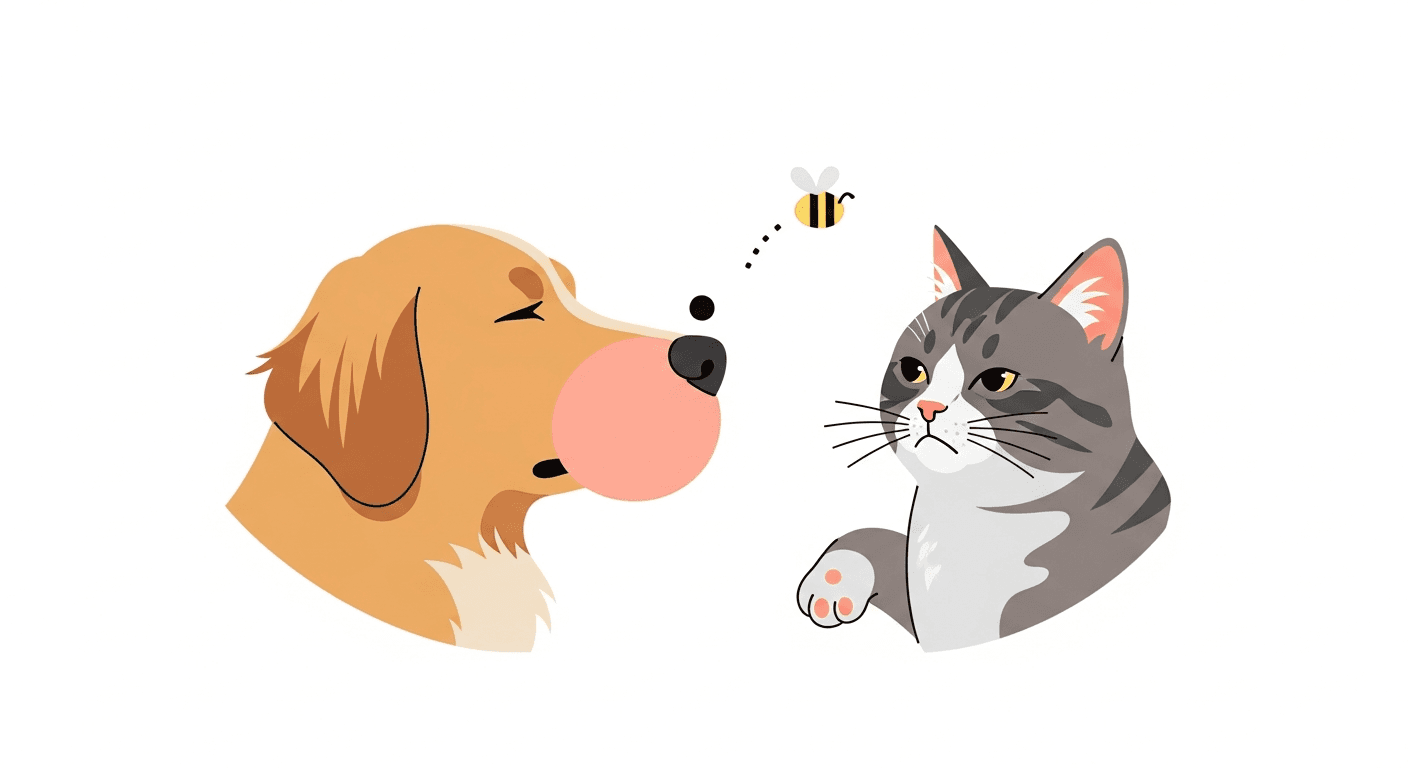
How Pets Get Stung — and What Happens Next
Dogs especially love investigating buzzing insects, often snapping at them — making the face, mouth, tongue, and paws the most common sting sites. Cats are more cautious but can still be stung. A single bee sting injects venom that causes immediate pain, localized swelling, and redness. For most pets, this is uncomfortable but not dangerous. The real concern is allergic reaction — which can range from hives and swelling to anaphylaxis, a life-threatening systemic response that can kill a pet within minutes.
Stings inside the mouth or throat are especially dangerous regardless of allergy status, because swelling in these areas can obstruct the airway even in non-allergic pets.
Step-by-Step First Aid for Bee Sting
- Remove the stinger if visible: Bee stingers (not wasp — wasps don't leave stingers) continue pumping venom after detachment. Scrape it sideways with a credit card or fingernail. Do not use tweezers to pinch the stinger — this squeezes the venom sac and injects more venom.
- Apply a cold compress: Wrap ice in a cloth and hold against the sting site for 10 minutes to reduce swelling and pain. Do not apply ice directly to skin or fur.
- Clean the area: Wash with mild soap and water to reduce infection risk.
- Monitor closely for the first 30 minutes: This is the window when allergic reactions are most likely to appear. Keep the pet calm and watch for the signs below.
- Antihistamine — only if instructed by a vet: Some vets advise diphenhydramine (Benadryl) at a specific weight-based dose for mild reactions. Do NOT give any medication without first calling your vet, as the correct dose varies by pet size and not all antihistamines are safe for pets.
Signs of Allergic Reaction — Watch For These
- Mild reaction: Swelling beyond the immediate sting site, hives (bumpy raised skin), itchiness, mild facial swelling
- Moderate reaction: Vomiting, diarrhea, excessive drooling, agitation, swelling around the eyes or muzzle
- Severe / anaphylaxis: Sudden collapse, extreme pale or white gums, rapid weak pulse, labored breathing, loss of consciousness. This is a life-threatening emergency — go to the vet immediately, do not wait.
Multiple Stings: Extra Danger
Multiple bee stings (from disturbing a hive) can overwhelm even a non-allergic pet with sheer venom volume. If your pet was attacked by a swarm or received more than 5–10 stings, this requires emergency vet evaluation regardless of whether they appear allergic. Systemic toxicity from venom accumulation can cause kidney damage, blood cell destruction, and cardiovascular collapse.
Log the sting time, number of visible stings, and any symptoms in the TailRounds Daily Log. Use TailRounds AI Triage to help determine urgency based on your pet's symptoms.
When to See a Vet
A single sting with only local swelling and no other symptoms can often be managed at home with a cold compress and close monitoring. However, see a vet immediately if: the sting is in or near the mouth or throat, any signs of allergic reaction develop, you notice multiple stings, or your pet was previously known to react to insect stings. Book a vet appointment or find a clinic near you for any reaction beyond local discomfort.
Continue Reading
 🚑 First Aid
Snake Bite in Dogs and Cats: Emergency Steps and What to Expect
What to do if your dog or cat is bitten by a snake — identifying venomous vs non-venomous bites, first aid steps, and why the vet visit can't wait.
 🚑 First Aid
Pet Poisoning: Signs to Watch For and What to Do Immediately
Learn the warning signs of poisoning in dogs and cats, the most common toxins in the home, and the emergency steps to take right now.
 🚑 First Aid
Stopping Bleeding in Pets: A Practical First Aid Guide
How to control bleeding from cuts, wounds, and injuries in dogs and cats — correct pressure technique, tourniquets, and when to rush to the vet.
 🚑 First Aid
Heatstroke in Pets: How to Recognize It and What to Do
Heatstroke can kill a pet within minutes. Learn the warning signs, immediate cooling steps, and when veterinary care is non-negotiable.