
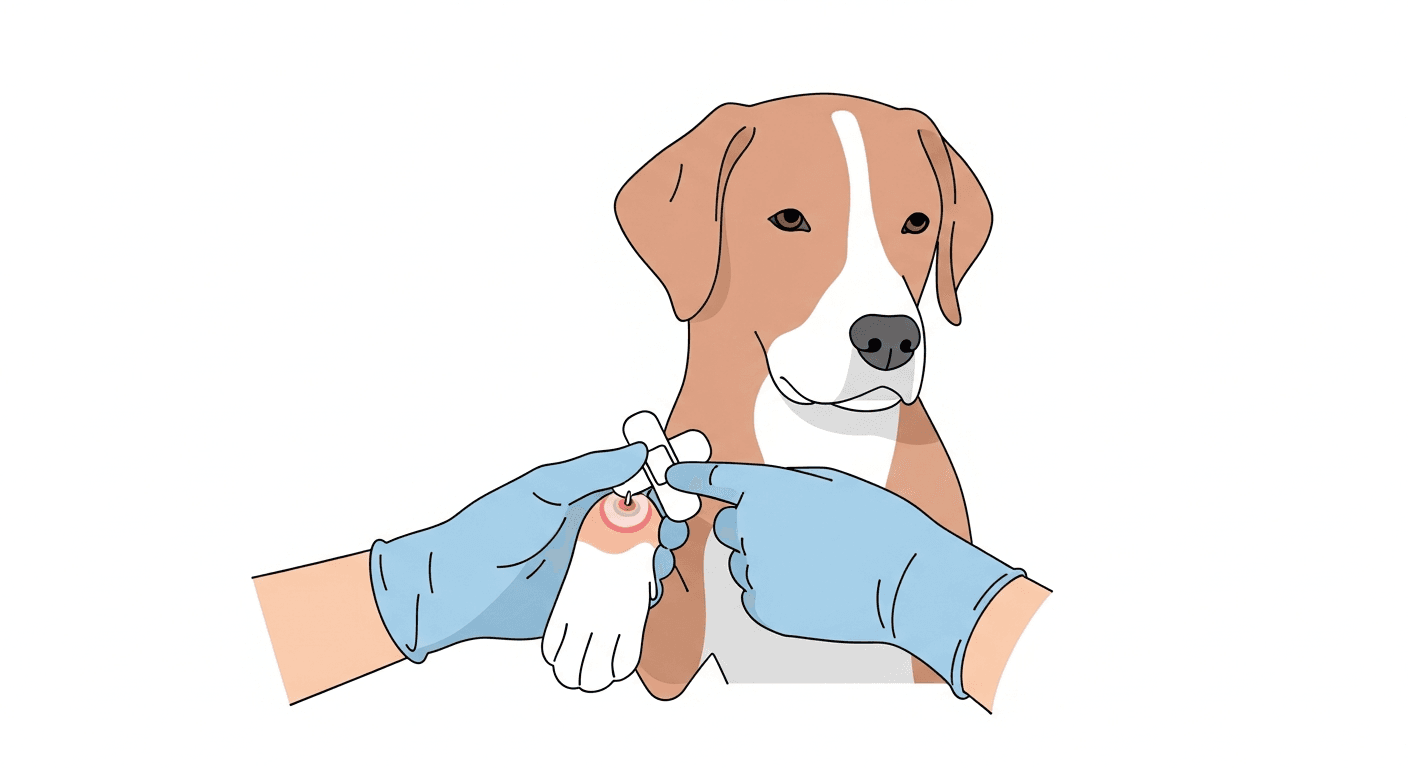
Why Dog Bites Are More Serious Than They Look
Dog bites — whether from another dog or a cat bite on your dog — are notorious for being deceptively dangerous. The skin puncture visible on the surface is often small, but the crushing force of a jaw drives bacteria deep into muscle tissue and can cause abscesses, deep infections, and even pneumothorax (punctured lung) from bites to the chest. Cat bites are especially prone to infection because their sharp, needle-like teeth inject bacteria deep into tissue that then closes over, creating an ideal anaerobic environment for bacteria like Pasteurella to thrive.
Never assume a bite wound is minor just because the hole looks small.
Immediate First Aid Steps
- Separate the animals: Do not reach between fighting dogs with bare hands. Use a barrier — a board, a chair, a bin lid — or startle them with loud noise or water. Wait until both animals are calm before handling.
- Check for serious bleeding first: Apply firm, direct pressure with a clean cloth to any actively bleeding wounds. If blood is pulsing or spurting, this indicates arterial damage — maintain pressure and get to a vet immediately.
- Clip fur around the wound: Use scissors to trim fur away from the bite site so you can see it clearly. This also reduces contamination during cleaning.
- Flush thoroughly with clean water: Irrigate the wound generously with clean, room-temperature water for at least 5 minutes. A syringe or a steady stream from a tap works well. This is the single most effective step in reducing infection risk.
- Apply a mild antiseptic: Chlorhexidine solution (diluted to pale blue — about 0.05%) or diluted povidone-iodine (pale yellow) are appropriate for wound irrigation. Do not use hydrogen peroxide — it damages healthy tissue and delays healing.
- Do not close the wound: Bite wounds need to drain. Covering with tape or bandaging tightly traps bacteria inside. A light, non-occlusive dressing to protect from contamination is fine, but the wound should not be sealed.
- Get a vet assessment within 24 hours at most: Almost all bite wounds require professional evaluation. The vet will probe the wound depth, check for underlying damage, prescribe antibiotics, and may place a drain or sutures.
Signs of Infection (Can Develop Within 24–72 Hours)
- Increasing redness, warmth, and swelling around the wound
- Pus or discharge from the wound site
- A lump or soft swelling (abscess forming) under the skin near the bite
- The pet becoming lethargic, losing appetite, or developing a fever
- Foul smell from the wound area
- The pet excessively licking or chewing at the site
If any of these signs appear, return to the vet immediately — abscesses may need surgical drainage and systemic antibiotics.
Special Concerns: Chest and Neck Bites
Bites to the neck and chest are especially dangerous because the chest wall can be penetrated even without visible external damage. Signs of internal chest injury include labored breathing, a sucking sound from the chest, blue gums, or the pet being unable to lie comfortably. This is always an emergency — go directly to a vet.
Track wound progress daily using the TailRounds Daily Log. Document the wound appearance with photos each day so you and your vet can spot worsening trends. Use TailRounds AI Triage to assess whether the wound looks like it needs urgent review.
See a Vet — Sooner Rather Than Later
Bite wounds that look small can hide large problems. The cost of a veterinary visit is always less than treating a full abscess or managing sepsis. Book a vet appointment today, or check the clinic finder for availability near you. Bring your pet in within 24 hours of any bite, even if the wound appears minor.
Continue Reading
 🚑 First Aid
Stopping Bleeding in Pets: A Practical First Aid Guide
How to control bleeding from cuts, wounds, and injuries in dogs and cats — correct pressure technique, tourniquets, and when to rush to the vet.
 🚑 First Aid
Snake Bite in Dogs and Cats: Emergency Steps and What to Expect
What to do if your dog or cat is bitten by a snake — identifying venomous vs non-venomous bites, first aid steps, and why the vet visit can't wait.
 🚑 First Aid
Bee Sting in Pets: From Mild Reaction to Anaphylaxis
What to do when a dog or cat is stung by a bee or wasp — removing the stinger, treating local reactions, and recognizing dangerous allergic responses.
 🚑 First Aid
Building a Pet First Aid Kit: Everything You Need and Why
The complete checklist for a home and travel pet first aid kit — what to include, what to avoid, and how to use the kit in a real emergency.