
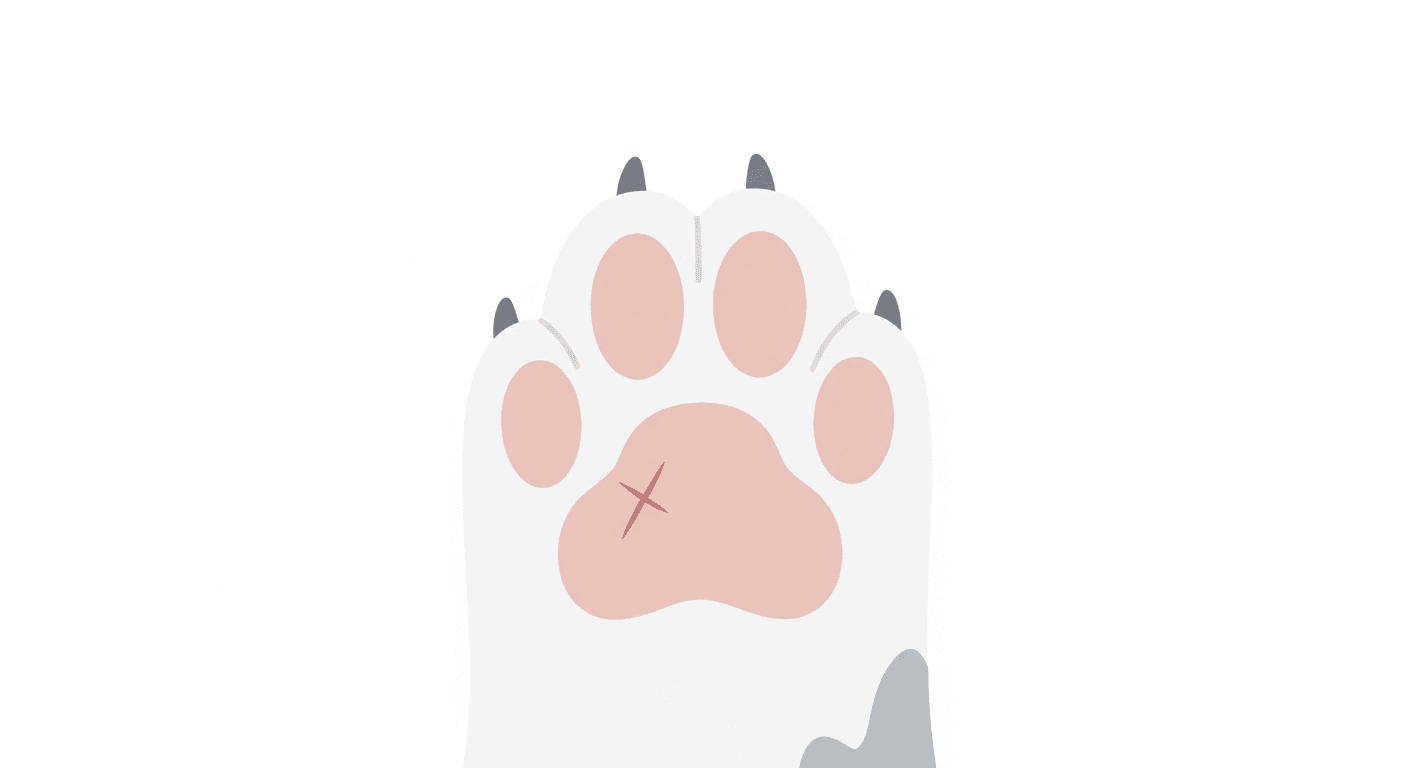
Why Paw Pad Injuries Are Tricky
Paw pads are tough, but they are not indestructible — and because your pet walks on them constantly, injuries to the pads are both painful and difficult to keep clean and protected. Common causes include stepping on glass, sharp stones, or debris; running on hot pavement in summer (asphalt can reach 140–160°F on a hot day); exposure to de-icing salts and chemicals in winter; rough terrain abrasion; and lacerations from fences or wires. Cats that go outdoors are especially prone to glass cuts.
Recognizing Paw Pad Injury
- Limping or holding the paw up off the ground
- Licking or chewing at the paw excessively
- Visible cut, flap of skin, or raw area on the pad
- Blood on the floor or paw
- For burns: the pad surface appears pale, discolored, or the outer layer is peeling; blistering may appear 24–48 hours after the burn
First Aid for Paw Pad Cuts
- Control bleeding: Apply firm, direct pressure with a clean cloth or gauze for 5–10 minutes without lifting. For persistent bleeding, apply a pressure bandage.
- Examine the wound: Once bleeding is controlled, gently inspect the pad under good light. Look for glass or debris embedded in the wound — shine a torch across the surface. Embedded glass is notoriously hard to see.
- Flush thoroughly: Use clean water or sterile saline to flush the wound. A syringe works well to direct the stream into any cuts. This removes bacteria and debris.
- Apply a light antiseptic: Dilute chlorhexidine solution is ideal. Avoid hydrogen peroxide and alcohol — both damage tissue and delay healing.
- Bandage the paw: Apply a non-stick gauze pad over the wound, then wrap with conforming bandage, then cover with a self-adhesive bandage. Ensure you can slip two fingers under the bandage at the leg. Too tight = cuts circulation.
- Prevent licking: Use an e-collar. Mouth bacteria are a major source of wound infection in paw injuries.
- Change the bandage every 24 hours or sooner if it becomes wet or soiled.
First Aid for Burned Paw Pads
- Cool the burn immediately: Hold the paw under cool (not cold) running water for 10–15 minutes. Do not use ice — this causes vasoconstriction and worsens tissue damage.
- Do not apply butter, toothpaste, or home remedies — these cause infection and worsen the burn.
- Apply a sterile non-stick dressing: Cover loosely with sterile gauze.
- Seek vet care: Burns on paw pads are painful, prone to infection, and often more serious than they appear at first. Blistering, or pads that are white, grey, or peeling, indicate significant depth of burn requiring veterinary treatment.
When to See the Vet
- The wound is deep, gaping, or won't stop bleeding after 10 minutes of pressure
- A flap of pad tissue is hanging off
- You suspect embedded debris you cannot remove
- The wound is on the weight-bearing surface of the pad and is more than 1 cm long
- Any signs of burn beyond minor redness — blistering, paleness, or peeling
- Signs of infection within 2–5 days: increasing redness, swelling, pus, bad smell, or the pet becoming lame again after initial improvement
Track wound healing daily with photos and notes in the TailRounds Daily Log. Use TailRounds AI Triage to assess whether your pet's paw needs immediate attention. Book a vet appointment or find care near you at the clinic finder.
Continue Reading
 🚑 First Aid
Stopping Bleeding in Pets: A Practical First Aid Guide
How to control bleeding from cuts, wounds, and injuries in dogs and cats — correct pressure technique, tourniquets, and when to rush to the vet.
 🚑 First Aid
Dog Bite Wound: First Aid Steps for Your Pet
How to clean, assess, and treat a dog bite wound on another pet — first aid steps, signs of infection, and when stitches or antibiotics are needed.
 🚑 First Aid
Building a Pet First Aid Kit: Everything You Need and Why
The complete checklist for a home and travel pet first aid kit — what to include, what to avoid, and how to use the kit in a real emergency.
 🚑 First Aid
Suspected Broken Bone in a Pet: What to Do Before the Vet
How to identify a possible fracture in a dog or cat, safe handling to prevent further injury, and why improvised splinting often does more harm than good.