
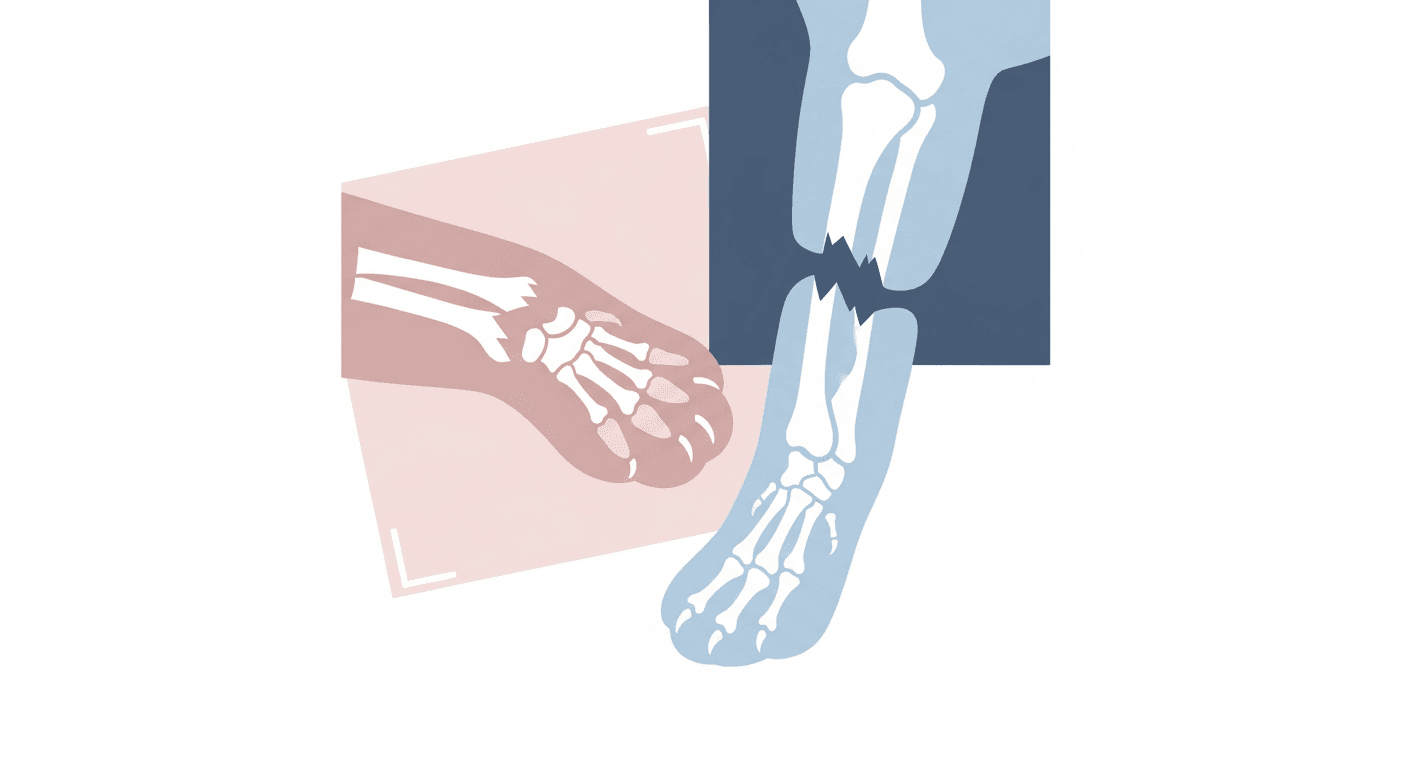
How to Tell If Your Pet May Have a Broken Bone
Fractures in pets most commonly result from vehicle accidents, falls from height, being stepped on, rough play, or in older animals, from minimal trauma due to weakened bones. Unlike humans who can tell you exactly where it hurts, pets communicate injury through behavior and physical signs you need to know how to read.
Signs of a possible fracture:
- Holding a limb up and refusing to put any weight on it
- Visible deformity — a limb at an unusual angle, or a limb that looks shorter or bent compared to the other side
- Crepitus — a grinding or crackling sound or sensation when the area is gently touched (do not press on it deliberately)
- Severe swelling, bruising, or a wound near the injury site (open/compound fracture)
- Extreme pain response — crying, flinching, biting — when the area is touched
- Complete non-weight-bearing on the limb even after the pet has had time to settle
Spinal fractures are especially dangerous — signs include inability to walk, dragging the hindlimbs, incontinence, or the pet crying when the back is touched.
Safe Handling: Preventing Secondary Injury
- Do not try to straighten the limb: Attempting to realign a fracture causes severe pain, can damage nerves and blood vessels, and can turn a closed fracture into an open one.
- Do not apply a splint: Improvised splints, unless done correctly by a vet or trained professional, cause more harm than good — they can create pressure sores, cut off circulation, and cause the animal to thrash and worsen the injury. Keeping the pet still and calm is better than splinting.
- Support the whole body, not just the limb: When lifting, support the chest and abdomen. For suspected spinal injuries, slide the pet onto a rigid board (like a cut-off cardboard box) to keep the spine straight during transport.
- Muzzle if needed: Pain makes even gentle pets unpredictable. Muzzle before handling unless the pet is having trouble breathing.
- Minimize movement during transport: Place the pet in a box or carrier lined with soft padding to limit shifting. A cat carrier with the top removed is ideal for a cat.
Open (Compound) Fractures
An open fracture means bone is protruding through the skin, or there is a wound communicating with the fracture site. This is a surgical emergency — bone exposed to the environment becomes contaminated within minutes, leading to osteomyelitis (bone infection). Cover the wound loosely with a sterile damp gauze pad to protect it during transport. Do not attempt to push the bone back in.
Pain Management While Waiting
Do not give your pet any human pain medications. Ibuprofen, naproxen, and aspirin are toxic to dogs and cats. Acetaminophen is deadly to cats. The only safe option is keeping the pet still, warm, and calm until you reach the vet. Stress and movement increase pain — minimize both.
Use TailRounds AI Triage to assess the urgency level of your situation. Log the incident details including mechanism of injury in the TailRounds Daily Log.
Get to a Vet — This Cannot Wait
Fractures require X-rays for diagnosis, professional pain management, and either surgical fixation or casting. The sooner pain is controlled and the injury stabilized, the better the outcome. Book an appointment now or find an emergency clinic near you. Call ahead so they know to prepare pain medication for your pet on arrival.
Continue Reading
 🚑 First Aid
Dog Hit by Car: What to Do in the First Minutes
Immediate first aid steps for a dog struck by a vehicle — how to move them safely, what injuries to expect, and how to get them to a vet fast.
 🚑 First Aid
Stopping Bleeding in Pets: A Practical First Aid Guide
How to control bleeding from cuts, wounds, and injuries in dogs and cats — correct pressure technique, tourniquets, and when to rush to the vet.
 🚑 First Aid
Paw Pad Cuts and Burns: First Aid for Your Pet's Feet
How to clean and treat paw pad cuts, burns, and abrasions in dogs and cats — safe bandaging, signs of infection, and when stitches are needed.
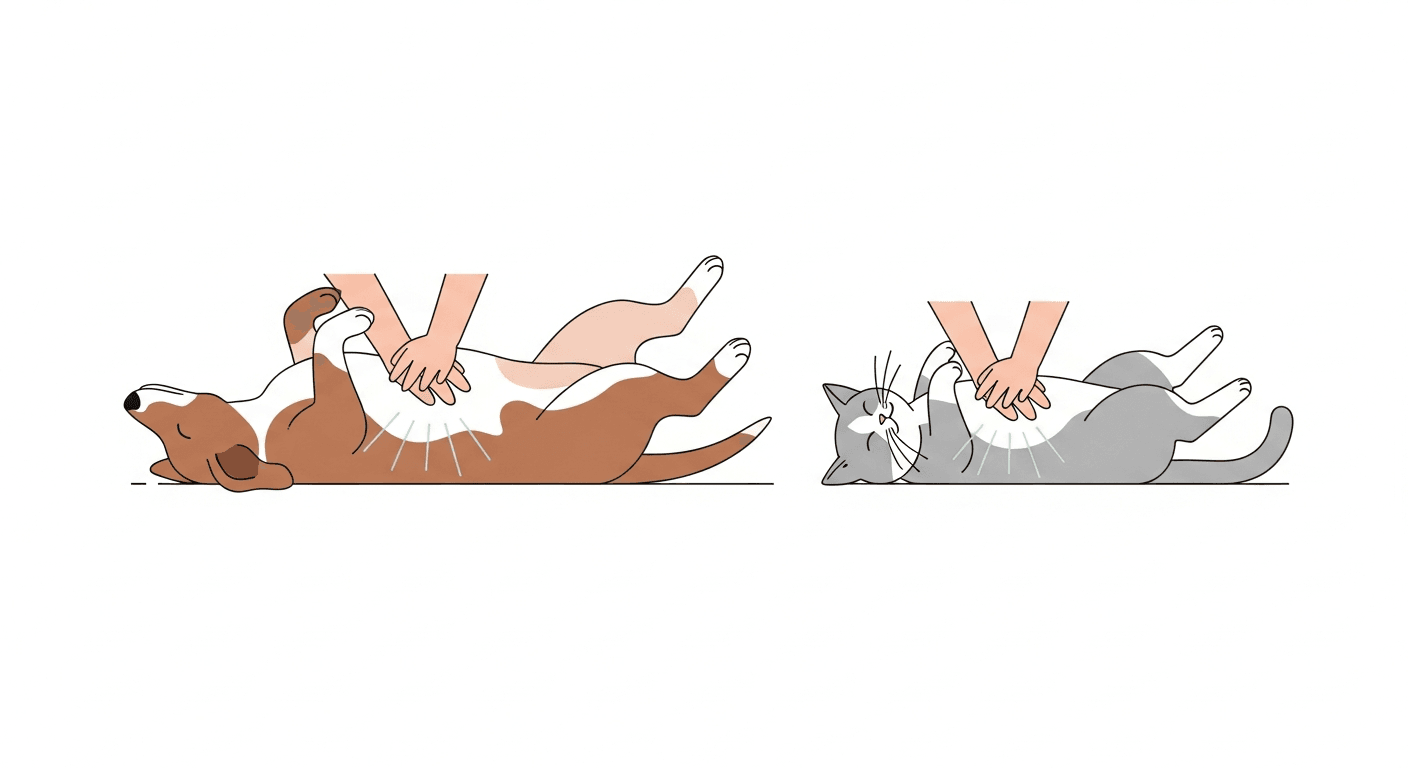 🚑 First Aid
How to Perform CPR on a Dog or Cat: A Step-by-Step Guide
Learn pet CPR — how to check for pulse, perform chest compressions, and give rescue breaths for dogs and cats of different sizes, based on current guidelines.