
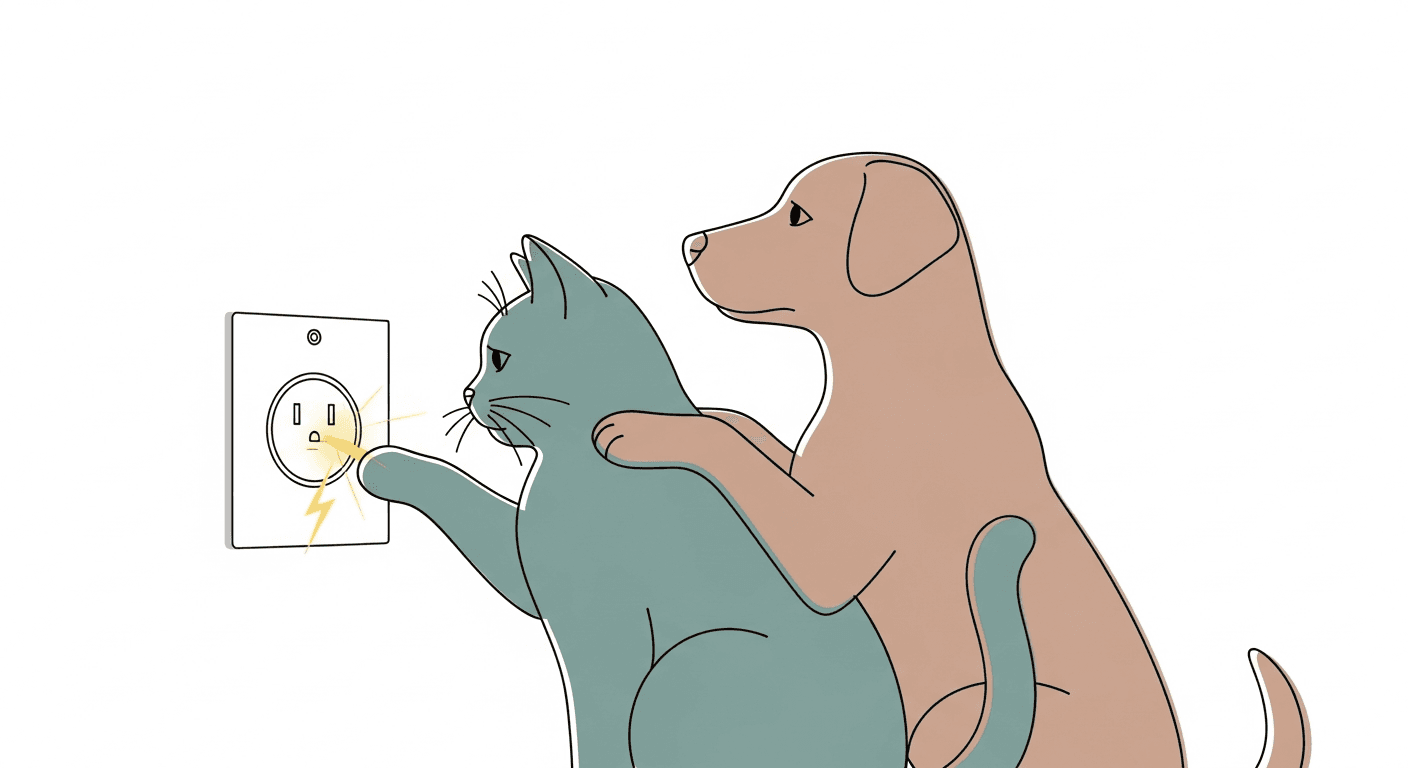
Electrocution in Pets: More Common Than You Think
Puppies and kittens are especially prone to chewing electrical cords — it's a textbook puppy behavior that can have devastating consequences. Adult cats occasionally chew cords too. The severity of electrical injury depends on the voltage and amperage of the current, the duration of contact, and the path the current takes through the body. Household current (110–240V) is sufficient to cause cardiac arrest, pulmonary edema (fluid in the lungs), oral burns, and neurological injury.
The oral burns from biting a live wire are usually obvious and visible. The cardiac and pulmonary effects may be delayed and are often more dangerous than the visible burns.
Step One: Do Not Touch the Pet Until the Power Is Off
This cannot be stressed enough: do not grab the pet while the current is still flowing. Electricity will pass through you. The pet becomes part of the circuit, and touching them while they are in contact with a live source means you receive the shock too.
- Cut the power at the circuit breaker or fuse box immediately — this is always safer than trying to unplug at the socket.
- If you cannot reach the breaker: Use a non-conductive object — a dry wooden stick, a rubber-handled tool, a folded dry towel — to push the pet away from the power source. Do not use anything metal or wet.
- Only then approach and assess the pet.
Assessing the Pet After the Power Is Off
- Is the pet conscious and breathing? If not, begin CPR immediately — see the CPR guide for dogs and cats.
- Check the mouth: Look for burn marks or charred tissue, especially at the commissures (corners) of the mouth and on the tongue. Mouth burns appear pale, yellow, or grey immediately and develop into painful necrotic lesions over 2–3 weeks.
- Check breathing: Even if the pet is breathing, listen and watch for labored breathing, coughing, or crackling sounds — signs of pulmonary edema developing.
- Check gum color: Pale or white gums indicate shock. Blue-tinged gums indicate insufficient oxygenation.
- Check cardiac rhythm if the pet is responsive: Place your hand on the left chest wall behind the elbow — can you feel a regular heartbeat? Irregular or absent heartbeat requires immediate CPR and emergency vet care.
Injuries to Expect and Monitor For
- Oral burns: Often look mild initially, worsen over 2–3 weeks as tissue dies. Can affect eating and drinking long-term.
- Cardiac arrhythmia: Electrical current through the chest can disrupt normal heart rhythm — can be immediate or delayed.
- Pulmonary edema (flash pulmonary edema): Fluid rapidly accumulates in the lungs after electrical shock — can appear within hours of apparent recovery. Signs: increasing respiratory effort, rapid breathing, coughing pink frothy fluid.
- Neurological effects: Temporary paralysis, disorientation, or seizures may occur.
- Cataracts: Can develop weeks to months after electrical injury to the head — the vet should note this for monitoring.
Get to a Vet Immediately
Electrocution is always a veterinary emergency — even if the pet seems to recover quickly. Delayed pulmonary edema can develop silently within 4–8 hours. The vet needs to take chest X-rays, assess cardiac rhythm, and monitor oxygen levels. Log all observations in the TailRounds Daily Log and use TailRounds AI Triage to help communicate urgency. Book an emergency appointment or go directly to the nearest 24-hour clinic.
Continue Reading
 🚑 First Aid
Stopping Bleeding in Pets: A Practical First Aid Guide
How to control bleeding from cuts, wounds, and injuries in dogs and cats — correct pressure technique, tourniquets, and when to rush to the vet.
 🚑 First Aid
Pet Seizure First Aid: How to Help During and After a Seizure
What to do when your dog or cat has a seizure — how to keep them safe, what to time and observe, and when seizures become life-threatening.
 🚑 First Aid
How to Perform CPR on a Dog or Cat: A Step-by-Step Guide
Learn pet CPR — how to check for pulse, perform chest compressions, and give rescue breaths for dogs and cats of different sizes, based on current guidelines.
 🚑 First Aid
Building a Pet First Aid Kit: Everything You Need and Why
The complete checklist for a home and travel pet first aid kit — what to include, what to avoid, and how to use the kit in a real emergency.