
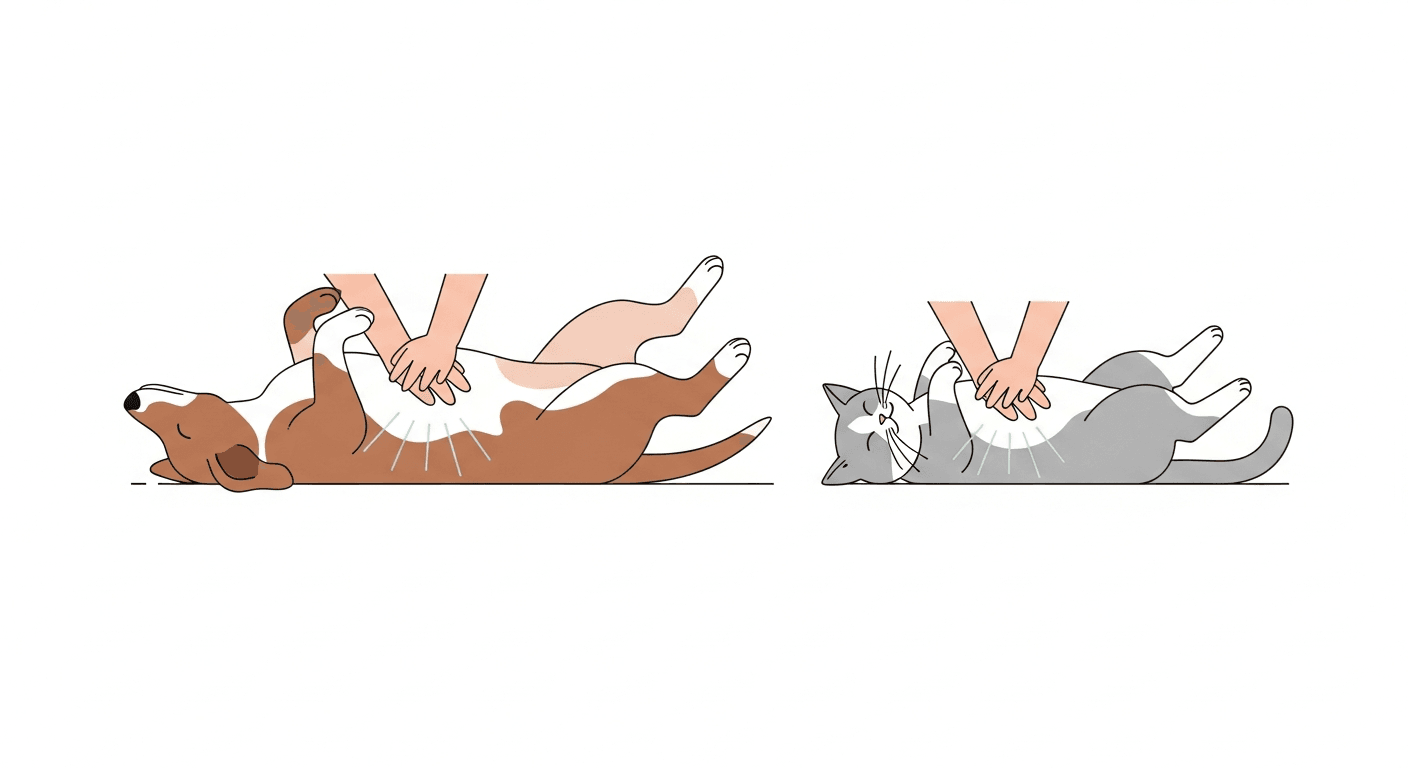
When Is Pet CPR Needed?
CPR (cardiopulmonary resuscitation) is needed when a pet is in cardiac or respiratory arrest — meaning the heart has stopped, breathing has ceased, or both. Common causes include severe trauma, drowning, electrocution, poisoning, choking, and severe allergic reaction. Performing CPR buys critical time until professional veterinary care is reached. It is not a substitute for emergency veterinary treatment — always have someone call a vet or head to an emergency clinic while you perform CPR.
Before beginning CPR, confirm the pet is truly unresponsive:
- Call the pet's name and tap gently — no response
- Check for breathing: watch for chest rise, feel for breath on your cheek held near the nose
- Check for pulse: place fingertips on the inner surface of the upper thigh (femoral artery) for dogs and cats. For small pets, you can feel the heartbeat directly on the left chest wall behind the elbow.
CPR Basics: The 30:2 Ratio
Current guidelines from the Reassessment Campaign on Veterinary Resuscitation (RECOVER) recommend:
- 30 chest compressions followed by 2 rescue breaths — repeat without interruption
- Rate: 100–120 compressions per minute (approximately 2 per second)
- Compression depth: one-third to one-half of the chest width
- Allow full chest recoil between compressions — do not lean on the chest
Chest Compressions: By Pet Size and Shape
Large dogs (over 30 lbs, round or keel-shaped chest):
- Place the pet on its right side on a firm, flat surface
- Place both hands (one on top of the other) over the widest part of the chest
- Compress firmly to one-third to one-half chest depth
- Keep elbows straight and use body weight, not just arm strength
Small dogs and cats (under 30 lbs):
- Place on right side on a firm surface
- Use one hand wrapped around the sternum (breastbone) for very small pets — thumb on one side, fingers on the other
- For slightly larger small dogs: two fingers or the heel of one hand on the chest
- Compress to one-half chest depth
Flat-chested breeds (Bulldogs, Pugs):
- Place on their back rather than their side
- Compress on the sternum (breastbone) directly
Rescue Breaths
- Tilt the head back slightly to open the airway. For cats and small dogs, close the mouth and create a seal around the entire muzzle with your mouth.
- For large dogs: close the mouth and seal your mouth around the nostrils, breathing into the nose.
- Give 2 slow breaths, just enough to see the chest rise — do not overinflate.
- If the chest does not rise: reposition the head, check for visible obstructions in the mouth, and ensure a good seal.
Continue Until...
- The pet shows signs of life (breathing spontaneously, pulse returns, responsive)
- Professional veterinary care takes over
- You are physically unable to continue after exhaustive effort (CPR is demanding — rotate with another person if available)
CPR during transport: if someone else is driving, you can continue CPR in the back seat. Call the clinic ahead to tell them you are incoming with a pet in cardiac/respiratory arrest. Use TailRounds AI Triage to communicate the situation. Have the clinic finder pulled up on your phone to navigate to the nearest emergency facility. Keep your pet first aid kit in your car so you always have gauze and gloves available.
Practice Before You Need It
CPR in a crisis is difficult without practice. Consider attending a pet first aid course offered by organizations like the Red Cross, local veterinary clinics, or online video platforms. Book a wellness visit and ask your vet to demonstrate CPR technique for your specific pet's size and breed — it's one of the most valuable 5 minutes they can give you.
Continue Reading
 🚑 First Aid
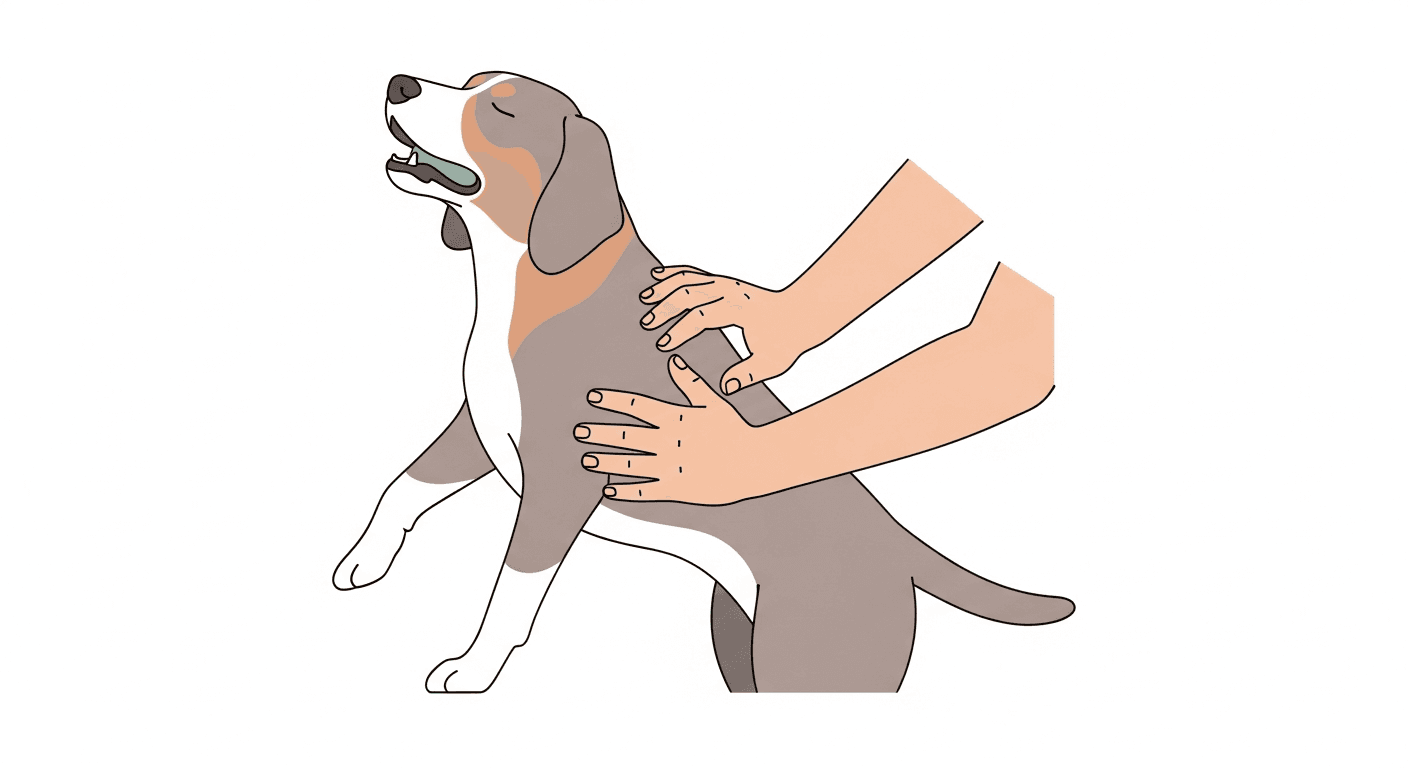
Dog Choking: How to Help a Dog With Airway Obstruction
Step-by-step guide to helping a choking dog, including the canine Heimlich maneuver, what to look for, and when to rush to the vet.
 🚑 First Aid
Near-Drowning in Pets: What to Do After Your Pet Is Pulled from Water
Immediate steps after a dog or cat is rescued from water — clearing the airway, warming, and why "secondary drowning" requires a same-day vet visit.
 🚑 First Aid
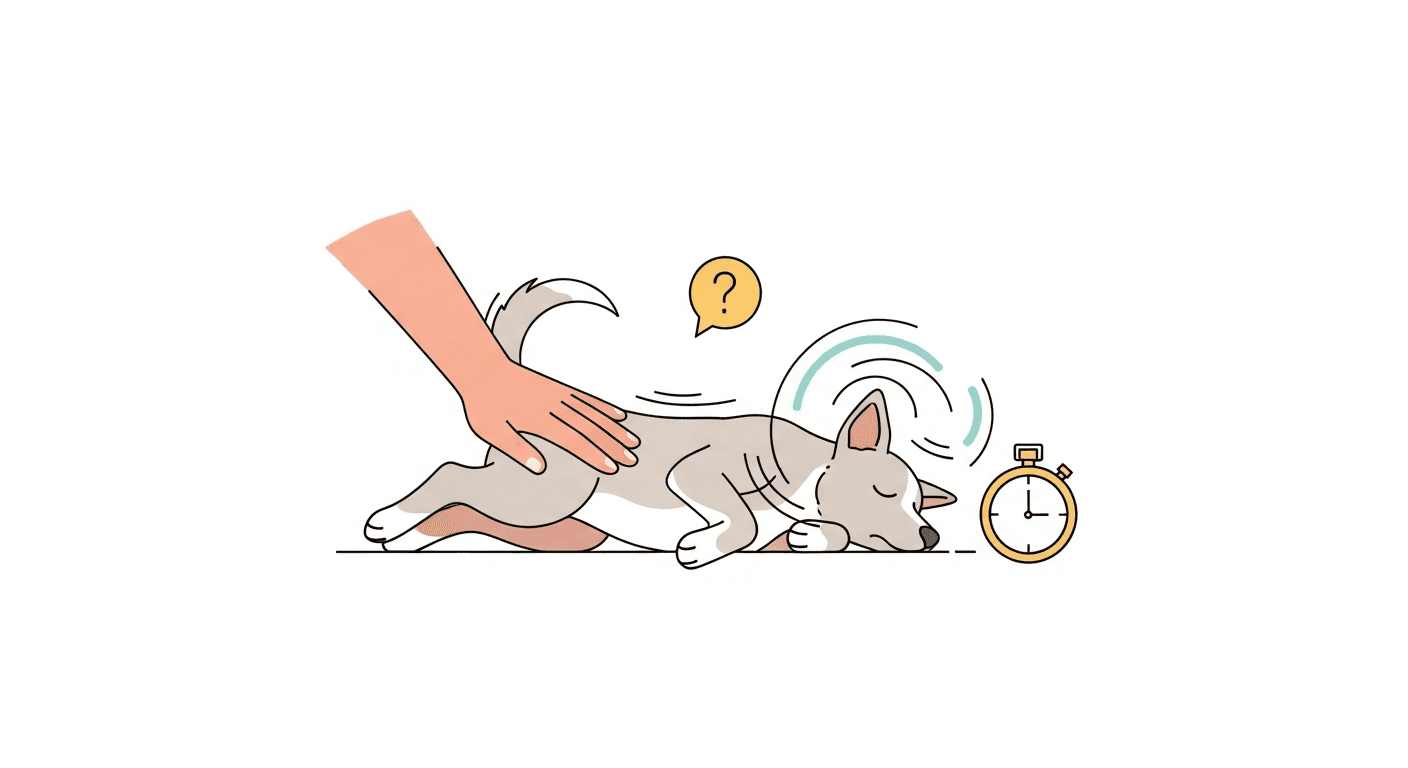
Pet Seizure First Aid: How to Help During and After a Seizure
What to do when your dog or cat has a seizure — how to keep them safe, what to time and observe, and when seizures become life-threatening.
 🚑 First Aid
Building a Pet First Aid Kit: Everything You Need and Why
The complete checklist for a home and travel pet first aid kit — what to include, what to avoid, and how to use the kit in a real emergency.