
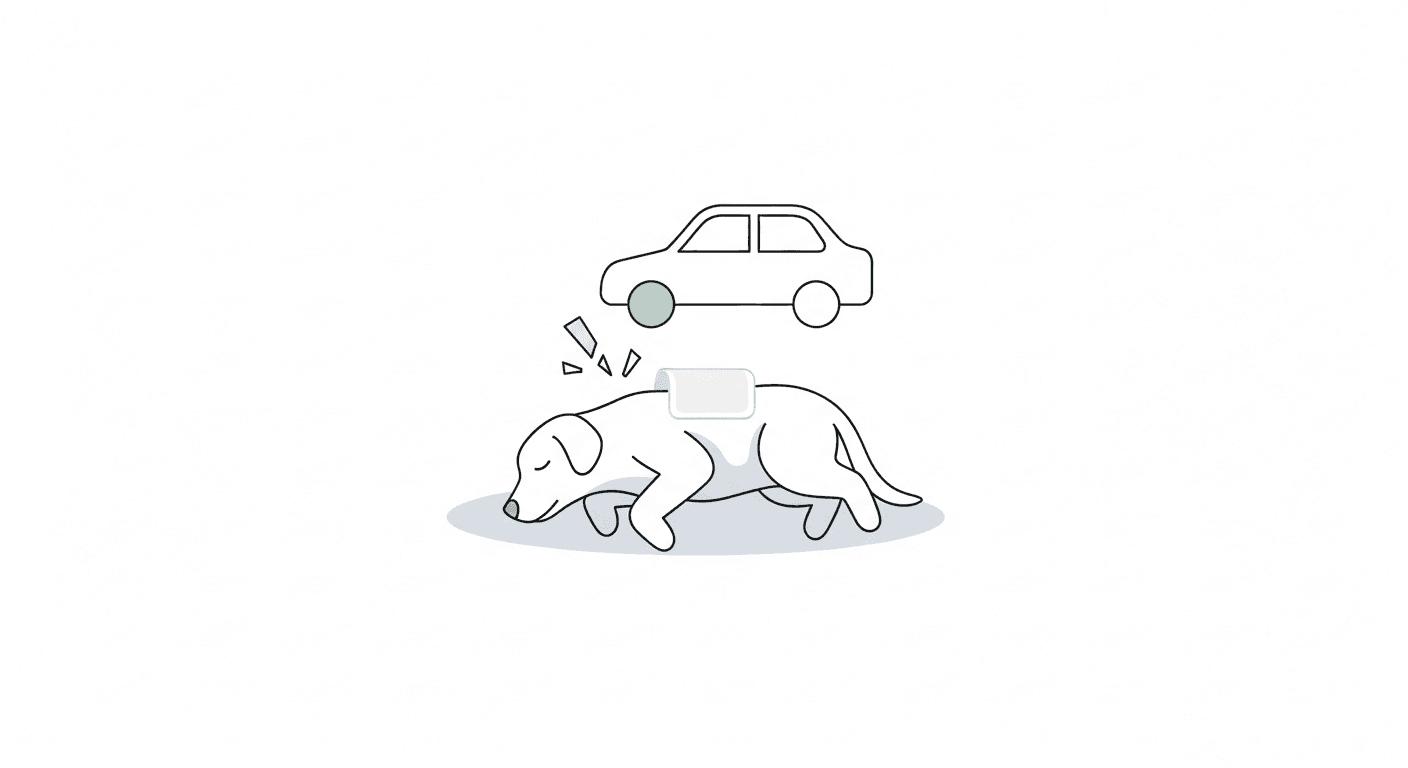
The First 60 Seconds: Stay Safe, Then Help Your Dog
A dog hit by a car is one of the most traumatic experiences a pet owner can face. In the chaos of the moment, knowing what to do — and what NOT to do — can literally save your dog's life. Vehicle trauma can cause injuries that aren't immediately visible: internal bleeding, lung contusion, spinal damage, ruptured bladder, or broken bones. Your dog may look okay and still be in critical danger.
Before approaching your dog:
- Make sure the road is safe — flag down traffic, turn on hazard lights, move vehicles if possible
- Call for help — have someone call the vet while you attend to the dog
- Approach calmly and slowly — an injured dog in pain and shock may bite even its own owner out of fear and pain
How to Safely Approach and Move an Injured Dog
- Muzzle the dog if possible: Even the gentlest dog may bite when in pain. If you have a soft muzzle or can improvise one (a strip of fabric tied gently around the snout), use it. If the dog is having trouble breathing, skip the muzzle.
- Do not bend or twist the spine: Spinal injuries are common in vehicle accidents. Slide the dog onto a flat, rigid surface — a wooden board, a car bonnet/hood laid flat, or a firm piece of cardboard. Keep the head, neck, and spine aligned as you move them.
- Minimize handling: Move the dog only as much as necessary to get off the road and into a vehicle. Every additional movement risks worsening internal injuries.
- Keep the dog warm: Shock causes rapid heat loss. Cover with a blanket or jacket. This is not the time to worry about blood staining — warmth is essential.
- Transport in the position they fell: If your dog is on their side, keep them on their side during transport. Do not try to make them stand or sit up.
Injuries to Expect and Monitor For
Vehicle trauma typically causes a combination of injuries. Do not assume that walking means no serious injury — adrenaline masks pain, and many internal injuries are painless initially.
- Lacerations and road rash: Visible but usually not the most dangerous injuries. Apply gentle pressure with a clean cloth to any bleeding wounds. See our guide to stopping bleeding in pets.
- Broken bones: Signs include abnormal limb position, inability to bear weight, and obvious deformity. Do not attempt to splint at the scene — this usually causes more harm. Minimize movement.
- Pneumothorax (collapsed lung): Signs include labored breathing, open mouth breathing, blue gums. Keep the dog calm and upright (sternal position preferred).
- Internal bleeding: Signs include pale gums, rapid weak pulse, cold extremities, progressive weakness. This is a stealth killer — get to the vet immediately regardless of how the dog looks on the surface.
- Head trauma: Watch for dilated or unequal pupils, loss of consciousness, seizures, or unusual behavior.
- Urinary tract injury: Inability to urinate or blood in urine after trauma warrants urgent evaluation.
At the Vet: What to Tell Them
Provide the vet with as much detail as possible:
- Approximate speed of the vehicle
- Which part of the body was struck first
- Whether the dog lost consciousness at any point
- Whether you saw the dog urinate or defecate involuntarily (suggests spinal injury)
- Current gum color (pink = better, white or grey = shock)
- Any first aid already administered
Log all observations in the TailRounds Daily Log so you have a clear timeline for the vet. Use TailRounds AI Triage while you're en route to get a preliminary urgency assessment.
Get Your Dog to a Vet Immediately
There is no home treatment for vehicle trauma. This is always an emergency vet situation. Call ahead while driving so the clinic can prepare for your arrival. Book at Happy Paws or use the clinic finder to locate the nearest emergency practice — explain it's a vehicle trauma case when you call so they can triage appropriately.
Continue Reading
 🚑 First Aid
Stopping Bleeding in Pets: A Practical First Aid Guide
How to control bleeding from cuts, wounds, and injuries in dogs and cats — correct pressure technique, tourniquets, and when to rush to the vet.
 🚑 First Aid
Suspected Broken Bone in a Pet: What to Do Before the Vet
How to identify a possible fracture in a dog or cat, safe handling to prevent further injury, and why improvised splinting often does more harm than good.
 🚑 First Aid
Pet Seizure First Aid: How to Help During and After a Seizure
What to do when your dog or cat has a seizure — how to keep them safe, what to time and observe, and when seizures become life-threatening.
 🚑 First Aid
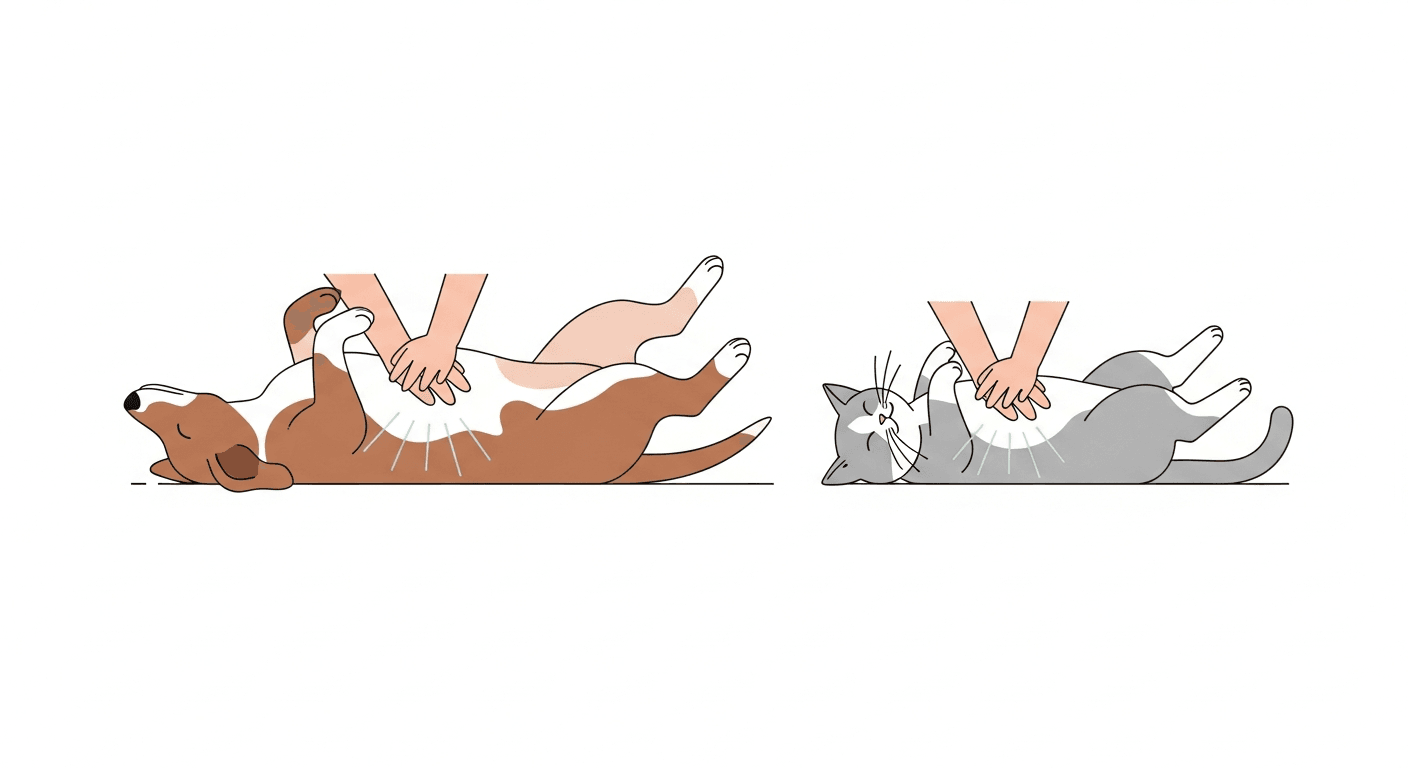
How to Perform CPR on a Dog or Cat: A Step-by-Step Guide
Learn pet CPR — how to check for pulse, perform chest compressions, and give rescue breaths for dogs and cats of different sizes, based on current guidelines.