
Recognizing a Choking Dog
A choking dog is a terrifying sight — and fast action can mean the difference between life and death. Dogs choke on bones, toys, sticks, chunks of food, and even household objects they shouldn't have been chewing in the first place. Unlike humans, dogs can't tell you what's wrong, so you need to recognize the signs and act within seconds.
Classic signs of choking include:
- Pawing frantically at the mouth or face
- Gagging, retching, or making wheezing sounds without producing anything
- Blue or purple tinge to the gums or tongue (cyanosis) — a late and serious sign
- Panicked, wide-eyed expression with labored or absent breathing
- Collapse or loss of consciousness if the blockage is complete
Note: coughing vigorously is often not choking — it may be kennel cough or reverse sneezing. A truly choking dog usually cannot make sound or makes very little sound while struggling to breathe.
Step-by-Step: What to Do Right Now
- Stay calm and restrain gently: A panicked dog may bite even the most beloved owner. Speak calmly and hold the dog still without hurting it. Have someone help you if possible.
- Open the mouth and look inside: Carefully pull the upper lip over the teeth to open the mouth, then use a flashlight if available. If you can clearly see the object and it's near the front of the mouth, use two fingers to sweep it out. Never blindly finger-sweep deeper into the throat — you risk pushing the object further down.
- Try gravity for small dogs: For dogs under 30 lbs, hold the dog upside down by the thighs (like a wheelbarrow) and give 3–5 firm back blows between the shoulder blades. Gravity may dislodge the object.
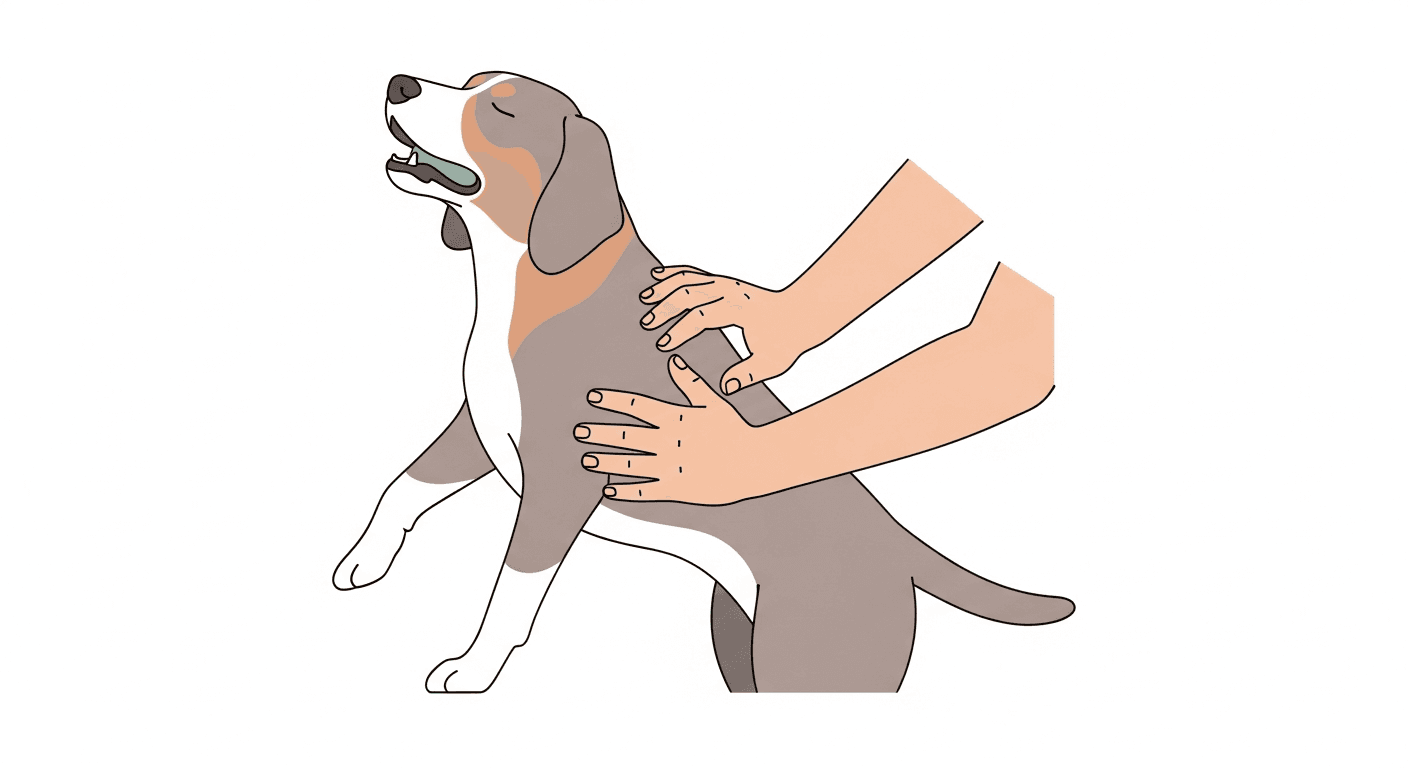
- Apply the canine Heimlich maneuver for larger dogs: Stand or kneel behind your dog. For a dog standing up, make a fist with one hand and place it just below the ribcage. Use your other hand to push inward and upward in a sharp, thrusting motion 3–5 times. For a dog lying on its side, place both hands just behind the last rib and push down and forward in sharp thrusts.
- Check the mouth again after each attempt: After each set of thrusts, look in the mouth again to see if the object has moved within reach. Remove it if visible and accessible.
- Begin CPR if the dog loses consciousness: If your dog collapses and stops breathing, begin rescue breaths and chest compressions. See our full CPR guide for dogs and cats.
After the Object Is Removed
Even if you successfully remove the object and your dog seems fine, a vet visit is strongly recommended. Internal bruising, throat lacerations, or aspiration of material into the lungs can cause serious complications hours later. Your vet will check the airway and throat for damage and may prescribe anti-inflammatories or antibiotics.
Use the TailRounds AI Triage tool if you're unsure about urgency — it can help you assess whether to go immediately or call ahead first.
Prevention: Reducing Choking Risk at Home
- Always supervise chewing — rawhide, bones, and chews are common culprits
- Choose toys appropriate for your dog's size — a retriever toy is a choking hazard for a Chihuahua
- Avoid small balls, toy parts, buttons, and children's toys in reach of dogs
- Feed large-breed dogs from slow-feeder bowls to prevent gulping
- Keep trash cans sealed — corn cobs, fruit pits, and packaging are frequent offenders
- Keep a pet first aid kit ready, including a small flashlight and blunt-tipped tweezers
Book a Post-Choking Check-Up
Your dog may look totally fine moments after a choking episode, but a veterinary check the same day is the safest move. Throat swelling can worsen over a few hours after trauma, and if any material was aspirated into the lungs, early intervention prevents pneumonia. Book a vet appointment or find a clinic near you to get your dog checked out quickly. Don't wait to see if symptoms develop — act proactively.
Continue Reading
 🚑 First Aid
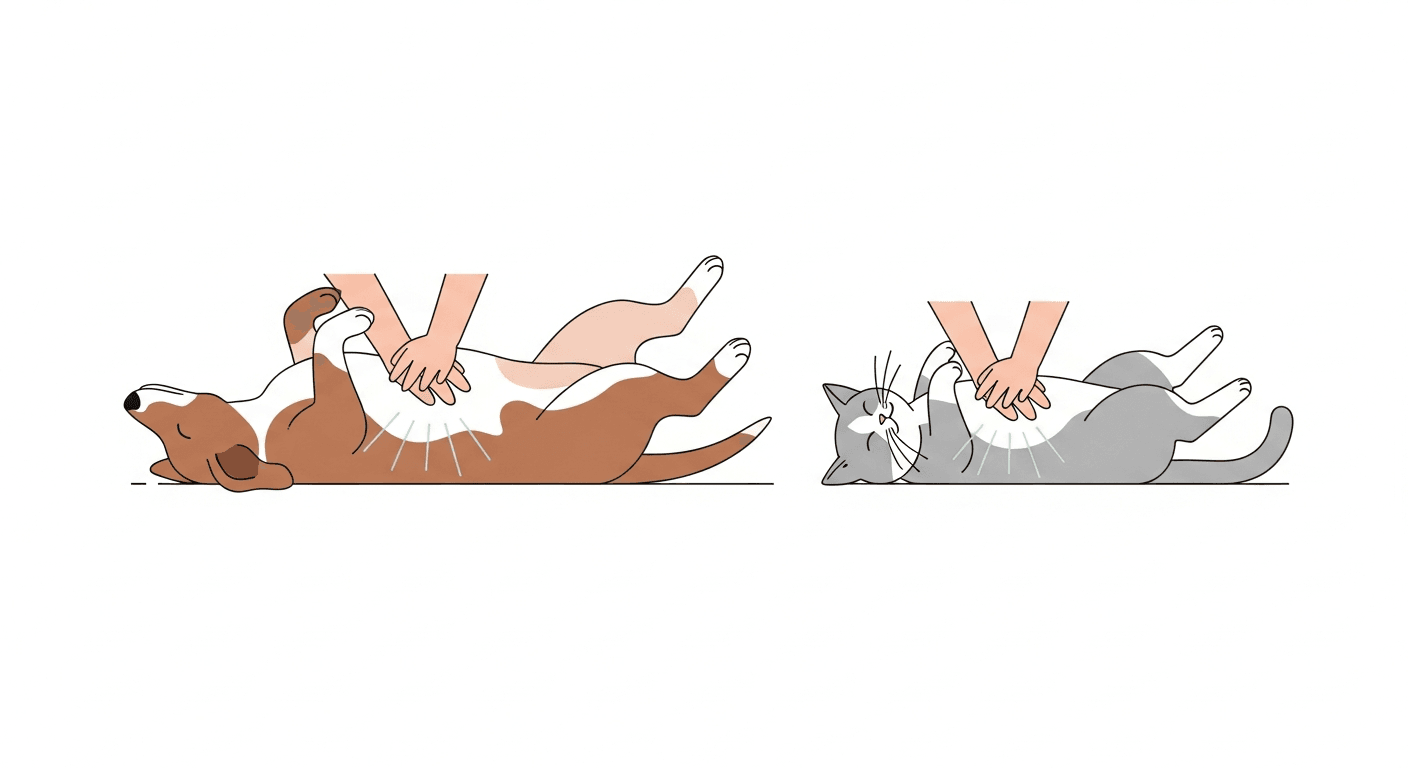
How to Perform CPR on a Dog or Cat: A Step-by-Step Guide
Learn pet CPR — how to check for pulse, perform chest compressions, and give rescue breaths for dogs and cats of different sizes, based on current guidelines.
 🚑 First Aid
Building a Pet First Aid Kit: Everything You Need and Why
The complete checklist for a home and travel pet first aid kit — what to include, what to avoid, and how to use the kit in a real emergency.
 🚑 First Aid
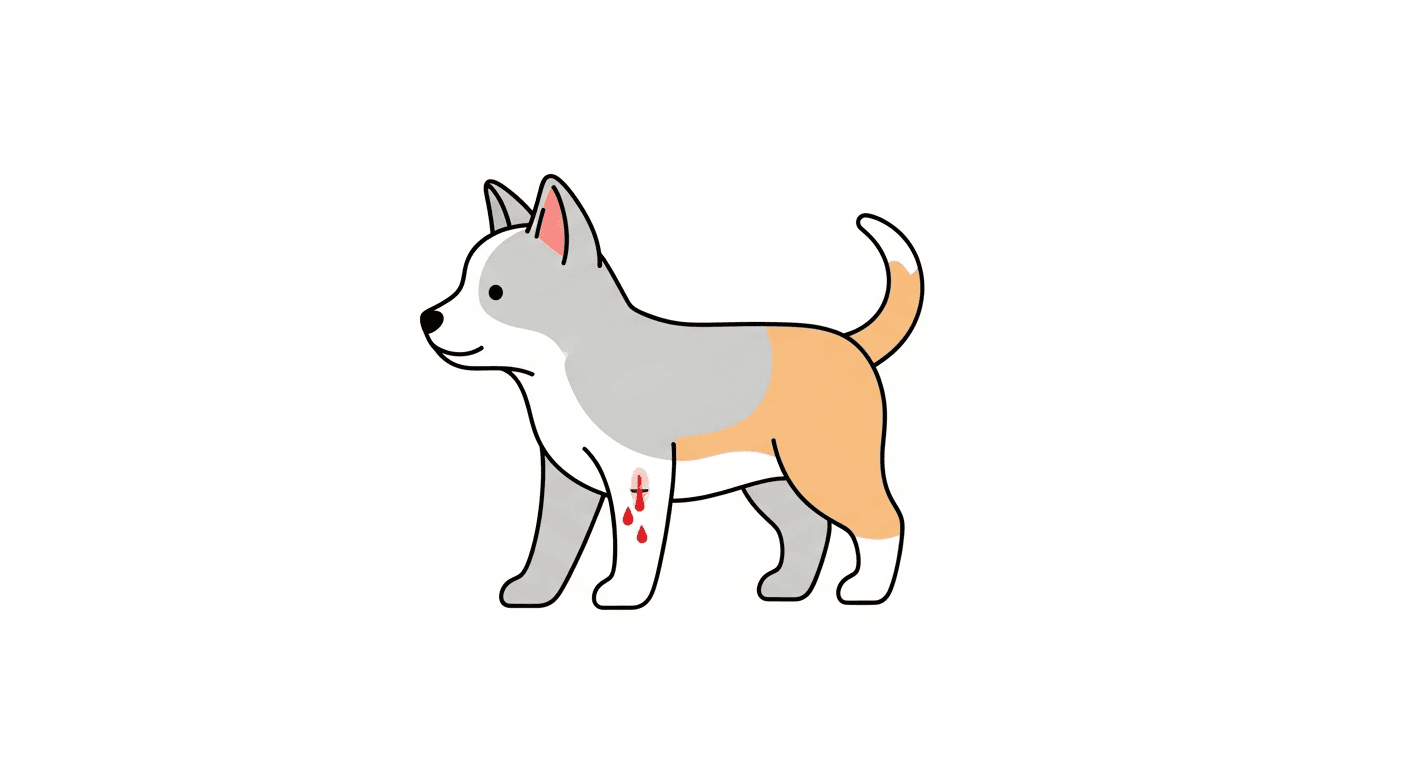
Stopping Bleeding in Pets: A Practical First Aid Guide
How to control bleeding from cuts, wounds, and injuries in dogs and cats — correct pressure technique, tourniquets, and when to rush to the vet.
 🚑 First Aid
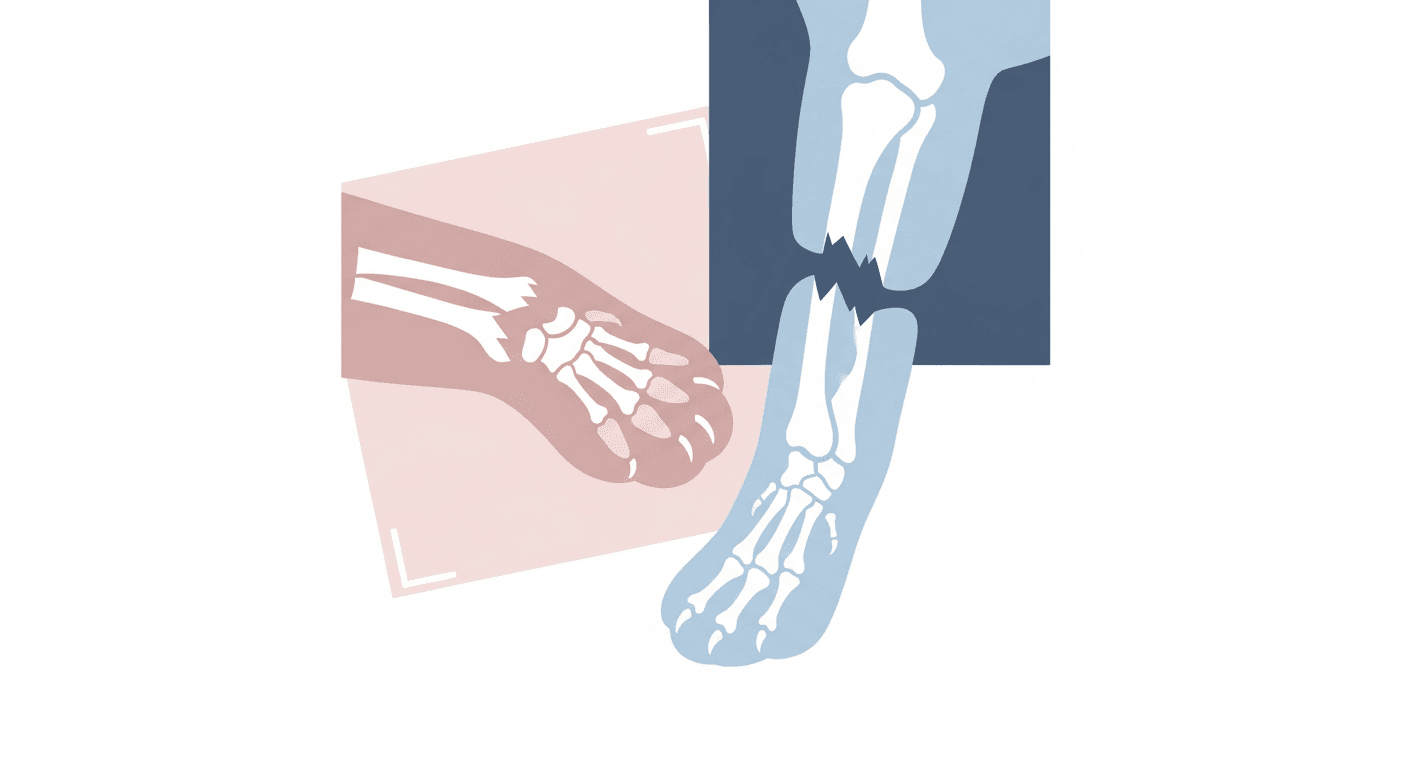
Suspected Broken Bone in a Pet: What to Do Before the Vet
How to identify a possible fracture in a dog or cat, safe handling to prevent further injury, and why improvised splinting often does more harm than good.