

The Immediate Danger After Water Rescue
A pet pulled from water — a pool, a river, a lake, or even a bathtub — may appear to recover quickly, breathing and moving within minutes of rescue. Do not be reassured by rapid apparent recovery. Near-drowning causes water to enter the airways and lungs, and the resulting inflammation, fluid accumulation, and oxygen deprivation can worsen significantly over the following 4–24 hours in a phenomenon known as "secondary drowning" or delayed pulmonary edema. A pet that looks fine at home can deteriorate to respiratory failure while you sleep.
Every near-drowning pet must see a vet on the same day, even if they appear to have fully recovered.
Step-by-Step After Rescue
- Remove from water and check responsiveness: Is the pet breathing? Conscious? Call their name, check for chest rise.
- For small dogs and cats — clear the airway with gravity: Hold the pet upside down by the hips for 15–20 seconds to allow water to drain from the airway. Gently swing the body from side to side to help. Lay them on their side immediately after and check for breathing.
- For large dogs: You cannot safely hold them upside down. Instead, tilt the head downward if possible — position them on a slope with the head lower than the body. Gently compress the sides of the chest to encourage expulsion of water.
- Clear the mouth: Use your fingers to remove any visible debris, vomit, or water from the mouth. Tilt the head back slightly to open the airway.
- Begin CPR if not breathing: Rescue breaths and chest compressions if there is no breathing and no pulse. See the full CPR guide for dogs and cats.
- Warm the pet immediately: Water conducts heat away from the body rapidly — hypothermia develops quickly. Wrap in warm towels or a blanket. See the hypothermia guide for additional steps.
- Transport to the vet: Even a pet that is breathing normally needs veterinary evaluation for lung status, oxygen levels, and to monitor for delayed pulmonary edema.
Signs of Secondary Drowning to Watch For
In the hours after rescue, monitor for:
- Coughing, especially if persistent or getting worse
- Labored breathing, rapid breathing, or breathing with the neck extended
- Blue or grey tinge to gums or tongue
- Increasing lethargy — more tired than expected
- Coughing up foamy or pink-tinged fluid
Any of these signs after apparent recovery means immediate emergency vet care — do not wait until morning.
Pool and Water Safety for Pets
- Not all dogs are natural swimmers — brachycephalic breeds and top-heavy dogs can sink rapidly
- Always supervise pool time — no exceptions, even for "water dogs"
- Install pool ramps or ledges so pets can exit independently if they fall in
- Consider a pet life jacket for water activities and boating
- Keep pool gates secured
Log the incident, rescue time, and symptoms in the TailRounds Daily Log. Use TailRounds AI Triage to assess respiratory symptoms after rescue.
See a Vet the Same Day
Near-drowning is deceptive — the danger is invisible and internal. Same-day veterinary evaluation including chest X-rays and oxygen assessment is essential. Book a vet appointment immediately, or use the clinic finder to find an emergency service if it's after hours. Do not wait to see whether symptoms develop.
Continue Reading
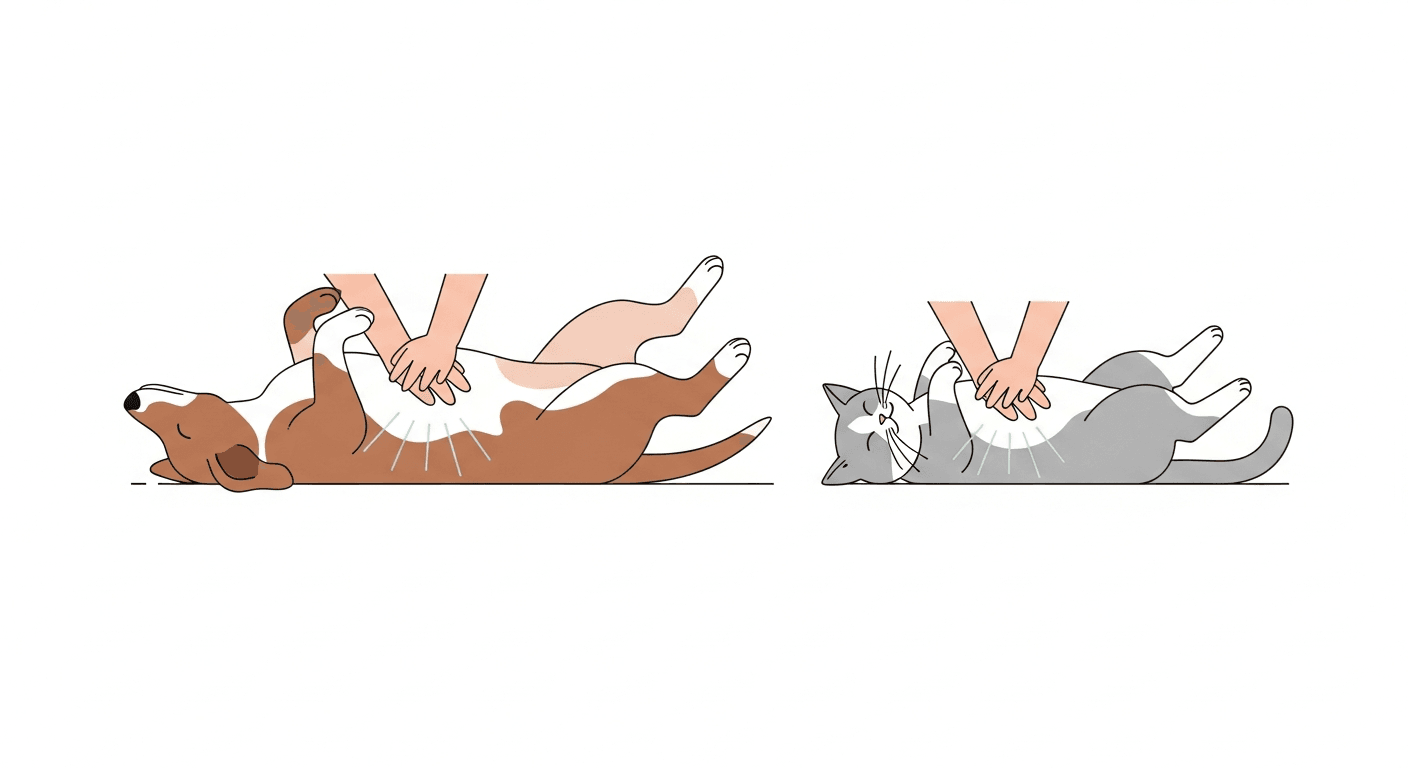 🚑 First Aid
How to Perform CPR on a Dog or Cat: A Step-by-Step Guide
Learn pet CPR — how to check for pulse, perform chest compressions, and give rescue breaths for dogs and cats of different sizes, based on current guidelines.
 🚑 First Aid
Hypothermia in Pets: Signs, Safe Warming, and When to See a Vet
How to recognize and treat hypothermia in dogs and cats — safe rewarming techniques, what not to do, and why mild hypothermia still needs monitoring.
 🚑 First Aid
Heatstroke in Pets: How to Recognize It and What to Do
Heatstroke can kill a pet within minutes. Learn the warning signs, immediate cooling steps, and when veterinary care is non-negotiable.
 🚑 First Aid
Building a Pet First Aid Kit: Everything You Need and Why
The complete checklist for a home and travel pet first aid kit — what to include, what to avoid, and how to use the kit in a real emergency.