
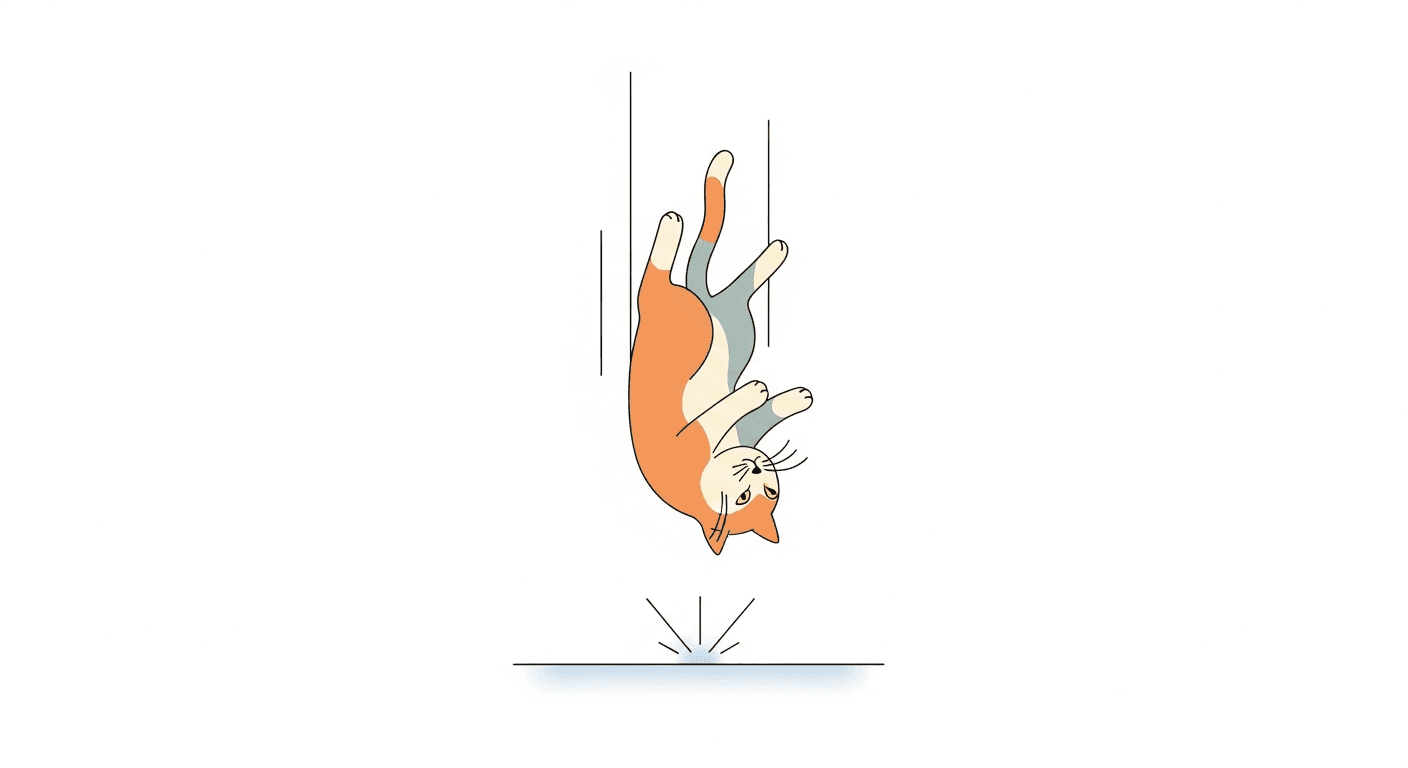
The "Righting Reflex" Doesn't Mean Cats Are Indestructible
Cats have a remarkable ability to right themselves during a fall, spread their body to increase air resistance, and land on their feet — a phenomenon well documented in veterinary literature. Studies of cats falling from high-rise buildings in urban areas have shown surprisingly high survival rates even from considerable heights. But "survived" is not the same as "uninjured." Falls commonly cause a predictable pattern of injuries known as "high-rise syndrome": jaw fractures, chest contusions, lung bruising (pulmonary contusion), pneumothorax (collapsed lung), ruptured diaphragm, abdominal organ damage, and limb fractures — particularly the front limbs as the cat braces for impact.
A cat that walks away from a fall may still be injured internally. Always perform a thorough assessment and see a vet the same day.
Immediate Assessment After a Fall
- Secure the cat first: A frightened, injured cat will try to run and hide, which can worsen injuries. Calmly confine them to a small room or gently wrap in a towel.
- Check breathing: Is the chest rising and falling normally? Is the cat breathing with an open mouth (abnormal for cats and indicates respiratory distress)? Are the gums pink or blue/grey?
- Check for obvious external injuries: Look at the jaw, face, and limbs. Jaw fractures are common — check for misalignment of the teeth, drooling blood, or reluctance to close the mouth. Check each limb for swelling, deformity, or non-weight-bearing.
- Check the chest by feel: Gently place a hand on each side of the chest. Does it expand symmetrically? Asymmetric expansion suggests pneumothorax. Any crackling sensation (subcutaneous emphysema) suggests air under the skin from a lung or airway leak.
- Check for abdominal pain: Gently palpate the belly — a tight, rigid, or painful abdomen suggests internal organ damage.
- Do not force the cat to walk or stand: Let the cat find a comfortable position.
Common Injuries After High Falls
- Jaw fracture (symphyseal fracture): The lower jaw often splits at the midline. Signs: drooling blood, difficulty eating, jaw misalignment. Needs surgical repair.
- Pneumothorax: Air in the chest cavity collapses a lung. Signs: labored rapid breathing, blue gums, neck extended. Emergency vet care immediately.
- Pulmonary contusion: Bruised lungs may not show symptoms for several hours, then cause increasing respiratory difficulty. This is why vet evaluation is needed even for cats that seem fine.
- Limb fractures: Especially the radius/ulna (forearm) from impact bracing.
- Soft palate injury: Hard palate fractures or soft tissue trauma can cause problems eating and breathing.
- Urethral or bladder trauma: Watch for inability to urinate or blood in urine in the 24 hours after the fall.
When the Cat Seems Fine — Don't Be Fooled
Cats in shock can appear deceptively calm and quiet immediately after trauma. The adrenaline response masks pain, and internal injuries may not show obvious external signs. A cat that appears normal 30 minutes after a fall can deteriorate rapidly within hours as internal bleeding progresses or lung contusions worsen.
Log the fall details — height, surface, observed landing position — in the TailRounds Daily Log. Use TailRounds AI Triage to assess urgency based on the symptoms you observe.
Book a Same-Day Veterinary Assessment
Any fall from more than one story height requires same-day veterinary evaluation, full stop. The vet will take chest X-rays, check for internal injuries, assess blood pressure and oxygenation, and manage any fractures. Do not wait for symptoms to appear — the window to catch and treat serious injuries before they become critical is short. Book a vet appointment now, or use the clinic finder for an emergency practice if needed.
Continue Reading
 🚑 First Aid
Suspected Broken Bone in a Pet: What to Do Before the Vet
How to identify a possible fracture in a dog or cat, safe handling to prevent further injury, and why improvised splinting often does more harm than good.
 🚑 First Aid
Stopping Bleeding in Pets: A Practical First Aid Guide
How to control bleeding from cuts, wounds, and injuries in dogs and cats — correct pressure technique, tourniquets, and when to rush to the vet.
 🚑 First Aid
Eye Injury in Dogs and Cats: First Aid and When It's an Emergency
How to assess and respond to eye injuries in pets — scratches, foreign objects, prolapse, and chemical exposure — including safe flushing techniques.
 🚑 First Aid
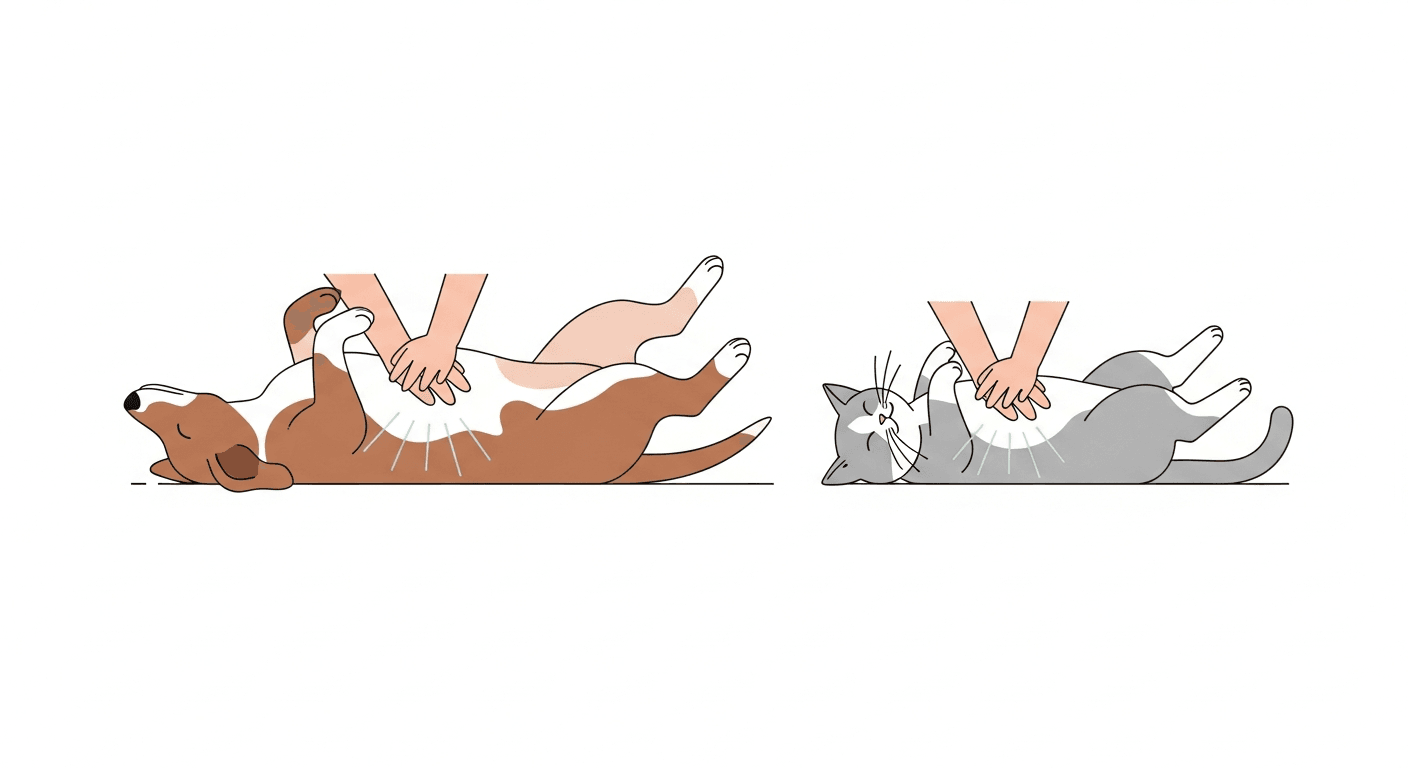
How to Perform CPR on a Dog or Cat: A Step-by-Step Guide
Learn pet CPR — how to check for pulse, perform chest compressions, and give rescue breaths for dogs and cats of different sizes, based on current guidelines.