
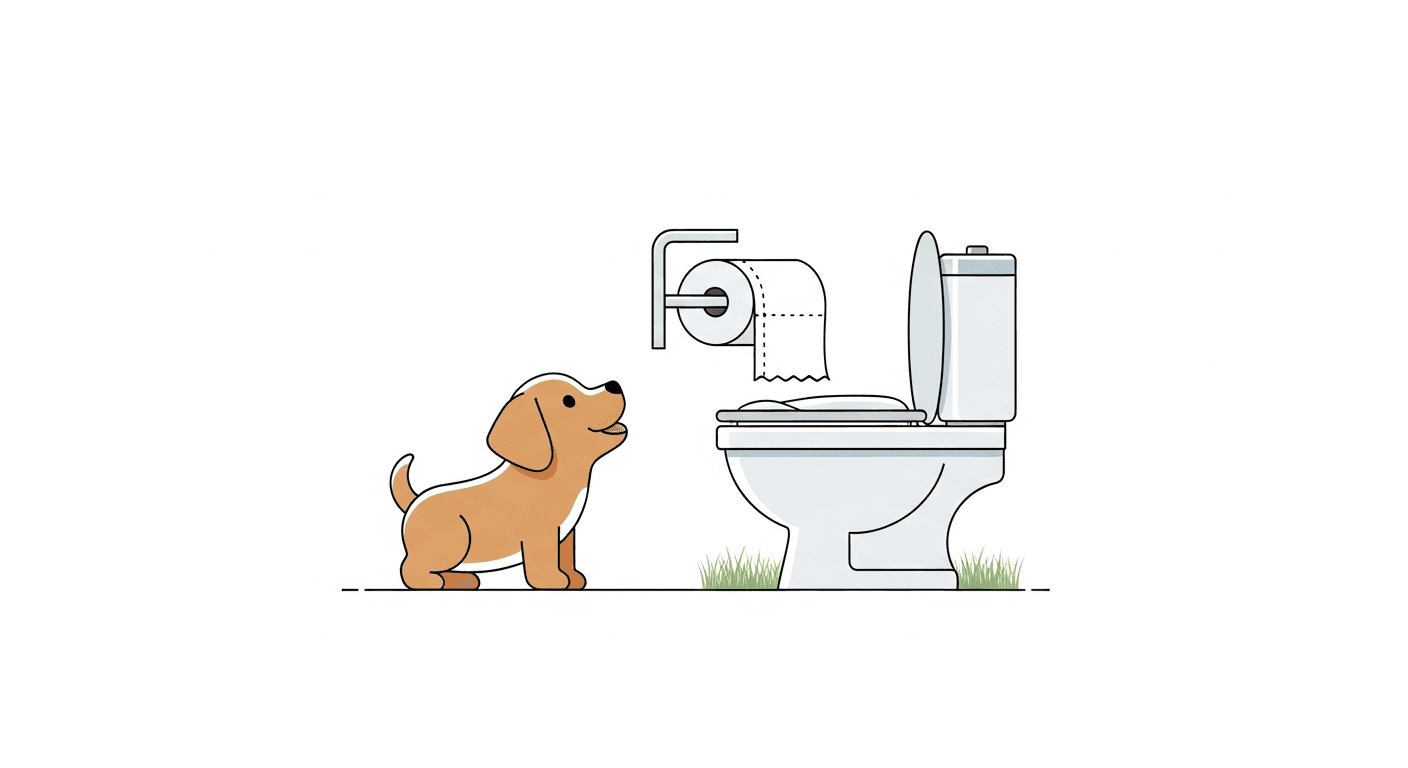
How Puppies Learn Toileting Habits
Puppies are not born understanding where they should and should not toilet. They learn through repetition and association. Every time a puppy successfully toilets in the right place and receives praise, that location becomes more appealing for future toileting. Every time a puppy toilets inside without consequence — or worse, with a delayed, confusing punishment — no useful learning occurs. The entire system of potty training rests on one principle: set up the situation so the puppy succeeds in the right place, and reward that success lavishly.
Puppies under twelve weeks have almost no bladder or bowel control. They cannot "hold it" any longer than they can manage physically. Understanding this biology prevents enormous amounts of frustration. You cannot train a puppy to hold their bladder beyond their physiological limit — you can only manage their schedule to ensure they are outside when they need to go.
The Potty Training Schedule
Consistency with timing is the backbone of fast potty training. Take your puppy outside at every one of these moments:
- Immediately upon waking (within one minute)
- After every meal (within ten to fifteen minutes)
- After any play session
- After any excitement (visitors arriving, coming out of the crate)
- Every thirty to sixty minutes for puppies under twelve weeks
- Every one to two hours for puppies aged three to four months
- Before every crate session
- Before bedtime
This sounds intensive because it is. The first two to four weeks of potty training are a full-time commitment. The upside is that puppies who are trained this consistently are usually reliably house-trained by twelve to sixteen weeks of age.
Step-by-Step Method
- Go outside immediately, not after a delay. Pick your puppy up and carry them to the toilet spot if needed. The moment you see signs of impending toileting — circling, sniffing the ground, squatting — scoop them up and get outside.
- Choose one toilet spot and always go there first. The scent of previous toileting encourages a puppy to go again in the same spot. Using one designated area speeds the process.
- Wait patiently and quietly. Do not talk to or play with your puppy while you are waiting for them to toilet. You want them focused on the task. Stay out for up to five minutes.
- Reward the moment they finish, not after you go inside. The moment the last drop is done, use your praise word ("good potty!" or "yes!") and give a small treat. The timing must be immediate.
- After a successful outdoor toilet, your puppy earns supervised indoor time. Think of it as a license: they have just emptied, so they have a window of (supervised) indoor time before they need to go out again.
- If they do not go outside, take them in and supervise tightly or put them in the crate briefly, then try again in ten minutes. Never give unsupervised access if they did not toilet outside.
Handling Indoor Accidents
- If you catch them in the act: Calmly say "outside" (not a sharp "no") and immediately take them to the toilet spot. Do not scold — they will not understand what the scolding is for. Just interrupt and redirect.
- If you find an accident after the fact: Say absolutely nothing to your dog. Clean it up. The puppy cannot connect punishment to something that happened minutes or hours ago — it will only cause confusion and fear.
- Clean accidents thoroughly with an enzymatic cleaner. Regular household cleaners do not break down the odor compounds that attract puppies back to the same spot. Pet-specific enzymatic cleaners (like Nature's Miracle) are essential.
- Every accident is a management failure, not a training failure. It means the puppy was unsupervised too long, or the timing between outdoor trips was too wide. Adjust your schedule and supervision.
Signs Your Puppy Needs to Go
Learning to read your individual puppy's signals is one of the most valuable things you can do. Common pre-toileting behaviors include:
- Sniffing the floor intently, especially in a circle
- Squatting — even just slightly
- Wandering away from you or toward a corner
- Suddenly stopping play
- Circling or looking uncomfortable
At first, these signals happen very fast and are easy to miss. Over the first week, you will learn to read your specific puppy's pre-toilet behavior, which allows you to intervene earlier and earlier. Keep a potty training log in the TailRounds Daily Log — note the time of every successful outdoor toilet and every indoor accident. Within a few days, clear patterns emerge that tell you exactly when your puppy needs to go. If your puppy is squatting frequently with little output, or showing signs of pain when toileting, consult your vet promptly — use TailRounds AI Triage to assess urgency before your appointment.
Continue Reading
 🎾 Dog Training
Crate Training Step by Step: Making the Crate a Safe Haven
Learn how to crate train your dog or puppy humanely, covering crate selection, introduction steps, and building up to overnight use.
 🎾 Dog Training
Positive Reinforcement Training: The Science and How to Apply It
Understand how positive reinforcement works in dog training, why it outperforms punishment-based methods, and how to apply it effectively.
 🎾 Dog Training
Teaching the Sit Command: A Step-by-Step Guide for Dogs
Learn how to teach your dog the sit command using positive reinforcement. Includes troubleshooting tips for stubborn or distracted dogs.
 🎾 Dog Training
Puppy Socialization: The Critical Window and How to Use It
Discover why the puppy socialization window closes at 12–16 weeks and get a practical checklist for raising a confident, friendly dog.