
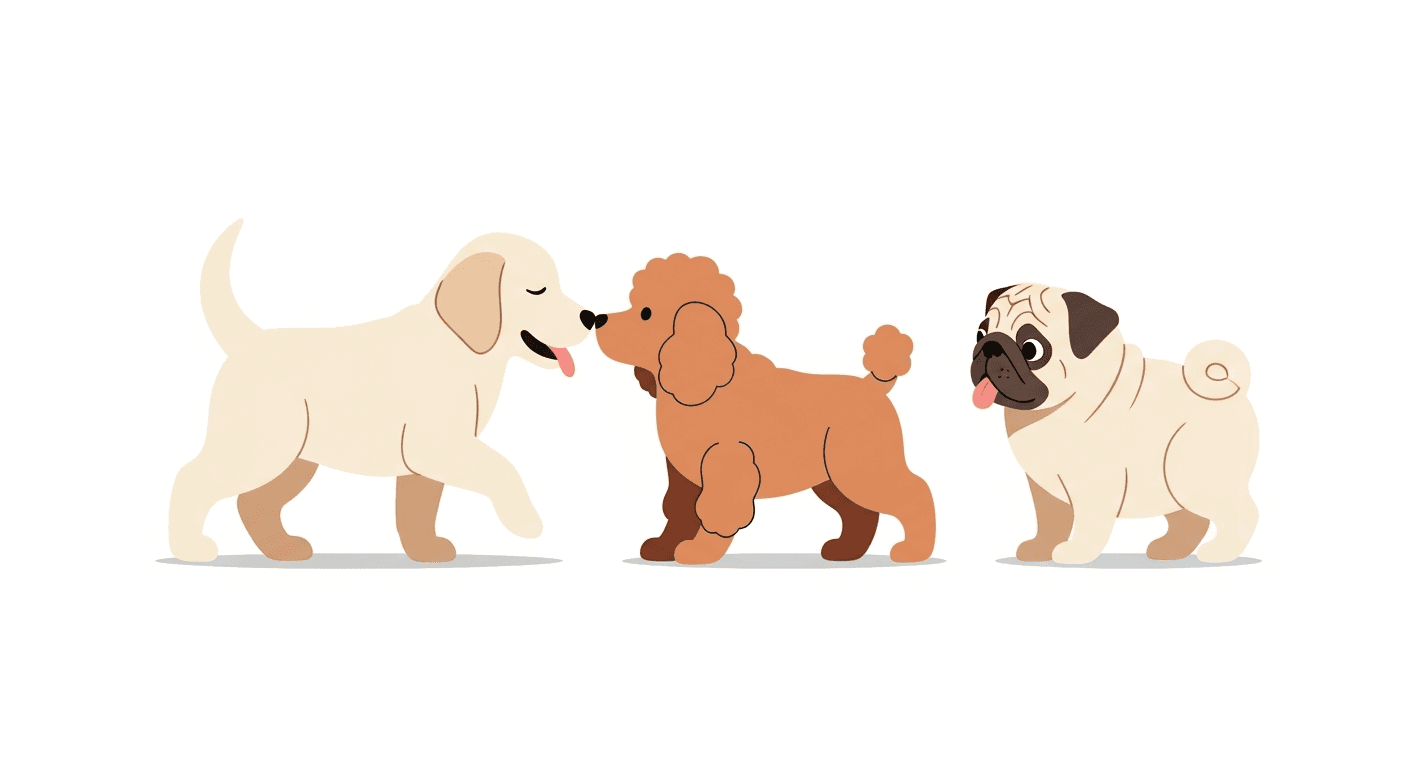
Why the Socialization Window Is the Most Important Period in Your Dog's Life
Between approximately three and twelve weeks of age, puppies go through a critical developmental period during which experiences leave an unusually strong and lasting impression on the brain. The brain is actively building neural pathways during this time, and things encountered during this window are categorized as "normal" and "safe." Things not encountered during this window may be perceived as novel and potentially threatening for the rest of the dog's life, even with exposure and training later on.
This is why the work you put in during your puppy's first weeks and months at home (typically eight to sixteen weeks of age) has effects that last their entire lifetime. A puppy that has positive, gentle exposure to a hundred different people, environments, sounds, surfaces, and animals during this window is statistically far less likely to develop fear-based behaviors, reactivity, or aggression as an adult than a puppy that is kept isolated or under-exposed. The investment in socialization is one of the highest-return things you will ever do for your dog.
What to Socialize Your Puppy To
Good socialization is not just meeting other dogs. It means gentle, positive exposure to everything the puppy will encounter as an adult dog. Work through this checklist in the first twelve to sixteen weeks:
- People: Men with beards, people wearing hats, people in uniforms, people using walking aids, children of various ages (always supervised), people wearing sunglasses, people of different ethnicities
- Other animals: Vaccinated, friendly dogs of various sizes, cats (if your household has them), livestock if relevant to your area
- Environments: Urban streets, rural areas, car parks, shops that allow dogs, public transport, veterinary clinics, grooming salons
- Sounds: Traffic, fireworks (use sound desensitization recordings), thunderstorms, hairdryers, vacuum cleaners, construction noise, crowds
- Surfaces: Grass, gravel, tarmac, metal grates, wet surfaces, slippery floors, sand
- Handling: Having ears, mouth, paws, and tail touched; being lifted; being groomed; being examined as a vet would
- Objects: Umbrellas, bicycles, pushchairs, shopping trolleys, large lorries passing by
How to Socialize Safely Before Full Vaccination
A common dilemma: puppies need socialization during the window that coincides with the period before they are fully vaccinated. The veterinary and behavioral community consensus is that the risk of behavioral problems from under-socialization exceeds the risk of disease from controlled socialization in most circumstances. Follow these guidelines to socialize safely:
- Avoid areas frequented by unknown dogs (public dog parks, high-traffic dog-walking routes) until fully vaccinated
- Arrange playdates with known, vaccinated dogs in private gardens
- Carry your puppy in areas where they cannot walk on public ground — still expose them to sights, sounds, and people
- Enroll in a puppy class run by a reputable trainer that requires proof of vaccination for all attendees and uses clean indoor facilities
- Visit your veterinary clinic for "happy visits" — brief, no-examination visits where the puppy gets treats from the staff. This prevents the clinic from becoming a fear-associated location.
Doing It Right: Quality Over Quantity
Socialization that produces fear is worse than no socialization at all. Every experience must be positive or at least neutral. Watch your puppy's body language carefully:
- Signs the puppy is comfortable: loose body, wagging tail, approaching voluntarily, taking treats, wanting to explore
- Signs the puppy is overwhelmed: tucked tail, flattened ears, refusing treats, trying to hide or escape, freezing, cowering
If your puppy shows signs of stress, create distance from the stimulus immediately. Never force a puppy to approach something that frightens them. "Flooding" (forcing the puppy to remain in the scary situation until they "get over it") can create lasting fear responses rather than resolving them. Instead, manage the distance so the puppy can observe from a comfortable range while receiving treats, then very gradually decrease the distance over many sessions.
Socialization Is Not Just for Puppies
While the critical window closes around twelve weeks, socialization is an ongoing process throughout your dog's first year and beyond. Dogs between six and eighteen months can still make significant gains in confidence with new experiences, though the learning is slower and may require more repetition than in the primary socialization window. Log your socialization experiences in the TailRounds Daily Log — keeping a record of which experiences your puppy has had, and how they responded, helps identify any areas of concern early. Schedule puppy health checks and socialization discussions with your vet at Happy Paws Veterinary Clinic.
Continue Reading
 🎾 Dog Training
Bite Inhibition Training: Teaching Your Puppy Gentle Mouth Manners
Learn what bite inhibition is, why it matters for safety, and the step-by-step method to teach your puppy to control the pressure of their bite.
 🎾 Dog Training
Puppy Potty Training: A Complete Guide to House Training Success
A step-by-step potty training guide for puppies covering schedules, signals, accident handling, and common house training mistakes.
 🎾 Dog Training
Positive Reinforcement Training: The Science and How to Apply It
Understand how positive reinforcement works in dog training, why it outperforms punishment-based methods, and how to apply it effectively.
 🎾 Dog Training
Fear-Based Behaviors in Dogs: Recognition and Compassionate Management
Understand the signs of fear-based behaviors in dogs, how to identify triggers, and evidence-based approaches to help a fearful dog.