
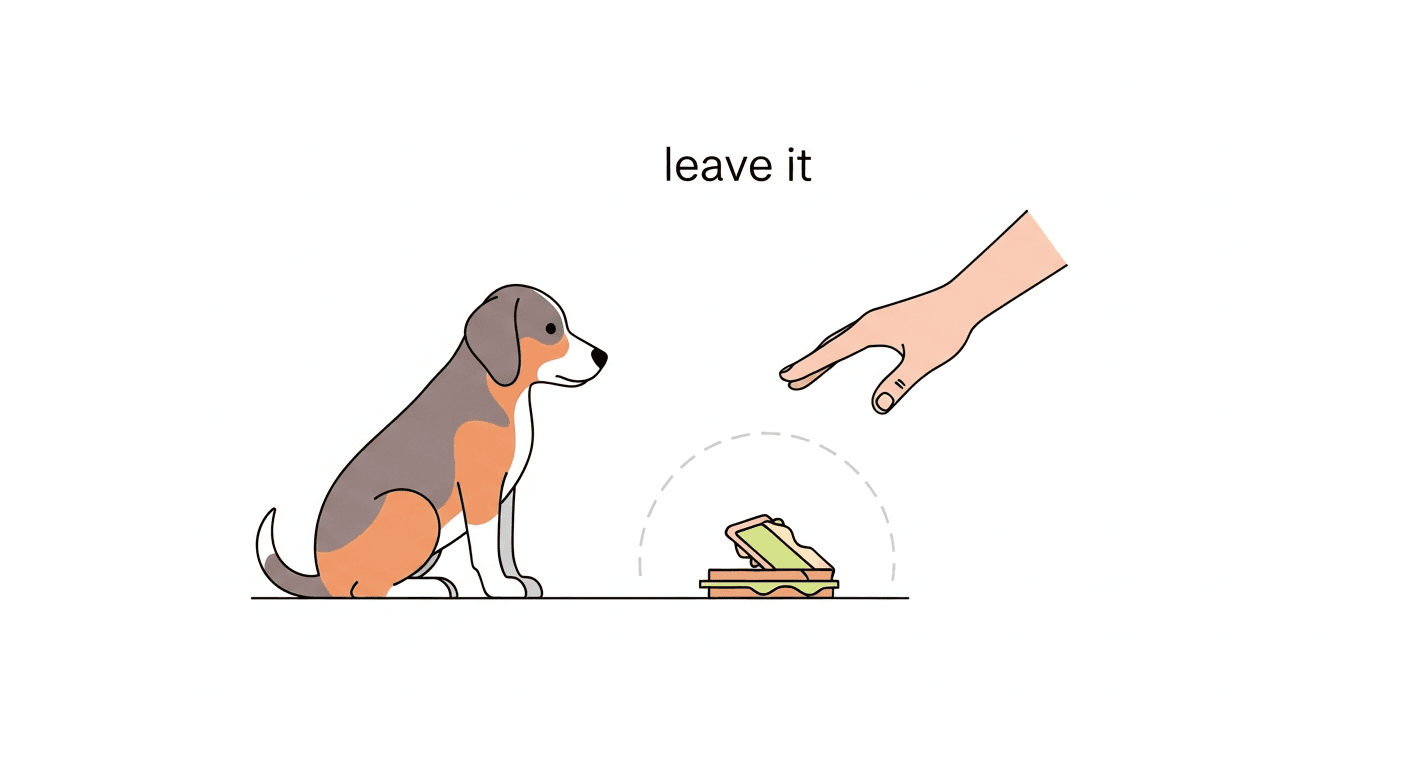
Why "Leave It" Can Save Your Dog's Life
Dogs explore the world with their mouths, and the outside world is full of things that can harm them: toxic foods dropped in the street, rat poison in gardens, broken glass, dead animals carrying disease, discarded medications, and hazardous rubbish. A reliable "leave it" command that causes your dog to immediately stop approaching or drop their attention from any object is a critical safety skill — arguably more immediately life-saving than any other behavior except recall.
Many owners teach a basic "leave it" and are satisfied with their dog ignoring a treat on the floor at home. But a truly reliable leave it is one that works when your dog has a chicken bone in their mouth on a busy pavement, when they have found something irresistible under a bush, or when they are mid-sprint toward something dangerous. Building to that level of reliability requires systematic training across many different contexts and stimuli.
Stage 1: The Foundation — Leave a Treat in Your Hand
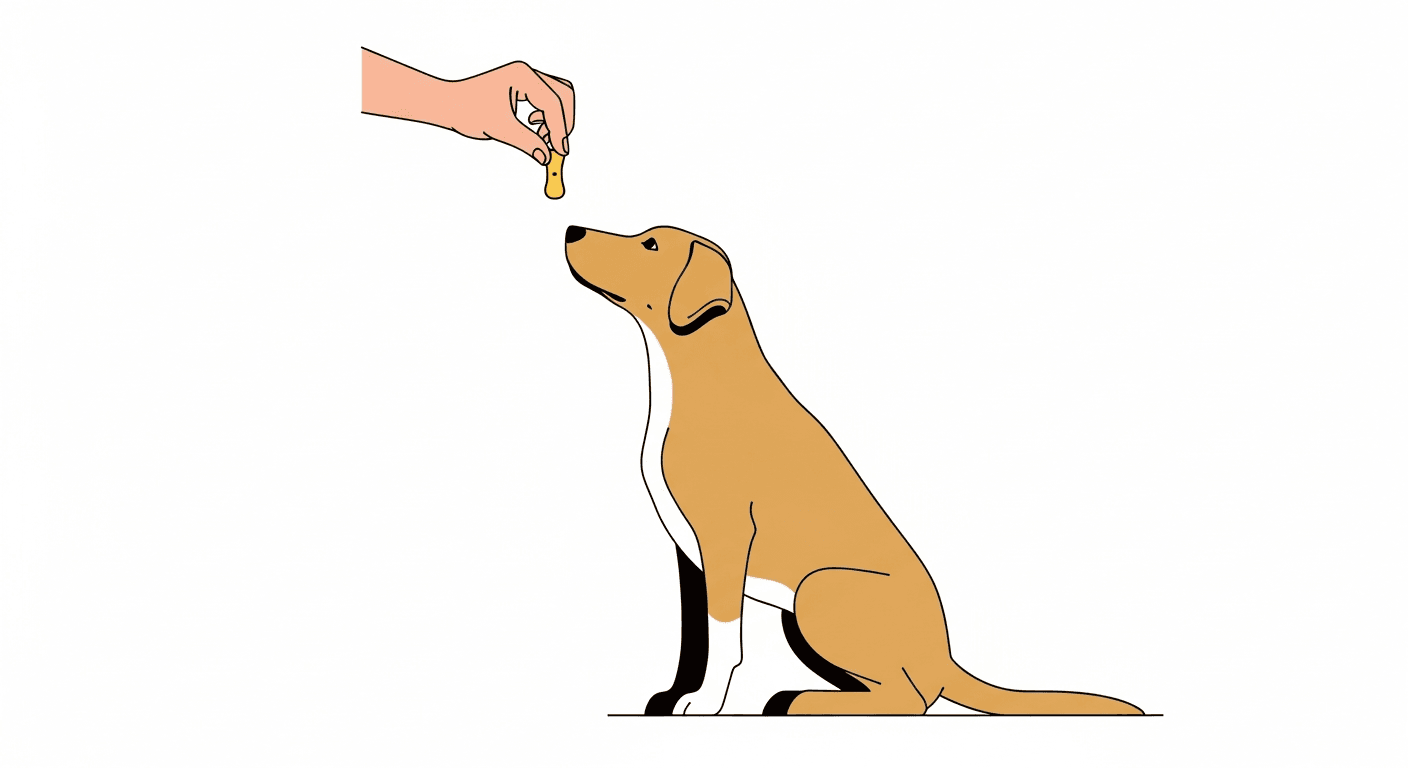
- Place a low-value treat in your closed fist. Hold your fist at your dog's nose level.
- Your dog will sniff, lick, paw, and mouth your hand trying to get the treat. Say nothing. Simply hold still and wait.
- The moment your dog pulls their nose back from your hand — even slightly — click or say "Yes!" and deliver a different, better treat from your other hand. Do not open the fist to give the treat that was being left — that treat is never a reward in this game.
- Repeat until your dog pulls away from your fist immediately when you present it (usually within a session or two).
- Now add the cue: as you present your fist, say "leave it" just before your dog starts moving toward it. Reward with the other hand when they pull back.
Stage 2: Leave It on the Floor
- Place a low-value treat on the floor. Cover it with your foot if your dog lunges toward it.
- Say "leave it." The moment your dog looks away from the treat, click and reward with a better treat from your hand. Pick up the floor treat — the dog never gets it.
- Progress to leaving the treat uncovered and rewarding the dog for not approaching it.
- Increase the duration: reward after two seconds of leaving it, then five, then ten.
- Progress to higher-value items: cheese, chicken, then toys and non-food items.
Stage 3: Leave It on Walks
This is where leave it needs to be reliable but is hardest to train. The key is to practice deliberately, not just when something bad happens.
- Deliberately drop a low-value item on the pavement during a training walk. Say "leave it." Reward with a high-value treat when your dog ignores the item.
- Gradually increase the value of the item you drop: a treat, then a piece of food, then something smelly.
- Practice approaching items that are already on the ground: a bird feather, a discarded wrapper, something that smells interesting.
- Practice leave it with dog waste (a common hazard) — make a point of walking toward it, saying "leave it," and rewarding heavily when your dog moves past it.
Adding "Drop It" for Items Already in the Mouth
"Leave it" teaches the dog not to pick something up. "Drop it" teaches them to release something they already have. Both are essential — because leave it does not always happen in time.
- Offer your dog a toy. Let them hold it. Offer a high-value treat near their nose and say "drop it." The moment they release the toy to get the treat, say "Yes!" and give the treat.
- Always return the toy or give something equivalent — drop it should never mean "and then you lose the thing forever." If it consistently means the end of fun, the dog will resist dropping.
- Practice with increasingly high-value held items — building to food items and things the dog finds most possessively appealing.
Emergency Leave It: What to Do When You Have No Time
For genuine emergencies — your dog heading toward something dangerous right now — your voice and body movement are your tools. Run backward away from the dog calling their name excitedly. Use your recall cue if it is strong. Create distance from the hazard while you approach to take control. Then visit your vet if the dog may have ingested something toxic. Use TailRounds AI Triage to assess urgency if your dog has swallowed a potentially dangerous substance, and find an emergency vet immediately at Find a Clinic. Log leave it practice sessions in the TailRounds Daily Log to track which stimuli your dog reliably leaves and which need more work.
Continue Reading
 🎾 Dog Training
How to Stop Counter Surfing: Keep Your Dog Off Kitchen Surfaces
Effective strategies to stop your dog stealing food from counters, including management, training alternative behaviors, and prevention.
 🎾 Dog Training
Positive Reinforcement Training: The Science and How to Apply It
Understand how positive reinforcement works in dog training, why it outperforms punishment-based methods, and how to apply it effectively.
 🎾 Dog Training
Recall Training: Teaching Your Dog a Reliable "Come" Command
Step-by-step recall training guide to build a fast, reliable come command that could save your dog's life in an emergency.
 🎾 Dog Training
Teaching the Sit Command: A Step-by-Step Guide for Dogs
Learn how to teach your dog the sit command using positive reinforcement. Includes troubleshooting tips for stubborn or distracted dogs.