
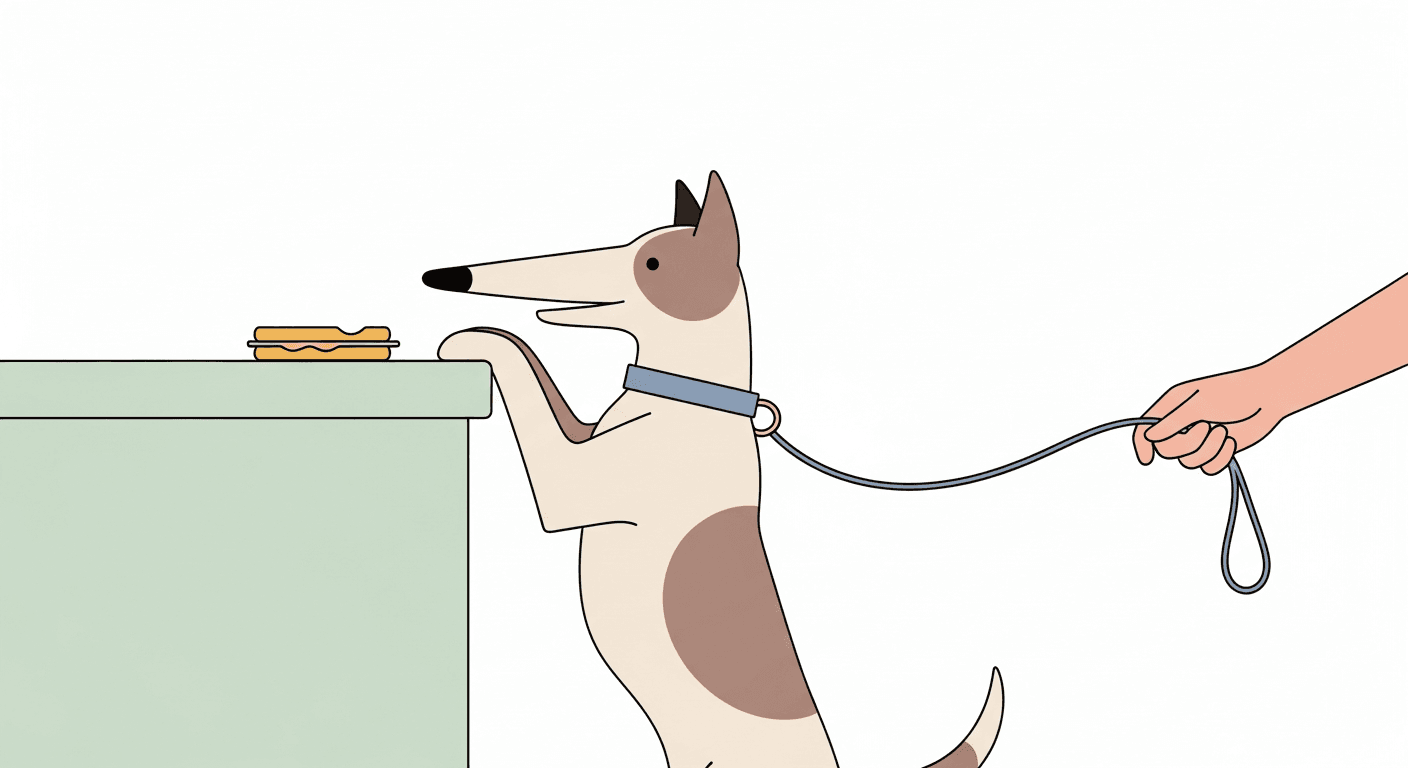
Why Dogs Counter Surf and Why It Is Hard to Stop
Counter surfing — reaching up to steal food from kitchen counters, tables, or any raised surface — is one of the most common and most frustrating dog behaviors. It is also one of the hardest to eliminate because of how powerfully it is self-reinforced. Every time a dog successfully gets food from the counter, they receive the strongest possible reward: real food, immediately. This intermittent, unpredictable reinforcement (sometimes there is food, sometimes there is not) creates extremely persistent behavior. Casino slot machines work on the same principle — unpredictable, variable reinforcement makes behavior very resistant to extinction.
This is why you cannot solve counter surfing through training alone. Management — ensuring the dog never successfully finds food on the counter — must be combined with training alternative behaviors. If the dog continues to occasionally find food on the counter, the training will make slow progress at best.
Step 1: Management First
Before any training can be effective, you must eliminate the reward by managing the environment:
- Never leave food unattended on counters or tables when the dog has access to the kitchen
- Use baby gates to exclude the dog from the kitchen when food preparation or eating is happening
- Keep counters clear of everything — even empty bowls or food wrappers — so there is nothing to investigate
- Ensure family members, housemates, and visitors understand and follow the same rules
- If the dog is left home alone, secure the kitchen or use a crate to prevent access
Management feels tedious, but it is non-negotiable. Every stolen item reinforces the behavior for weeks. Think of management as your interim solution while training is in progress.
Step 2: Teaching an Incompatible Behavior
The most effective long-term solution is to give the dog something else to do that is incompatible with counter surfing — a behavior that makes surfing physically impossible.
- Train a "place" or "mat" cue: Teach your dog to go to a specific mat and lie down and stay there. This is a stationary behavior that cannot be combined with counter surfing.
- Practice "place" during food preparation: Ask your dog to go to their mat while you cook. Reinforce heavily with treats thrown to the mat. Over many sessions, the dog learns that the kitchen means "go to mat and get rewarded," not "patrol the counters."
- Reward calm floor-level behavior near the kitchen: Any time your dog is in the kitchen with four paws on the floor and is not surfing, quietly reward them. Build a history of the floor being the most rewarding place to be.
Training the "Leave It" Cue at Counter Level
Teaching a solid "leave it" (see our dedicated guide on leave it command training) gives you a verbal tool to use when you catch your dog about to surf. However, leave it only works when you are present. It is not a solution to surfing when you are out of the room — management handles those situations.
- Practice leave it with items placed on low surfaces first, then progressively at counter height
- Reward heavily for leaving counter-height items alone
- Use a verbal marker and treat delivery at floor level — reward in the position you want (floor), not by reaching up near the counter
What Not to Do
- Do not punish after the fact: If you come home to evidence of counter surfing, you cannot punish it. The dog does not connect punishment to something that happened minutes ago.
- Do not use booby traps without professional guidance: Products that deliver an aversive when the dog approaches (motion-activated alarms, mats with textures) can sometimes work, but they can also create anxiety responses unrelated to the counter. They also do not work in all locations.
- Do not only manage without training: If you spend five years using baby gates and never train an alternative, the moment the baby gate is open the behavior returns immediately because it was never actually untrained.
Timeline and Realistic Expectations
Counter surfing that has been practiced and rewarded for months or years will not disappear in a week. With consistent management (no more successes) and daily training of a "place" behavior, most dogs show significant improvement within four to eight weeks. Full reliability — the dog genuinely not surfing even when food is left unattended — requires many months of consistent training and may never be completely reliable in certain dogs. For highly food-motivated breeds (Labrador Retrievers, Beagles, Cocker Spaniels), management should remain a permanent strategy even alongside training. Log counter surfing incidents — including frequency and what was taken — in the TailRounds Daily Log to track whether the frequency is reducing over time.
Continue Reading
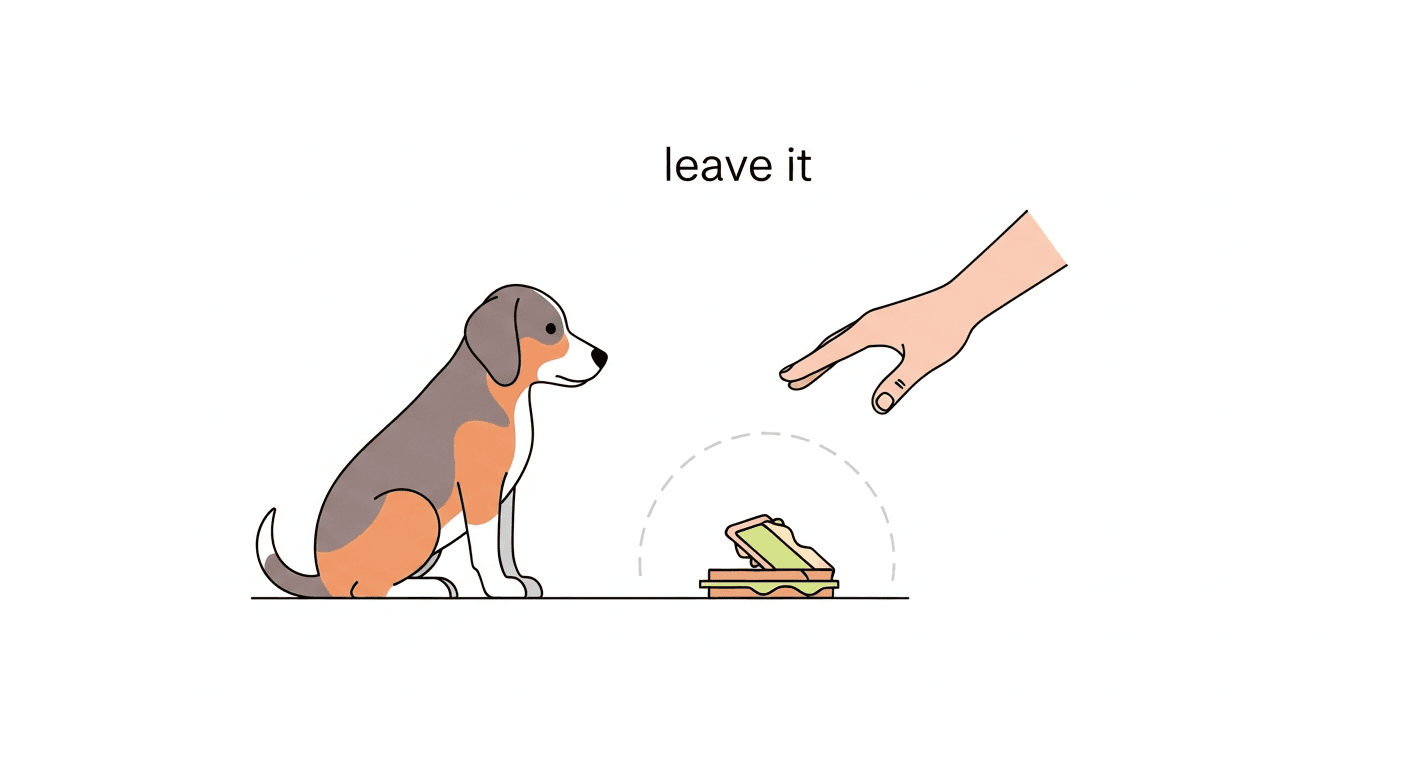 🎾 Dog Training
Leave It Command: Teaching Your Dog to Ignore Dangerous Items
Step-by-step guide to teaching a reliable "leave it" command that stops your dog picking up dangerous items on walks and at home.
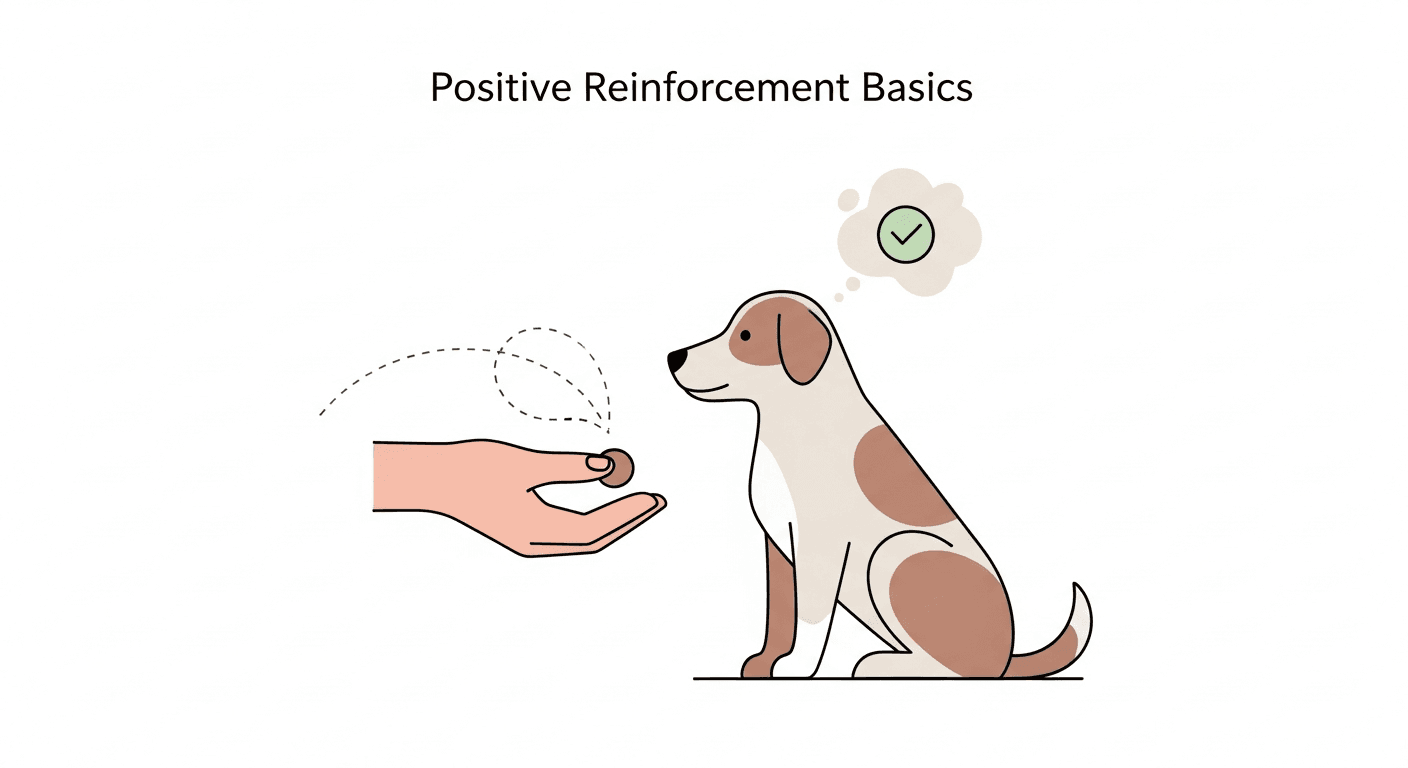 🎾 Dog Training
Positive Reinforcement Training: The Science and How to Apply It
Understand how positive reinforcement works in dog training, why it outperforms punishment-based methods, and how to apply it effectively.
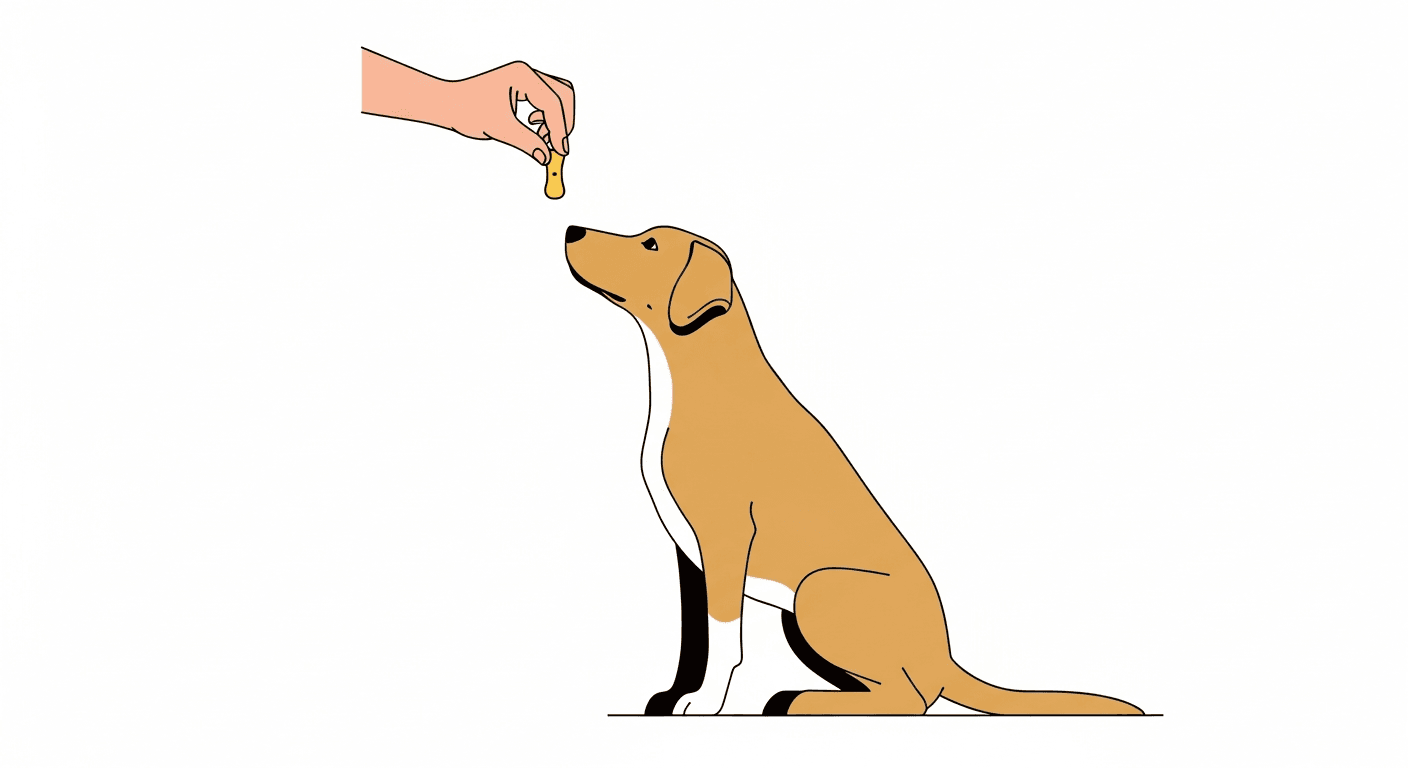 🎾 Dog Training
Teaching the Sit Command: A Step-by-Step Guide for Dogs
Learn how to teach your dog the sit command using positive reinforcement. Includes troubleshooting tips for stubborn or distracted dogs.
 🎾 Dog Training
Dog Training Tools Compared: What Works, What Harms, and What to Choose
An evidence-based comparison of popular dog training tools — from harnesses and clickers to prong collars and e-collars — and expert recommendations.