
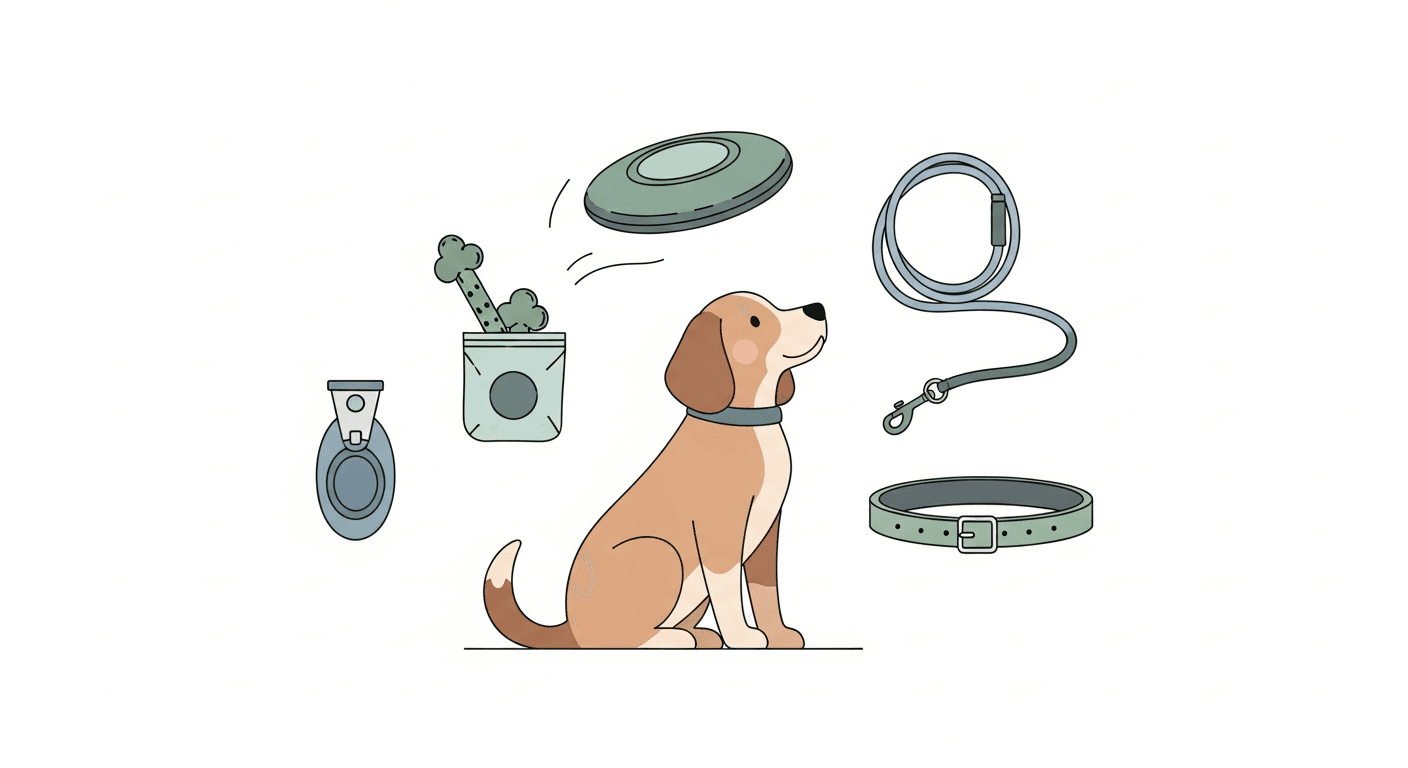
Why Your Equipment Choice Matters
The training tools you use do not train your dog — your technique, consistency, and timing do. But the equipment you choose can significantly influence the safety of the training process, the speed of learning, and the potential for unintended negative side effects. Understanding what each tool does and how it works helps you make informed choices aligned with your goals and your dog's welfare.
It is also important to understand the context in which tools are evaluated. A tool that "works" — in the sense of producing a behavior change — is not necessarily safe, humane, or optimal. The question to ask about any training tool is not just "does it work?" but "how does it work, what are the risks, and is there a less intrusive alternative that achieves the same result?"
Markers: Clickers and Verbal Markers
What they do: Mark the precise moment of a desired behavior, communicating to the dog that a reward is coming. A clicker produces a consistent, neutral sound; a verbal marker ("yes!" or "good") serves the same function.
Evidence: Research confirms that marker-based training speeds up learning by providing precise information about which moment produced the reward. The clicker is particularly effective for teaching complex or duration behaviors.
Best for: All stages of learning new behaviors, precision work, shaping complex behaviors, and dogs in any training context.
Limitations: Requires good timing. A clicker clicked at the wrong moment marks and reinforces the wrong behavior.
Recommendation: Start with a verbal marker for ease of use and add a clicker when you want to train more precise or complex behaviors. See our full guide on clicker training for dogs.
Harnesses
Front-clip harnesses: The leash attaches at the dog's chest. When the dog pulls, the front attachment steers them toward you, making pulling self-limiting. The best option for most dogs that pull. Examples: Ruffwear Front Range, PerfectFit, EzyDog Convert. Does not cause pain or discomfort.
Back-clip harnesses: The leash attaches on the dog's back. Does not discourage pulling — in fact, activates the dog's opposition reflex, which can increase pulling. Appropriate for dogs that already walk well on leash, for sighthound breeds with specific anatomical needs, or for sports where pulling is desired (canicross).
No-pull harnesses with tightening mechanisms: Some harnesses tighten around the body when the dog pulls. Use with caution — if the tightening mechanism rubs on leg joints or restricts movement, it can cause long-term physical issues. Consult your vet or an accredited trainer before using these.
Head Halters
What they do: The strap goes around the dog's muzzle and fastens at the back of the head. Because where the head goes the body follows, a head halter gives the handler precise directional control.
Best for: Large, strong dogs that cannot be physically controlled with a harness; dogs with significant leash reactivity where redirecting the head is important.
Important notes: Must be introduced gradually and positively — many dogs initially resist them strongly. Never jerk or correct forcefully with a head halter — this can cause neck injury. Common brands: Halti, Gentle Leader, Snoot Loop.
Recommendation: An excellent management tool when used correctly, but requires careful introduction and should not be used with hard corrections.
Standard Flat Collars
Appropriate for dogs that already walk nicely and do not pull. For consistent pullers, the trachea is put under repeated pressure, which can cause injury over time. Not recommended as the primary tool for dogs that pull regularly.
Aversive Tools: Prong Collars, Choke Chains, Shock Collars
How they work: These tools all work by applying an aversive stimulus — pain or discomfort — to suppress or reduce behavior. Prong and choke chains apply pressure and pain to the neck. Electronic collars (e-collars) deliver electric stimulation.
Evidence and risks: Research (Blackwell et al., Ziv 2017, Herron et al.) consistently shows that aversive training methods are associated with increased anxiety, increased aggression (particularly redirected aggression), and damaged human-dog relationships. A 2019 study found that dogs trained with e-collars showed significantly more negative behavior indicators than those trained without them, regardless of the experience of the trainer. The British Veterinary Association, Royal College of Veterinary Surgeons, and Association of Professional Dog Trainers all recommend against their use.
Recommendation: Avoid. The risks — including physical injury, increased fear, suppressed warning signals, and relationship damage — are not justified when effective positive reinforcement alternatives exist. If you are working with a trainer who recommends these tools, seek a second opinion from a certified force-free trainer.
Food Treats: Choosing and Using Them Effectively
- Use small treats (pea-sized) to prevent overfeeding during training
- Match treat value to task difficulty: kibble for known easy behaviors, chicken for new or difficult ones
- Account for training treats in daily calorie intake to maintain healthy weight
- Use a variety of treats to maintain novelty and motivation
- Treat pouches worn at the waist allow faster treat delivery and free your hands
Making Your Choice
The ideal tool kit for most dogs is: a flat collar with ID tag, a well-fitted front-clip harness, a 5m long line for recall training, a treat pouch, and a clicker or verbal marker. This combination covers all everyday training needs without any aversive risk. If you need guidance on which specific products work best for your dog's breed, size, and behavior, discuss with a certified trainer or ask your vet at Happy Paws Veterinary Clinic. Track your training progress and tool effectiveness in the TailRounds Daily Log.
Continue Reading
 🎾 Dog Training
Positive Reinforcement Training: The Science and How to Apply It
Understand how positive reinforcement works in dog training, why it outperforms punishment-based methods, and how to apply it effectively.
 🎾 Dog Training
Clicker Training for Dogs: A Complete Beginner's Guide
Learn how to use a clicker to train your dog faster and more precisely. Covers charging the clicker, timing, shaping, and fading the clicker.
 🎾 Dog Training
How to Stop Leash Pulling: A Complete Training Guide
Practical methods to stop your dog pulling on the leash, covering loose-leash walking techniques, equipment choices, and common mistakes.
 🎾 Dog Training
Heel Command and Loose Leash Walking: A Complete Guide
Learn to teach a formal heel position and loose-leash walking so walks are enjoyable for both you and your dog.