
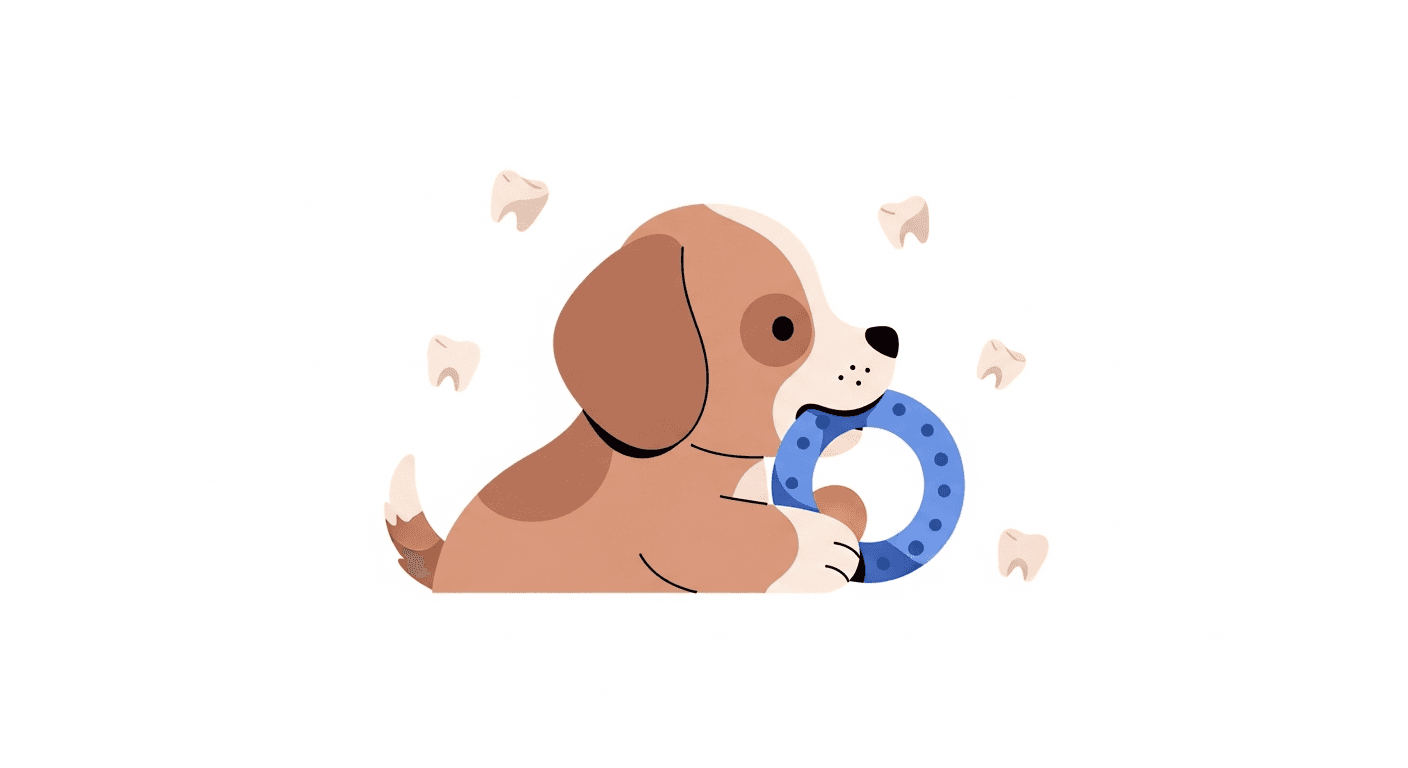
What Is Puppy Teething?
Puppies are born without teeth, develop 28 baby (deciduous) teeth by around 8 weeks, and then go through a teething process between 3 and 7 months of age as those baby teeth are replaced by 42 adult teeth. During this time, puppies chew — a lot — because chewing provides counter-pressure that relieves the discomfort of teeth pushing through tender gum tissue. Teething puppies may eat less, drool more, have red or swollen gums, and occasionally show small amounts of blood from a lost tooth. Understanding what's normal during teething helps you support your puppy through it without worry.
First 3 Steps You Can Take at Home
- Provide appropriate chew items: The urge to chew during teething is physiological and cannot be suppressed — only redirected. Provide a variety of appropriate chew items: frozen carrots (the cold soothes inflamed gums), rubber chew toys designed for teething (Kong Puppy line, for example), rope toys, and cold wet washcloths tied in a knot and frozen. Having 4–5 different textures available means you can rotate them and keep your puppy interested. When you see your puppy heading toward something inappropriate, calmly redirect to a chew toy without scolding.
- Manage the environment: Puppy-proofing during teething is essential — not because your puppy is being naughty, but because they are physiologically driven to put things in their mouth. Keep valuable or dangerous items off the floor and out of reach. Use baby gates to limit access to rooms with furniture you want to protect. Cover exposed cables. A playpen or puppy zone gives your puppy a safe space to chew without you needing to supervise every minute.
- Monitor tooth retention: Most baby teeth fall out naturally as the adult teeth push them out. Occasionally, a baby tooth and adult tooth are both present at the same time — called retained deciduous teeth. This is most common in small breeds and in the canine (fang) teeth. If you see double teeth at any point after 5 months, bring this up with your vet. Retained baby teeth can push adult teeth out of alignment and need removal, usually at the time of neutering or in a separate procedure.
When to Go to the Vet Immediately
- Significant gum swelling with pus, or a clearly broken tooth at any point
- Complete loss of appetite for more than 24 hours (not just slightly reduced)
- Heavy bleeding from the gums (a few drops from a lost tooth is normal)
- Double teeth present at 5+ months of age — retained baby teeth need attention
Follow-Up Care Checklist
- ☐ Have 4–5 different chew toys available and rotate them to maintain interest
- ☐ Freeze chew toys and carrots for extra gum relief
- ☐ Puppy-proof rooms and manage environment rather than punishing chewing
- ☐ Start gentle tooth brushing as soon as adult teeth begin to come in
- ☐ Check for retained baby teeth monthly from 4 months onward
- ☐ Tell your vet if you notice any double teeth at the next vaccine or check-up
📋 Log This With TailRounds
Track teething milestones, any concerns, and tooth loss dates in the TailRounds daily log. It's a great record for first-time puppy owners and helps you spot retained tooth issues early.
Start Free →Book a Vet Appointment
Your puppy's vaccine series appointments are a great time to ask about teething milestones and get retained tooth checks. If you suspect a retained tooth or dental alignment issue, don't wait for the annual exam — early intervention is much easier. Book an appointment at Happy Paws Veterinary Clinic — same-week slots are usually available.
Summary for Your Clinic
Pet concern: Puppy Teething
Age of puppy: [weeks/months], teething symptoms: [chewing, drooling, reduced appetite, gum redness]
Retained teeth: [yes — which teeth / not noticed]
Questions for vet: Do we have any retained baby teeth? When should we start regular tooth brushing? Is the chewing behavior within normal range?
Related Articles
Continue Reading
 🐕 Dog Health
Puppy Vaccination Schedule by Age
A complete puppy vaccination timeline from 6 weeks to 1 year. Know which vaccines are core, optional, and when boosters are due.
 🦴 Dog Care
Puppy Biting: How to Manage It
Why puppies bite and nip, what's normal vs. concerning, and the most effective techniques for teaching bite inhibition.
 🐕 Dog Health
Dog Not Eating: Common Causes and What to Do
Why your dog might stop eating, which causes are harmless, and which ones need a vet visit. Practical home steps included.