
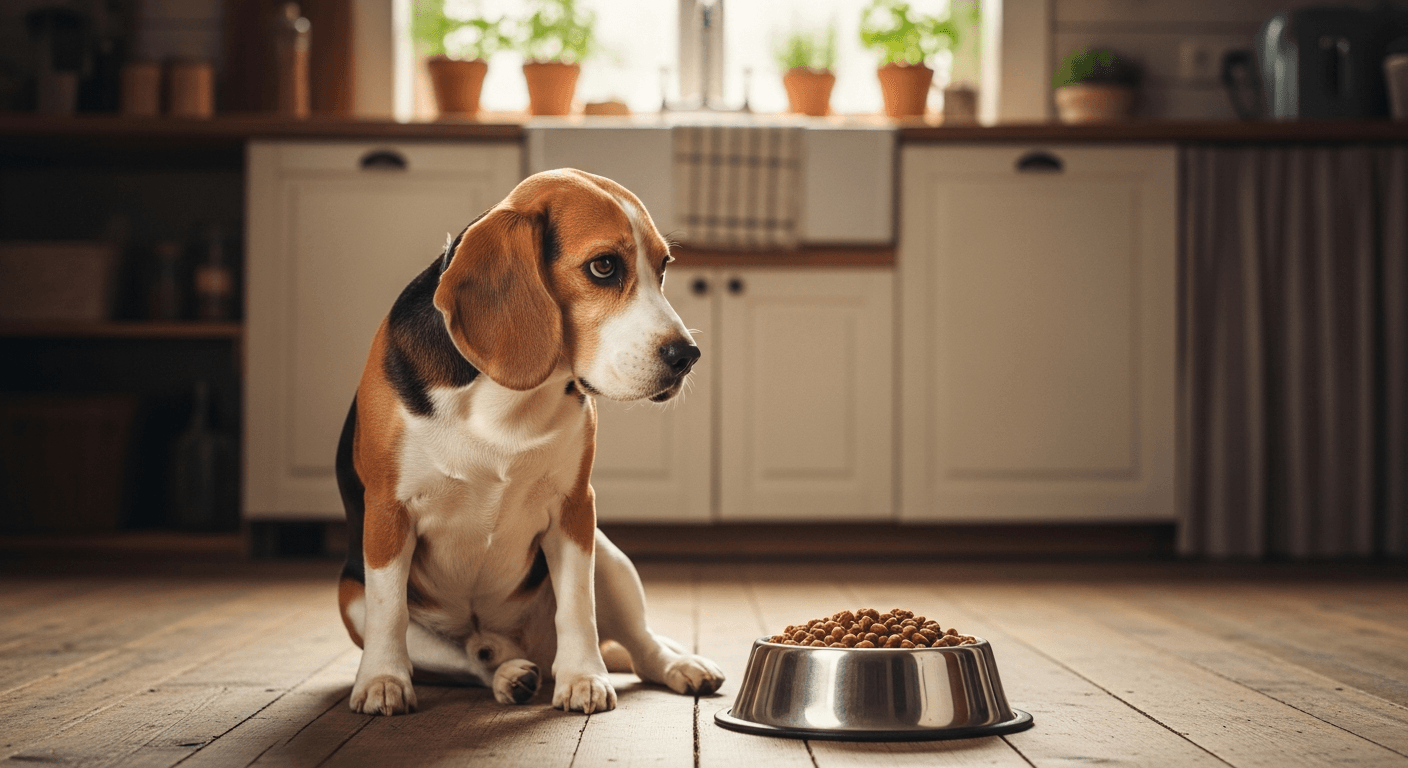
What Is Loss of Appetite in Dogs?
A dog skipping a meal isn't automatically a crisis — dogs often self-regulate their food intake and can go a meal or two without eating when they feel off, stressed, or after a change in routine. But when a dog stops eating for more than 24–48 hours, or refuses food alongside other symptoms like vomiting, lethargy, or weight loss, it's worth investigating. Appetite loss can be a symptom of almost anything — from dental pain making eating uncomfortable, to nausea, stress, infection, or serious systemic disease. The context matters enormously.
First 3 Steps You Can Take at Home
- Check the obvious first — food and bowl: Has the food gone stale or changed brand? Dogs have sensitive noses and will reject food that smells even slightly off. Try a fresh portion from a newly opened bag. Check the bowl too — some dogs refuse to eat from metal bowls that develop a metallic smell. Try a clean ceramic or glass bowl. If the food is the same but they won't touch it, move to step two.
- Look in their mouth: Dental pain is one of the most underdiagnosed causes of appetite loss in dogs. Gently lift your dog's lips and look for obvious issues: red, swollen gums, broken teeth, unusual smell, or reluctance to let you near their mouth. If eating seems to cause pain (head tilting, dropping food, preferring one side), dental disease is a strong candidate. Also check for anything caught between teeth.
- Reduce stress and make food more appealing: A dog that has been kenneled, had a new pet introduced, or experienced any major change in routine may refuse food due to anxiety. Try feeding in a quiet space, warming up the food slightly to enhance the smell, or adding a spoonful of plain broth. Don't panic-hand-feed immediately — this can train food refusal, but a small enticing addition is fair game.
When to Go to the Vet Immediately
Some symptoms require urgent veterinary attention. Do not wait — call your vet or head to an emergency clinic if you see:
- Not eating for more than 48 hours in an adult dog, or 24 hours in a puppy or senior dog
- Accompanied by vomiting, diarrhea, or significant lethargy
- Unexplained weight loss over days or weeks
- Bloated or hard abdomen
- Yellow tinge to the skin or eyes (jaundice — can indicate liver issues)
Follow-Up Care Checklist
After the immediate concern is handled, use this checklist to monitor your dog's recovery:
- ☐ Record exactly when your dog last ate normally and what they had
- ☐ Weigh your dog every 3 days to catch weight loss early
- ☐ Try different food temperatures — some dogs prefer room temperature or slightly warmed food
- ☐ Note any other behavior changes: less playful, sleeping more, hiding
- ☐ Rule out any recent medication changes (many drugs cause nausea as a side effect)
- ☐ Schedule a dental check if refusal persists and no other cause is found
📋 Log This With TailRounds
Use the TailRounds daily log to track meal acceptance, water intake, and energy levels. Seeing three weeks of data at a glance helps your vet spot whether this is a gradual decline or a sudden change — both tell very different stories.
Start Free →Book a Vet Appointment
Persistent appetite loss rarely resolves on its own when there's an underlying cause. Blood work, a physical exam, and possibly imaging can identify issues like kidney disease, liver problems, or infections that won't show up just by looking at your dog. Book an appointment at Happy Paws Veterinary Clinic — same-week slots are usually available.
Summary for Your Clinic
Copy and share this summary with your vet before the appointment:
Pet concern: Dog Not Eating
Symptoms noticed: Refusing all food / partial eating, duration [X days], [with/without other symptoms]
Home steps taken: Tried fresh food, checked mouth, reduced stress
Duration: Not eating normally for [X days]
Questions for vet: Should we run blood work? Could this be dental pain? Is a food allergy or GI issue possible?
Related Articles
Continue Reading
 🐕 Dog Health
Dog Vomiting: What to Do First at Home
Learn the first steps to take when your dog vomits, which signs mean danger, and when to call your vet immediately.
 🐕 Dog Health
Senior Dog Not Eating: What to Do
Appetite loss in older dogs — why it happens, which causes are serious, and how to encourage a senior dog to eat safely.
 🐕 Dog Health
Dog Diarrhea: When to Worry and When to Wait
A practical guide to dog diarrhea — home care steps, warning signs that need a vet, and how to firm up loose stools safely.