
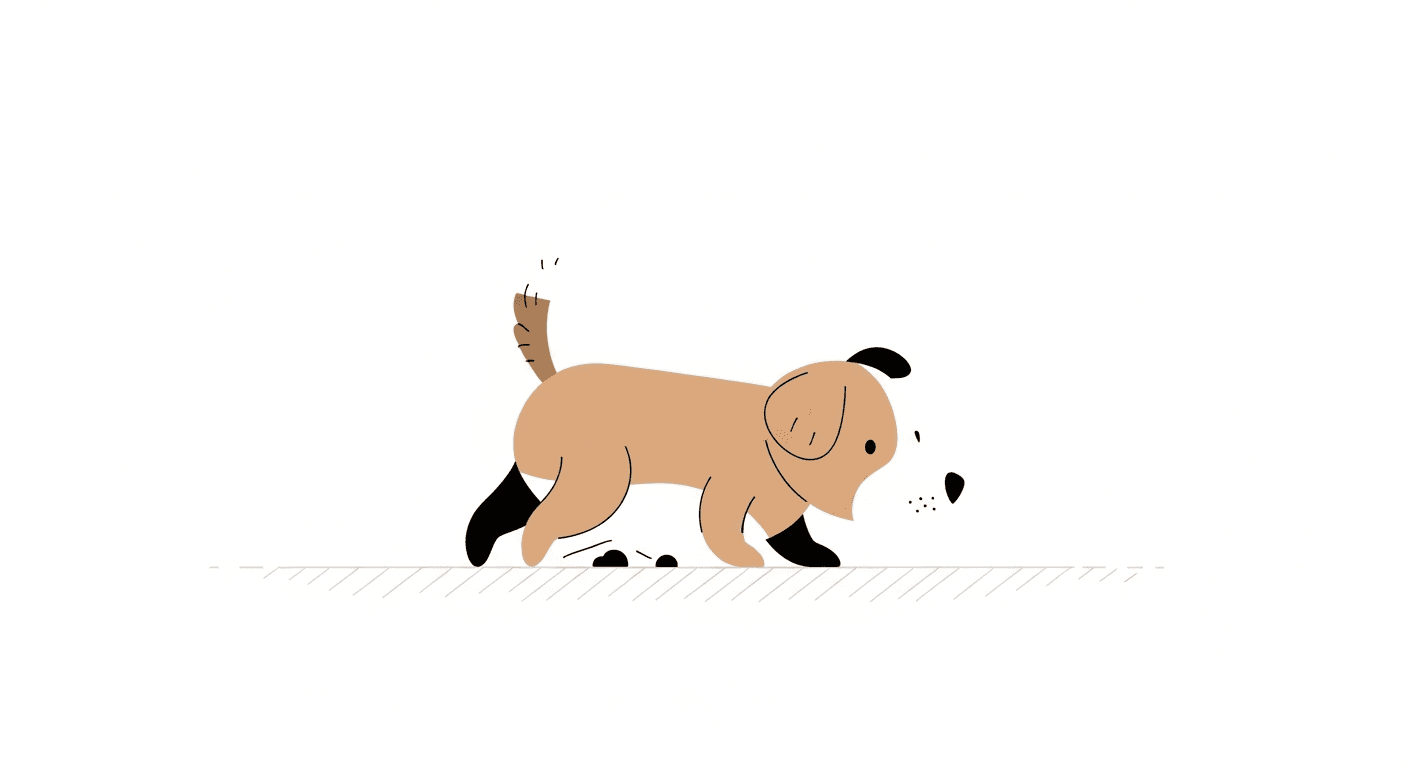
What Is Dog Scooting?
Scooting — when a dog drags their bottom along the floor, carpet, or grass — is one of those behaviors that makes owners laugh and cringe simultaneously. It's also almost always a sign that something is bothering your dog back there. The most common culprit is anal glands (also called anal sacs): two small scent glands on either side of the anus that normally empty when a dog defecates. When they become full, impacted, or infected, they cause significant discomfort. But intestinal parasites, allergies, skin irritation, and even just leftover poop stuck in the fur are also common causes.
First 3 Steps You Can Take at Home
- Check the anal area gently: Look at the skin around the anus for visible redness, swelling, or discharge. If you see two small bulges on either side of the anus that look red or inflamed, impacted anal glands are very likely. A fishy, strong smell that's not from a recent bowel movement is another telltale sign. Don't attempt to express the anal glands yourself at home — improper technique can cause injury or infection, and an impacted or infected gland needs professional care.
- Check for worms: Certain intestinal worms — particularly tapeworms — cause anal itching that drives scooting. Look at your dog's stool and around the anus for small, white, rice-grain-sized segments (tapeworm segments). Regular deworming and flea control (fleas carry tapeworm larvae) is the prevention. If you see segments, let your vet know — tapeworm treatment is different from roundworm treatment.
- Check for left-behind poop or irritation: Long-haired dogs and dogs with loose stools can get fecal matter matted in the fur around the anus — causing skin irritation and scooting. A gentle trim of the fur in this area and a careful clean can solve simple cases. If the skin looks red and irritated but clean, a dietary change causing loose stools may be reducing natural anal gland expression.
When to Go to the Vet Immediately
- Visibly swollen, painful lump on one side of the anus — possible anal gland abscess
- Discharge or blood from the anal area
- Your dog is crying or obviously in significant pain when trying to defecate
- Scooting combined with not defecating for 48+ hours
Follow-Up Care Checklist
- ☐ Schedule anal gland expression by a vet or groomer (if this is recurring)
- ☐ Check stool and bedding for tapeworm segments
- ☐ Ensure parasite prevention is current (flea and worming)
- ☐ Consider a fiber-rich diet to promote firmer stools that naturally express the glands
- ☐ Keep the perianal area trimmed and clean if this is a recurring issue
📋 Log This With TailRounds
Log scooting frequency and any accompanying stool changes in the TailRounds daily log. Recurring scooting often has a dietary trigger that becomes clear when you have consistent logs.
Start Free →Book a Vet Appointment
If home checks don't reveal an obvious cause, or if scooting keeps coming back, a vet visit is the quickest path to relief. Anal gland expression, a fecal test for parasites, and a skin check can solve most scooting cases in one appointment. Book an appointment at Happy Paws Veterinary Clinic — same-week slots are usually available.
Summary for Your Clinic
Pet concern: Dog Scooting
Symptoms: Dragging bottom on floor, [smell noted / not], [visible anal area changes], stool consistency
Parasite prevention: [up to date / overdue]
Duration: Scooting for approximately [X weeks]
Questions for vet: Do the anal glands need expressing? Should we test for worms? Could diet be a factor?
Related Articles
Continue Reading
 🐕 Dog Health
Dog Parasite Control Schedule
A complete year-round parasite prevention guide for dogs — fleas, ticks, heartworm, and intestinal worms with recommended treatment intervals.
 🦴 Dog Care
Dog Worm Symptoms Every Owner Should Know
How to tell if your dog has intestinal worms, which symptoms each type causes, and when treatment is urgent.
 🐕 Dog Health
Dog Flea Treatment Guide
The complete guide to treating dog fleas — product types, treating the home, and preventing reinfestation effectively.