
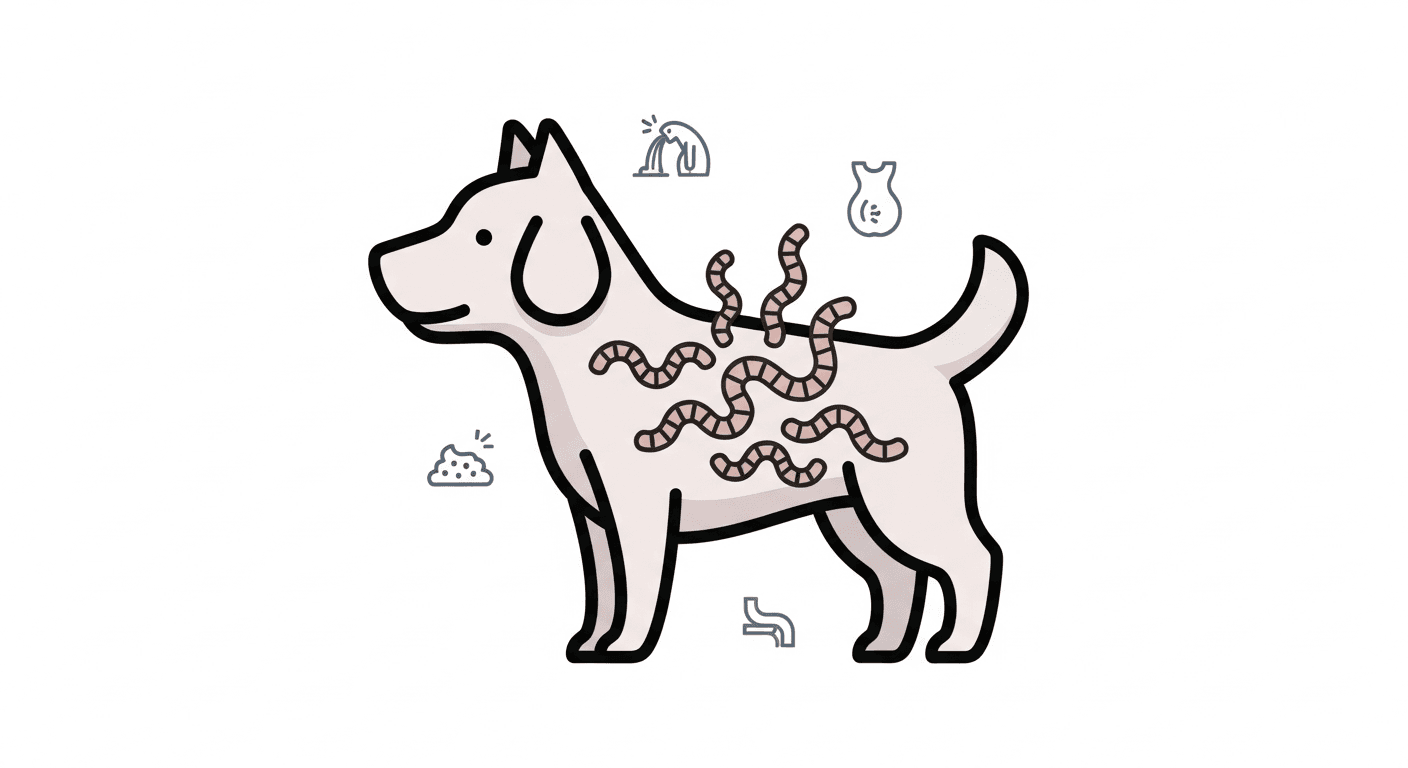
What Are Intestinal Worms in Dogs?
Intestinal worms are internal parasites that live inside your dog's digestive tract, absorbing nutrients and causing a range of symptoms from mild to life-threatening. The most common types in dogs are roundworms (Toxocara canis), hookworms (Ancylostoma), tapeworms (Dipylidium caninum or Taenia species), whipworms (Trichuris), and occasionally Giardia (a protozoan, technically not a worm but treated similarly). Each has a slightly different route of transmission and different symptoms. Regular deworming is the most effective prevention — but knowing what to look for means you can act early if a treatment gap occurs.
First 3 Steps You Can Take at Home
- Check the stool and perianal area: The easiest evidence is often visible. Roundworms look like spaghetti — cream-colored, round, up to 15cm long — and may appear in vomit or stool. Tapeworm segments look like small grains of rice and may be seen crawling around the anus or in dried form on bedding. Hookworm and whipworm infections generally don't produce visible worms but cause dark, tarry, or bloody diarrhea. Take a photo of any visible worms to show your vet.
- Know the symptom profile of your dog's infection: Heavy roundworm burden in puppies causes a pot-bellied appearance, poor growth, dull coat, vomiting, and diarrhea. Hookworms cause anemia — pale gums, weakness, bloody diarrhea. Tapeworms cause anal irritation and scooting. Whipworms cause chronic, watery, often blood-flecked diarrhea. Knowing which type is suspected guides the treatment choice, as not all wormers cover all species equally.
- Review your deworming history: When was the last wormer given, and what did it cover? Many popular all-in-one spot-on flea treatments do not include a wormer — they are separate products. Check the product label carefully. Some prescription combination products (Milbemax, Drontal Plus) cover a broad spectrum including roundworm, hookworm, whipworm, and tapeworm in a single dose.
When to Go to the Vet Immediately
- Puppy with pot belly, severe diarrhea, or pale gums — heavy worm burden can be fatal in young dogs
- Visible worms in vomit combined with lethargy and appetite loss
- Bloody diarrhea in an unvaccinated or poorly-wormed dog
- Any suspected worm symptoms in a dog that hasn't been treated in over 6 months
Follow-Up Care Checklist
- ☐ Treat with a broad-spectrum wormer covering all common types
- ☐ Repeat the wormer dose in 2–4 weeks to catch any larvae that mature after the first dose
- ☐ Dispose of all feces from the garden promptly — roundworm eggs can survive in soil for years
- ☐ Check for fleas — tapeworm is transmitted by fleas, so both need treating simultaneously
- ☐ Set quarterly worming reminders going forward
📋 Log This With TailRounds
Log worming treatment dates and any worm sightings in the TailRounds daily log. Consistent records make it easy to ensure treatment intervals are maintained.
Start Free →Book a Vet Appointment
A fecal flotation test at the vet can identify which specific worm species are present, allowing targeted treatment. This is especially useful for dogs with chronic loose stools or whose symptoms don't fully resolve after standard deworming. Book an appointment at Happy Paws Veterinary Clinic — same-week slots are usually available.
Summary for Your Clinic
Pet concern: Dog Worm Infestation
Visible worms: [description if seen], symptoms: [diarrhea/scooting/pot belly/weight loss]
Last wormer: [date and product name]
Questions for vet: Should we do a fecal test? Which wormer do you recommend for our situation?
Related Articles
Continue Reading
 🐕 Dog Health
Dog Parasite Control Schedule
A complete year-round parasite prevention guide for dogs — fleas, ticks, heartworm, and intestinal worms with recommended treatment intervals.
 🐕 Dog Health
Dog Flea Treatment Guide
The complete guide to treating dog fleas — product types, treating the home, and preventing reinfestation effectively.
 🐕 Dog Health
Dog Diarrhea: When to Worry and When to Wait
A practical guide to dog diarrhea — home care steps, warning signs that need a vet, and how to firm up loose stools safely.
 🐕 Dog Health
Dog Scooting on the Floor: Causes and Solutions
Why dogs drag their bottoms on the floor and what you can actually do about it — from anal glands to parasites and irritation.