
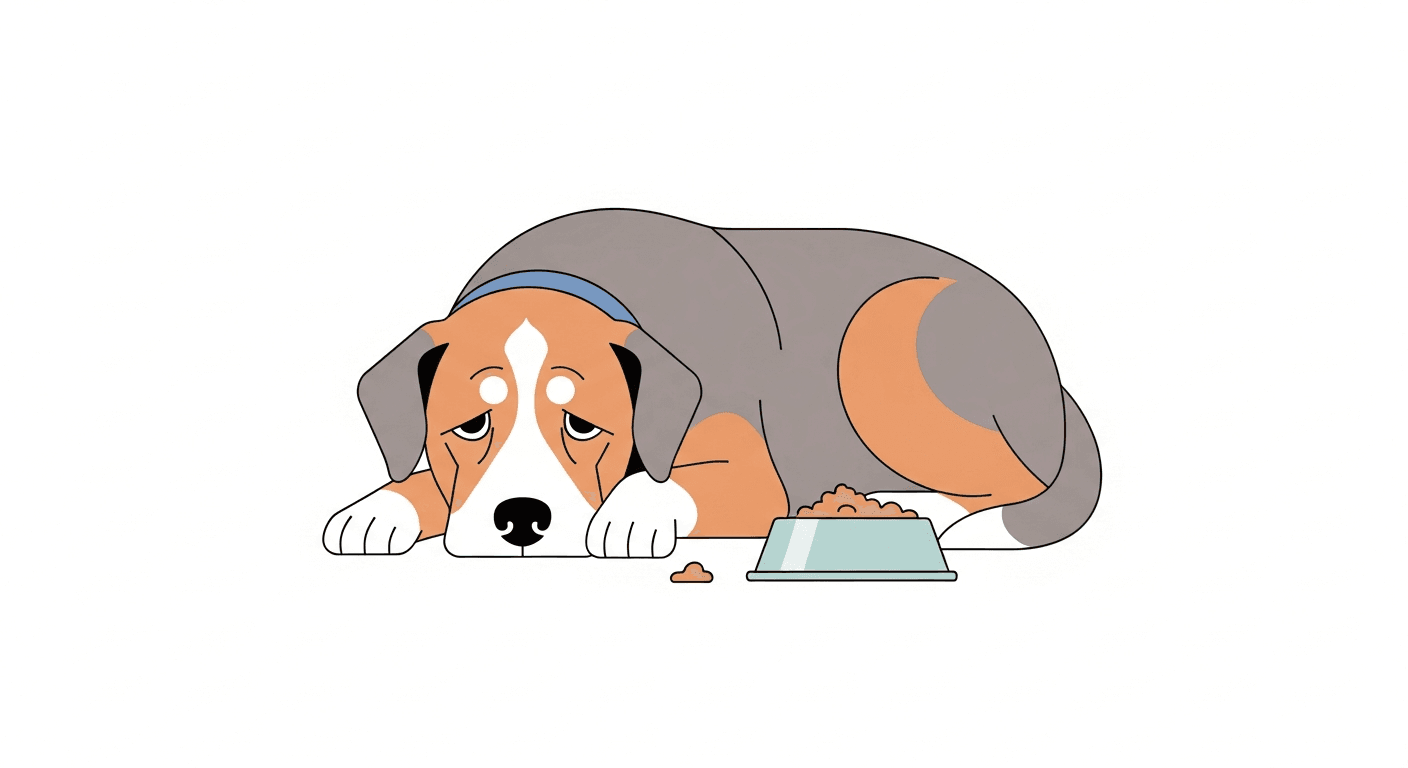
Why Senior Dogs Stop Eating
Appetite loss in older dogs deserves more attention than the same symptom in a young adult dog. Senior dogs (generally 7+ for large breeds, 10+ for small breeds) have reduced physiological reserve, meaning they can deteriorate more quickly when they stop eating, and there are more potential serious causes to consider. Common reasons include: dental pain (the #1 most underdiagnosed cause), kidney disease, liver disease, cancer, pain from arthritis making it uncomfortable to stand and eat, cognitive decline causing confusion around meals, and side effects from medications. A senior dog that skips more than 24 hours of eating needs a vet assessment — don't take a wait-and-see approach for more than one day.
First 3 Steps You Can Take at Home
- Check whether eating is painful: Senior dogs with dental disease or arthritis in the neck or jaw may be willing to eat but find the physical act painful. Watch how your dog approaches the bowl — do they seem interested but then back away? Do they drop food, tilt their head when chewing, or only chew on one side? Try offering soft food at a height that doesn't require them to bend down steeply if joint pain is a possibility. Even a small mat or slightly elevated bowl can make a meaningful difference.
- Warm the food and increase palatability: Aging dogs lose some sense of smell, and an impaired sense of smell means food smells less appealing. Warming wet food or a small amount of low-sodium chicken broth to just above body temperature (not hot — test on your wrist) releases aroma and can stimulate appetite effectively. Strong-smelling options like warmed wet food, a little plain yogurt, or a teaspoon of sardine in spring water mixed into kibble often entice reluctant senior eaters.
- Note everything else that's different: Is your senior dog sleeping more, drinking more, seeming confused or disoriented, showing changes in bathroom habits, or losing weight progressively? Appetite loss alongside these signs points toward systemic disease. Bring your written observations to the vet — seniors often have multiple conditions simultaneously, and the picture needs to be assembled carefully.
When to Go to the Vet Immediately
- Complete refusal to eat for 24+ hours in a senior dog
- Rapid weight loss over days or weeks
- Appetite loss with significant lethargy, vomiting, or behavioral changes
- Yellow tinge to the eyes, gums, or skin (jaundice)
Follow-Up Care Checklist
- ☐ Weigh your senior dog weekly — record results to track trends
- ☐ Schedule at least bi-annual vet check-ups for dogs over 8
- ☐ Ask your vet about bloodwork and urinalysis as part of annual senior screening
- ☐ Consider a senior-formulated food if not already using one
- ☐ Review any medications for appetite-suppressing side effects
- ☐ Ensure eating position is comfortable — elevated bowl or mat for arthritic dogs
📋 Log This With TailRounds
For senior dogs, a consistent daily log of food intake, water consumption, energy levels, and bathroom habits in the TailRounds daily log is one of the most valuable tools for catching health decline before it becomes a crisis.
Start Free →Book a Vet Appointment
Senior dogs benefit enormously from proactive check-ups. A 6-monthly blood panel can catch kidney disease, liver disease, and thyroid problems before they cause serious appetite loss — when treatment options are still many and quality of life can be preserved for years. Book an appointment at Happy Paws Veterinary Clinic — same-week slots are usually available.
Summary for Your Clinic
Pet concern: Senior Dog Not Eating
Dog's age: [X years], breed, current medications: [list]
Appetite change: [gradual decline / sudden refusal], duration: [X days]
Other signs: [weight loss/lethargy/increased drinking/behavioral changes]
Questions for vet: Should we run a senior blood panel? Could dental pain be the cause? Is the current diet appropriate for their age?
Related Articles
Continue Reading
 🐕 Dog Health
Dog Not Eating: Common Causes and What to Do
Why your dog might stop eating, which causes are harmless, and which ones need a vet visit. Practical home steps included.
 🐕 Dog Health
Dog Drinking Too Much Water: Should You Worry?
Polydipsia in dogs — what excessive thirst signals, from diabetes to kidney disease, and when to get blood work done.
 🐕 Dog Health
Dog Bad Breath: Dental Warning Signs
Bad dog breath is rarely just "dog breath" — learn what causes it, when it signals dental disease, and how to protect your dog's mouth.