
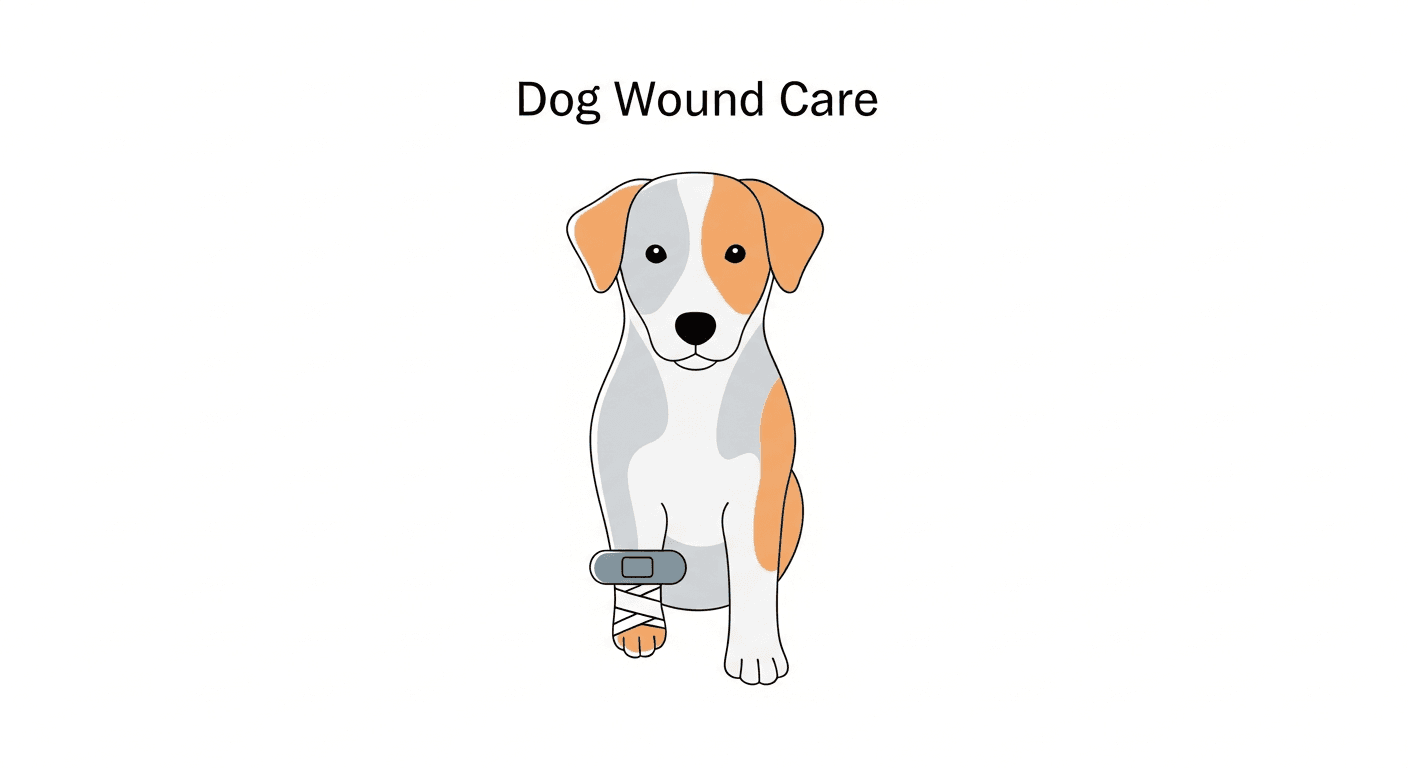
Which Wounds Can Be Managed at Home?
Minor wounds — small cuts, superficial scrapes, and abrasions — can often be managed at home successfully with proper care. Wounds that need immediate veterinary attention include: deep wounds, puncture wounds (from bites or nails), wounds that are actively bleeding and won't stop, wounds near the eyes or other sensitive structures, wounds with foreign bodies embedded, and any wound that shows signs of infection within 24–48 hours. When in doubt about the depth of a wound, a vet visit is always the right call — many wounds look smaller at the surface than they actually are, and puncture wounds in particular are deceiving.
First 3 Steps You Can Take at Home
- Stop any bleeding first: Apply gentle, firm pressure with a clean cloth or gauze for 2–5 minutes. Don't keep lifting the cloth to check — each check disrupts clot formation. If bleeding soaks through the cloth, add more cloth on top rather than removing what's there. Once bleeding is controlled or slowed significantly, you can begin cleaning. If a wound bleeds heavily or intermittently restarts for more than 10 minutes, go to the vet — deeper blood vessels or arteries may be involved.
- Clean the wound properly: Irrigation is the most important step in wound care — it physically removes bacteria and debris. Use saline (sterile saline preferred, or clean tap water) and gently flush the wound. Don't use hydrogen peroxide — it damages healing tissue. Don't use alcohol — it's also damaging and painful. A syringe or spray bottle can help direct saline irrigation into the wound. Trim any fur around the wound edges with blunt-tipped scissors to keep it clean and allow air circulation and monitoring.
- Cover appropriately and prevent licking: Very minor superficial wounds often heal well exposed to air — keep them clean and dry. Wounds that are in locations prone to being licked, in areas of friction, or that are deeper benefit from a light dressing. Change dressings daily and assess the wound at each change. The golden rule: a dog licking a wound is an infection waiting to happen. A cone is mandatory for any wound your dog can reach with their tongue.
When to Go to the Vet Immediately
- Any bite wound — even small ones are deep punctures and almost always become infected without antibiotics
- Wound showing infection signs: increasing redness, warmth, swelling, pus, or red streaking
- Wound is deep or gaping — may require sutures
- Wound near the eye, mouth, genitals, or joints
Follow-Up Care Checklist
- ☐ Clean the wound with saline twice daily
- ☐ Check for infection signs at every cleaning: redness, swelling, warmth, discharge
- ☐ Change dressings daily — never leave a wet dressing on
- ☐ Cone at all times — mandatory
- ☐ Monitor for healing: wound edges should be coming together and looking less angry within 3–4 days
- ☐ Visit the vet if no improvement or worsening within 48 hours
📋 Log This With TailRounds
Photograph and log wound appearance daily during healing in the TailRounds daily log. Progressive photos make it easy to see whether the wound is healing or developing infection, and give your vet clear visual information at any follow-up.
Start Free →Book a Vet Appointment
Bite wounds from other animals always need veterinary assessment — the puncture may be small on the surface but deep underneath, and the bacterial contamination from an animal bite makes infection almost inevitable without antibiotics. Book an appointment at Happy Paws Veterinary Clinic — same-week slots are usually available.
Summary for Your Clinic
Pet concern: Dog Wound
Wound type: [cut/scrape/puncture/bite], location: [body area], size and depth estimate
Cause: [known/unknown], bleeding controlled: [yes/no], infection signs: [present/absent]
Questions for vet: Does this need sutures? Should we start antibiotics? How long until healed?
Related Articles
Continue Reading
 🦴 Dog Care
Dog Post-Surgery Home Care
How to care for your dog after surgery — wound monitoring, activity restriction, pain management, and the recovery milestones to watch for.
 🦴 Dog Care
Dog Broken Nail Home Care
What to do when your dog breaks a nail — how to manage pain, stop bleeding, prevent infection, and when a vet visit is needed.
 🐕 Dog Health
Dog Hot Spots: Early Treatment Steps
What dog hot spots are, why they happen, and the step-by-step approach to treating them at home before they spread.
 🦴 Dog Care
Dog Medication Guide for Pet Owners
How to give your dog medication safely, common medication types, what to watch for, and which human medications are dangerous for dogs.