
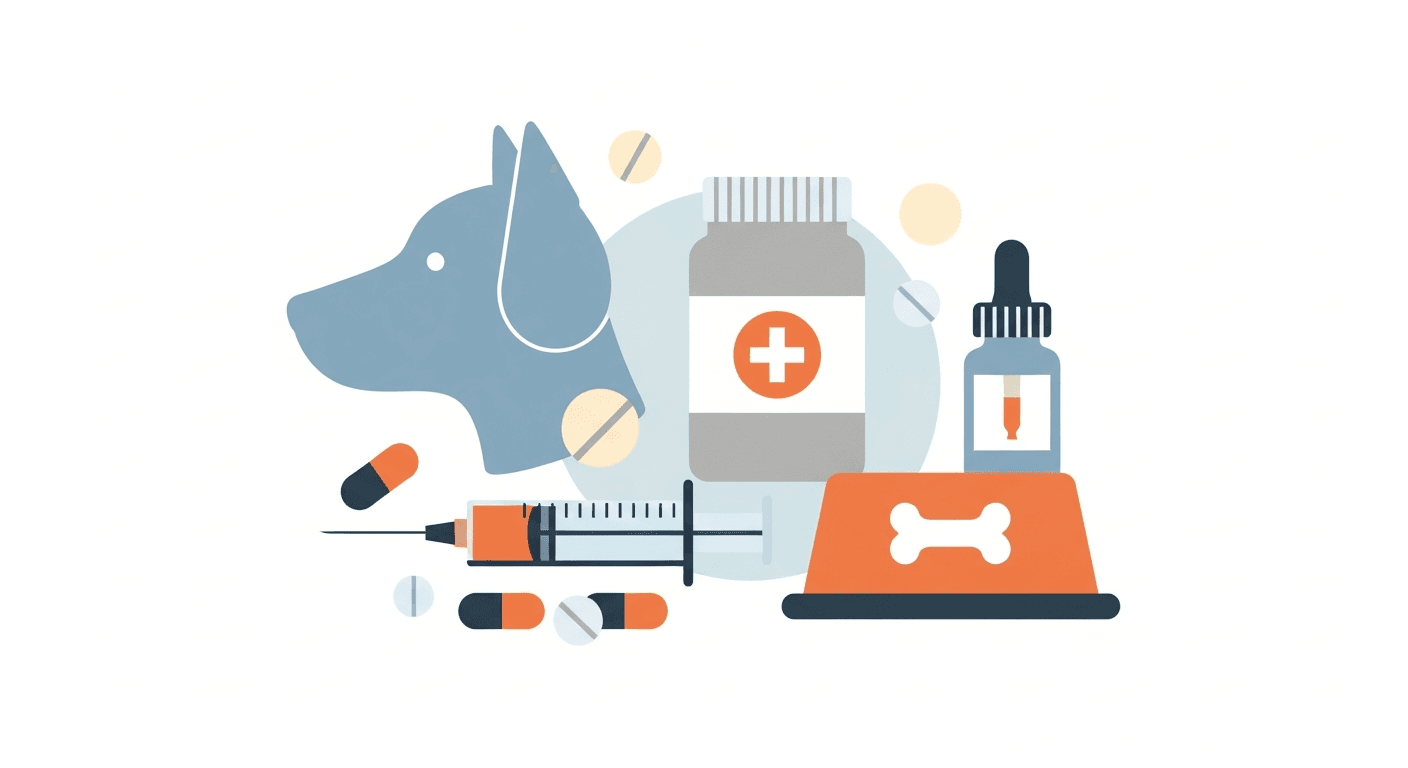
Understanding Dog Medications
Giving your dog medication at home is a common and important part of veterinary care — but there are meaningful differences between dog medications and human equivalents, real risks in dosing errors, and several human medications that are highly toxic to dogs. Whether you're managing a prescription antibiotic, giving monthly parasite prevention, or trying to safely give a short course of something for pain relief, understanding how to do it correctly and safely makes a real difference to treatment success and your dog's wellbeing.
First 3 Steps You Can Take at Home
- Give medications as prescribed — duration and dose matter: The most common medication error in pet owners is stopping a medication early because the dog "seems better." This is particularly dangerous with antibiotics — stopping early allows the most resistant bacteria to survive and repopulate, leading to a harder-to-treat secondary infection. Pain medications have specific dosing intervals for safety reasons. Antiparasitic treatments have specific timing requirements. Always complete the full course and give at the frequency your vet specified, even if your dog seems fully recovered.
- Know what you're giving and why: Before leaving the vet, make sure you understand: what the medication is for, the name (brand and generic), dose and frequency, whether to give with food or on an empty stomach, how long the course is, and what side effects to watch for. Write this down or photograph the prescription instructions. Common side effects worth knowing for your dog's current medications can be discussed with the vet or pharmacist — forewarned means you won't panic if your dog gets mild diarrhea from an antibiotic, for example.
- NEVER give human medications without explicit vet approval: This is critical safety information. Ibuprofen and aspirin cause serious GI ulceration in dogs. Acetaminophen (paracetamol/Tylenol) causes liver failure. Certain antihistamines containing decongestants are toxic. Many human anxiety medications are dangerous at dog-relevant doses. When your dog is in pain and you can't reach a vet, it's tempting to reach for the medicine cabinet — but this risks serious harm. If you need same-day pain relief for your dog, call a vet for appropriate options.
When to Go to the Vet Immediately
- Severe allergic reaction to a medication: facial swelling, difficulty breathing, collapse
- Accidental overdose — you gave the wrong dose or the dog found and ate the medication
- Your dog accidentally received a human medication — call a vet or poison control immediately
Follow-Up Care Checklist
- ☐ Write down each medication: name, dose, time given — use a chart if managing multiple medications
- ☐ Keep all medications stored safely away from pets and children
- ☐ Note any side effects and report to your vet — don't silently stop giving without guidance
- ☐ Never share medications between pets — doses are based on species and weight
- ☐ Keep a record of all medications ever prescribed to your dog — useful for future consultations
📋 Log This With TailRounds
Store your dog's complete medication history — including dose, frequency, start and end dates — in the TailRounds health profile. This prevents accidental double-dosing and gives any new vet a complete picture immediately.
Start Free →Book a Vet Appointment
If your dog is on multiple medications, periodic medication review with your vet ensures there are no interactions developing and that doses are still appropriate as your dog ages or their condition changes. Book an appointment at Happy Paws Veterinary Clinic — same-week slots are usually available.
Summary for Your Clinic
Pet concern: Medication Query
Current medications: [list with doses and frequency], duration of current course
Side effects observed: [describe], questions about compliance
Questions for vet: Are there any drug interactions? Is the dose still appropriate? Can we extend or reduce any medication?
Related Articles
Continue Reading
 🦴 Dog Care
Dog Post-Surgery Home Care
How to care for your dog after surgery — wound monitoring, activity restriction, pain management, and the recovery milestones to watch for.
 🐕 Dog Health
Dog Not Eating: Common Causes and What to Do
Why your dog might stop eating, which causes are harmless, and which ones need a vet visit. Practical home steps included.
 🦴 Dog Care
Dog Wellness Checklist by Life Stage
What preventive care your dog needs at every age — from puppy vaccines to senior blood work. A practical year-by-year wellness guide.