
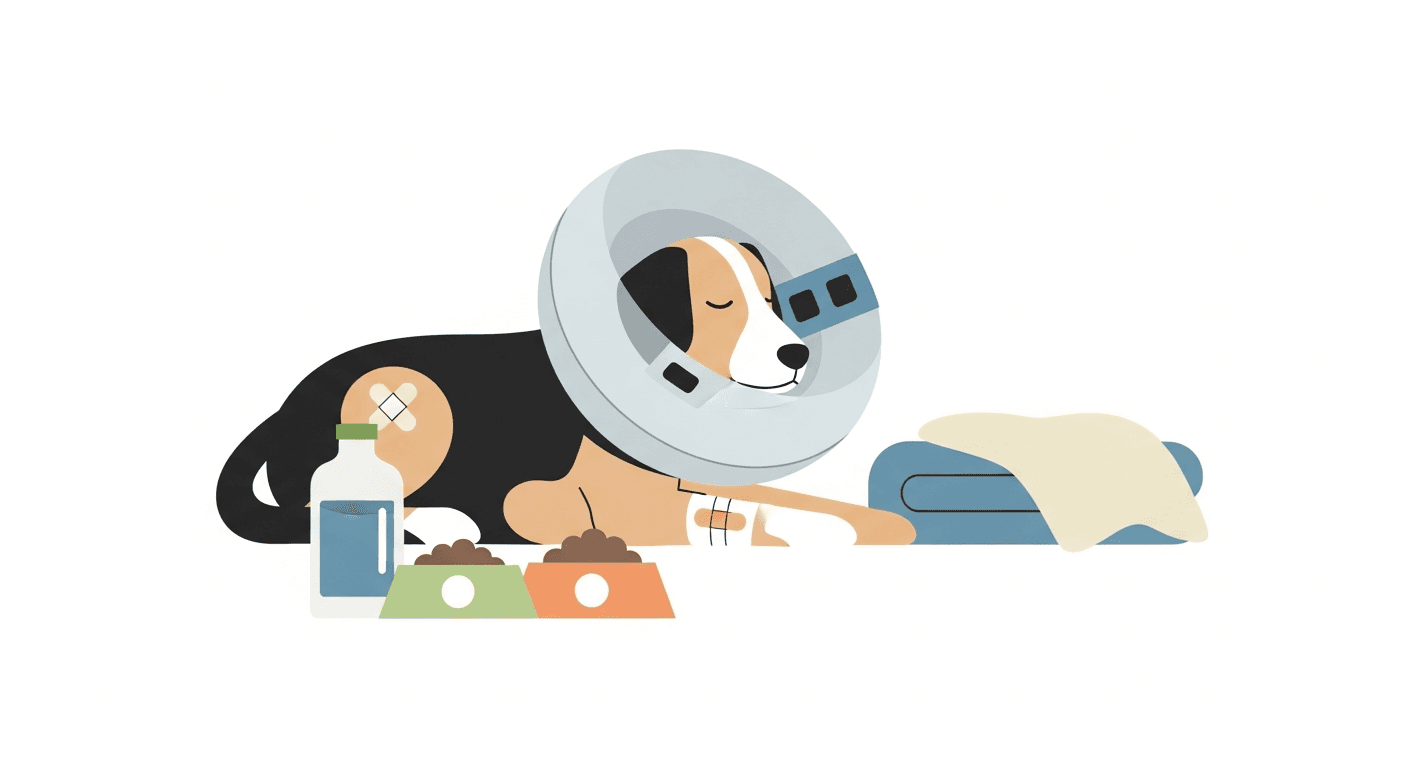
What to Expect After Dog Surgery
The period immediately following any surgery — from a simple spay/neuter to more complex orthopedic or abdominal procedures — is critical for recovery. Most owners feel anxious and unsure in this phase, which is completely understandable. Your dog may be groggy from anesthesia, unwilling to eat, and generally unlike themselves for 24–48 hours after surgery. This is normal. What isn't normal are signs of complications: excessive swelling, discharge at the wound site, your dog not eating at all beyond 48 hours, persistent vomiting, or the incision opening. Knowing what normal recovery looks like vs. warning signs allows you to monitor confidently and catch any issues early.
First 3 Steps You Can Take at Home
- Anesthesia recovery — keep it calm and warm: Dogs coming home from surgery are still clearing anesthetic agents and may be unsteady, confused, or disoriented for several hours. Keep them in a quiet, dimly lit, warm space away from other pets and excited children. Don't leave them unsupervised on elevated surfaces — post-anesthetic dogs have fallen off beds and couches. Offer a small amount of water once they're steady (forcing water in a drowsy dog can cause aspiration). Offer a small amount of bland food in the evening if the surgery was morning — most dogs aren't interested at first, and that's fine.
- Restrict activity strictly and persistently: This is where most post-surgical complications occur — not from the surgery itself but from allowing too much activity too soon. Your vet will specify restrictions (usually: no running, jumping, stairs, or rough play for 2 weeks minimum for soft tissue surgery; longer for orthopedic). This means leash walks only — even in the garden. No off-lead time even if your dog seems completely recovered. Internal sutures in the body don't heal at the same rate as external appearance — a dog that seems fully recovered at day 5 may be at serious risk of suture breakdown from activity.
- Monitor the incision daily: Check the wound at least twice daily. Normal post-surgical incision: slight swelling and redness in the first 2–3 days, gradually settling. Some bruising is normal, especially for larger procedures. Abnormal: significant swelling, warmth, purulent (yellow/green) discharge, incision opening, or a foul smell. Photograph the incision on day 1 (ask the clinic to show you the fresh incision before you leave) and compare daily — visual changes are often easier to spot than relying on memory.
When to Go to the Vet Immediately
- Incision opening or pulling apart
- Purulent discharge or significantly worsening swelling
- Your dog won't eat at all after 48 hours post-surgery
- Difficulty breathing, pale gums, or collapse post-surgery
- Persistent vomiting unable to keep medication or water down
Follow-Up Care Checklist
- ☐ Give all prescribed medications on schedule — including pain relief and antibiotics
- ☐ Keep the cone on until the vet says it's safe to remove
- ☐ Leash only during bathroom trips for the full rest period
- ☐ Photograph the incision on day 1 and compare every 2 days
- ☐ Attend the 10–14 day follow-up appointment for suture removal or wound check
- ☐ For orthopedic surgery: physiotherapy exercises prescribed by the vet are essential — follow them
📋 Log This With TailRounds
Log daily recovery observations — food intake, activity level, wound appearance, and medication given — in the TailRounds daily log. This record is invaluable at the follow-up appointment and helps you catch complications early.
Start Free →Book a Vet Appointment
Your post-surgical follow-up appointment is not optional — it allows wound assessment, suture removal if needed, and ensures recovery is on track. Book it before you leave the clinic on surgery day. Book an appointment at Happy Paws Veterinary Clinic — same-week slots are usually available.
Summary for Your Clinic
Pet concern: Post-Surgical Recovery Check
Surgery performed: [type], date: [X days ago], wound appearance: [describe]
Current medications: [list], activity level maintained: [leash only / has been running]
Questions for vet: Is healing progressing normally? Can the cone come off? When can activity resume?
Related Articles
Continue Reading
 🦴 Dog Care
Dog Wound Care at Home
How to clean and care for minor dog wounds at home, what signs mean infection is developing, and when a wound needs professional treatment.
 🦴 Dog Care
Dog Medication Guide for Pet Owners
How to give your dog medication safely, common medication types, what to watch for, and which human medications are dangerous for dogs.
 🐕 Dog Health
Dog Not Eating: Common Causes and What to Do
Why your dog might stop eating, which causes are harmless, and which ones need a vet visit. Practical home steps included.