
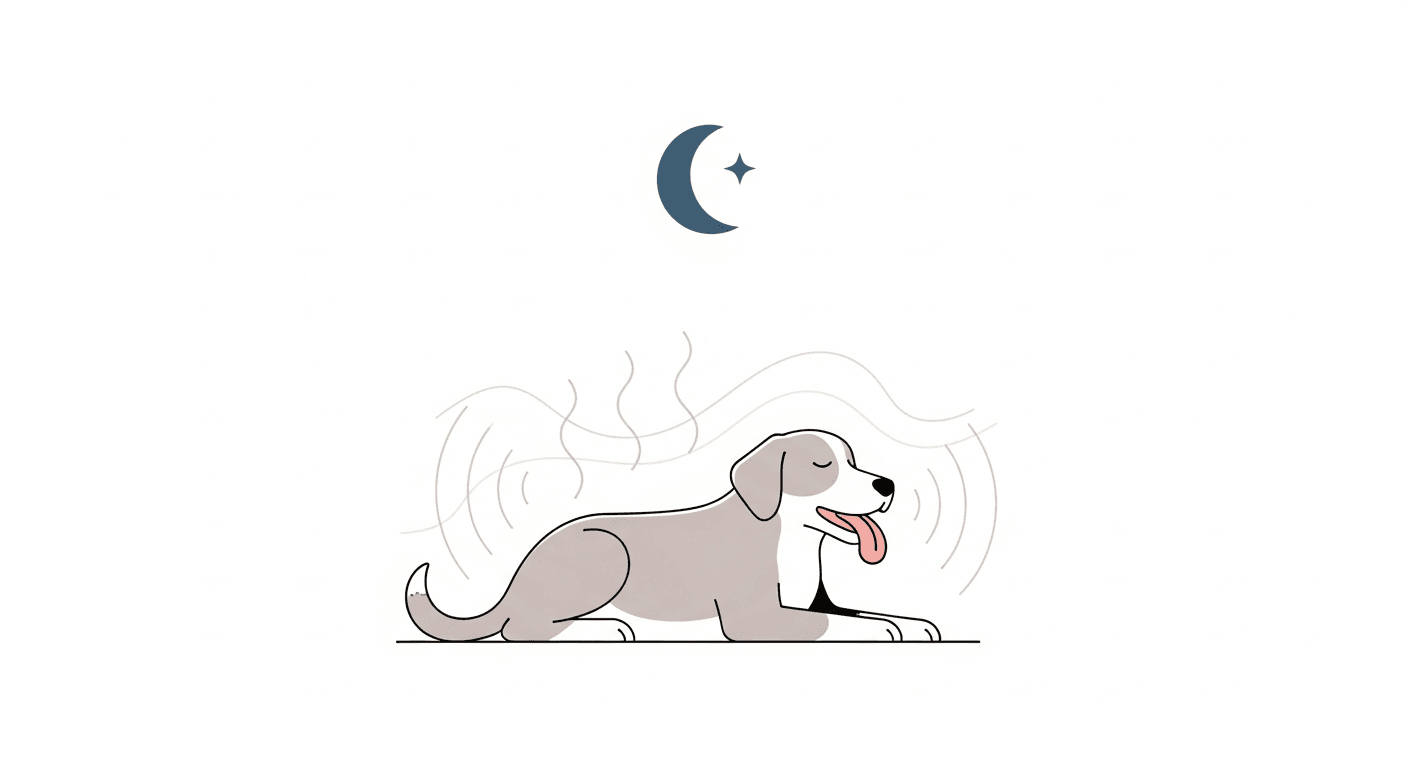
Why Do Dogs Pant at Night?
Normal panting is how dogs thermoregulate — it's fine and expected after exercise or in warm environments. Nighttime panting that disrupts sleep — your dog's and yours — is different. It usually indicates something is wrong: the dog is overheated (room too warm), in pain, anxious, or has an underlying medical condition. In older dogs especially, nighttime panting is a common early symptom of Cushing's disease (hyperadrenocorticism), chronic pain from arthritis, cognitive dysfunction syndrome (canine dementia), heart disease, or medication side effects. The context and your dog's age are significant clues.
First 3 Steps You Can Take at Home
- Rule out the obvious environmental causes first: Is the bedroom warm? Do you have the heating on? Is your dog sleeping on or near a heat source? A thick-coated or elderly dog may overheat in a room that feels comfortable to you. Try lowering the room temperature, moving your dog's bed away from heat sources, and offering fresh cool water. If panting stops — problem solved. If it continues in a cool environment, the cause is internal rather than environmental.
- Assess for pain: Pain is one of the most common causes of nighttime panting, especially in middle-aged to older dogs. Dogs often mask pain during the day through activity and distraction, but at night when they lie still, discomfort becomes more noticeable. Signs of pain alongside panting: reluctance to lie in certain positions, frequent position changes, groaning when getting up, stiff movement in the morning, or flinching when certain areas are touched. Arthritis in particular worsens when still for long periods.
- Consider recent medication changes: Prednisone and other steroids are among the most common causes of sudden nighttime panting in dogs — it's a well-known side effect. If your dog recently started a new medication of any kind and nighttime panting appeared shortly after, mention this to your vet. The dose may need adjustment, or there may be a more appropriate alternative medication.
When to Go to the Vet Immediately
- Panting with respiratory distress, labored breathing, or blue gums — cardiac/respiratory emergency
- Panting in a dog that also has a pot-bellied appearance, increased thirst, and thinning hair (Cushing's symptoms)
- Panting accompanied by confusion, disorientation, or pacing in an elderly dog (cognitive dysfunction)
Follow-Up Care Checklist
- ☐ Cool the sleeping environment if overheating is a possibility
- ☐ Assess for pain — gentle palpation of joints, observe mobility
- ☐ Note any medications given in the last 2–4 weeks
- ☐ For older dogs: schedule a senior health check with hormone panel if nighttime panting is new
- ☐ Keep a log of when panting occurs and how long it lasts
📋 Log This With TailRounds
Log nighttime panting episodes with timing, duration, room temperature, and any other observations in the TailRounds daily log. This pattern data is very helpful in distinguishing anxiety, pain, and hormonal causes at the vet appointment.
Start Free →Book a Vet Appointment
Persistent nighttime panting without an obvious environmental cause in an older dog warrants a vet visit and ideally a senior blood panel including a cortisol test. Cushing's disease and pain management are both very treatable when identified correctly. Book an appointment at Happy Paws Veterinary Clinic — same-week slots are usually available.
Summary for Your Clinic
Pet concern: Dog Panting at Night
Age of dog: [years], breed, current medications: [list]
Other symptoms: [increased thirst/pot belly/hair changes/confusion]
Room temperature: [warm/comfortable/cool], duration of problem: [X weeks]
Questions for vet: Could this be Cushing's? Is there an underlying pain source? Should we do a cortisol test?
Related Articles
Continue Reading
 🐕 Dog Health
Dog Anxiety When Left Alone: Practical Solutions
Understanding and managing dog separation anxiety — from mild distress to severe panic, with practical strategies that actually work.
 🐕 Dog Health
Dog Shaking and Trembling: When Is It Serious?
From cold to pain to toxins — why dogs shake and tremble, and how to know when it's a medical emergency vs. normal behavior.
 🐕 Dog Health
Senior Dog Not Eating: What to Do
Appetite loss in older dogs — why it happens, which causes are serious, and how to encourage a senior dog to eat safely.
 🐕 Dog Health
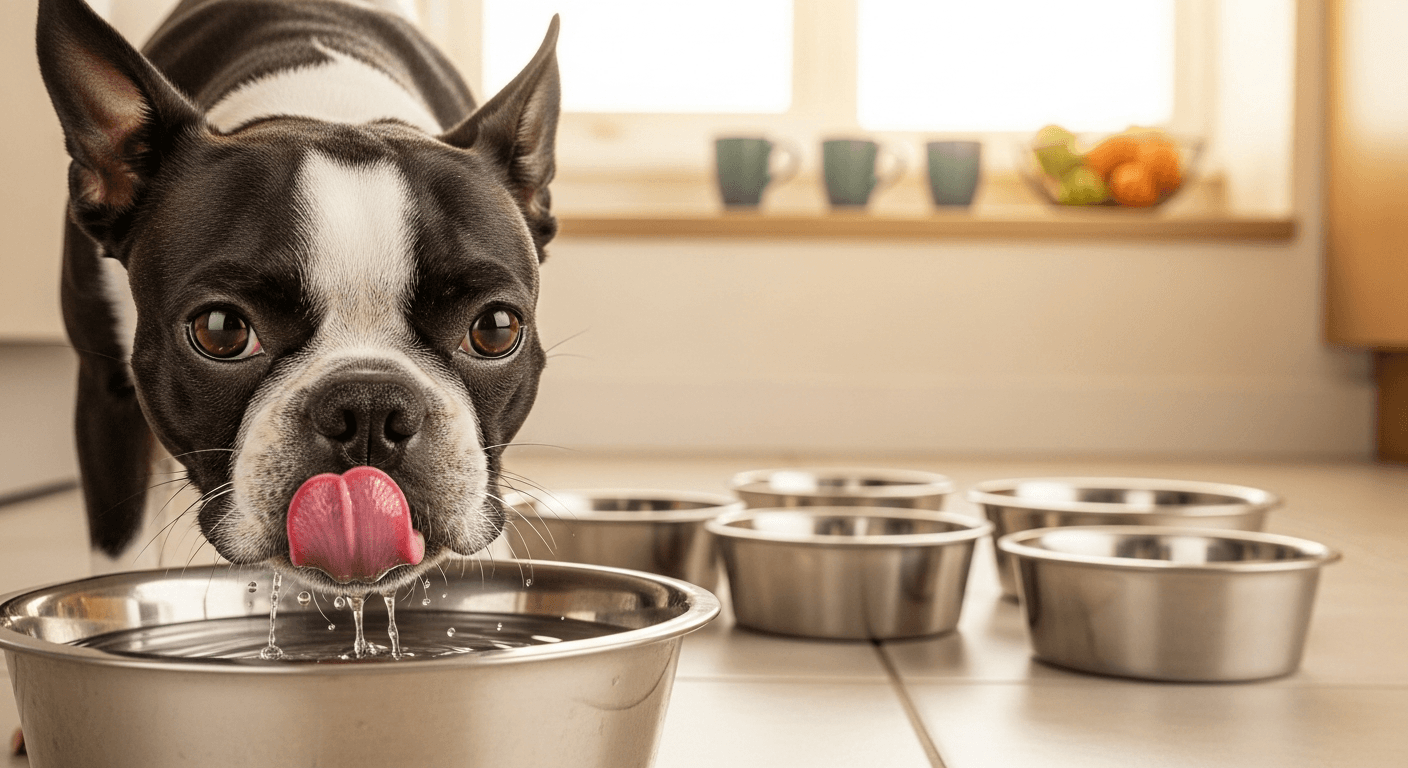
Dog Drinking Too Much Water: Should You Worry?
Polydipsia in dogs — what excessive thirst signals, from diabetes to kidney disease, and when to get blood work done.