
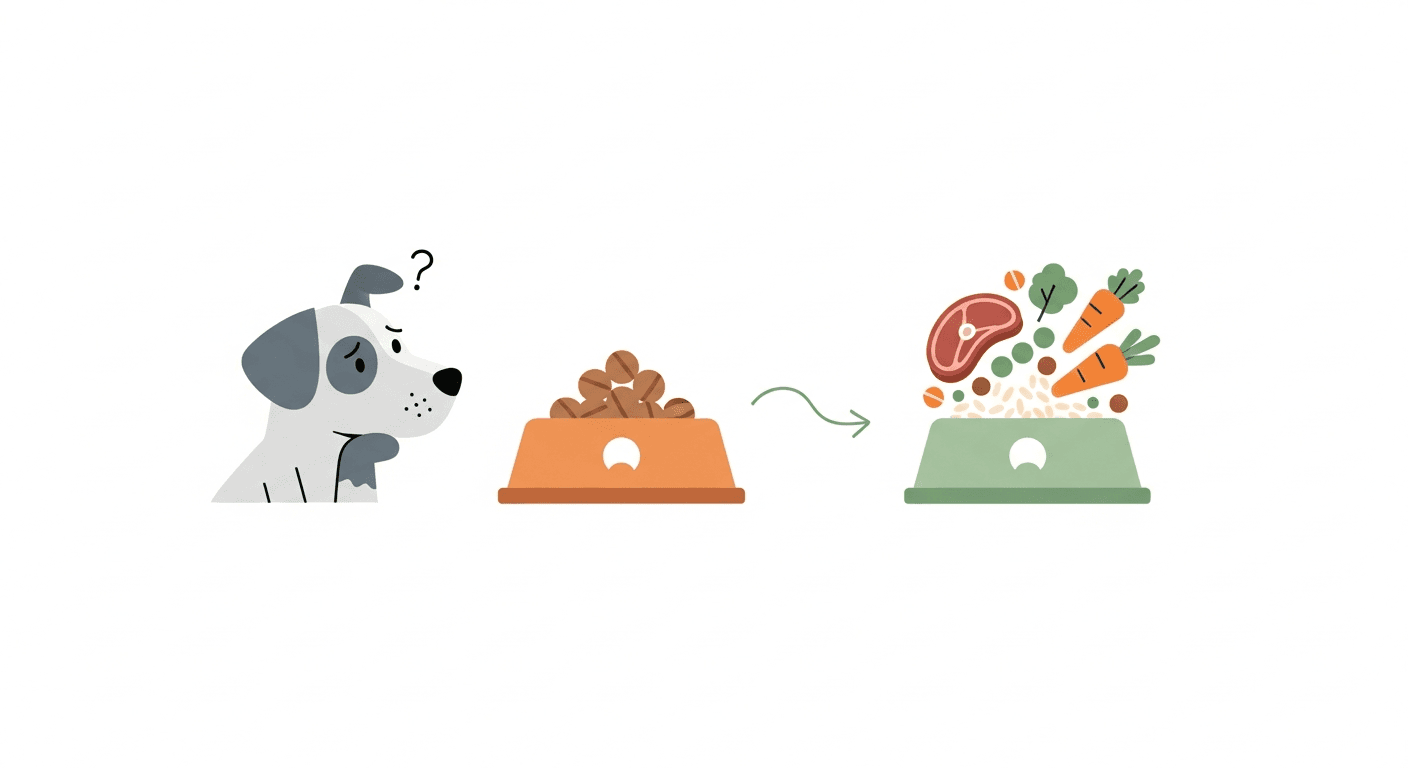
Why Does a Sudden Food Change Upset a Dog's Stomach?
Dogs' digestive systems adapt to the specific bacterial populations and enzymes needed to process their current food. A sudden switch to a completely different formula — even a higher quality one — disrupts this balance dramatically, causing diarrhea, vomiting, and gas as the gut microbiome scrambles to adapt. This is especially true when switching protein sources, changing between dry and wet food, or moving from grain-inclusive to grain-free formulas. A gradual transition over 7–10 days gives the gut time to adapt smoothly and prevents the digestive chaos that makes owners think the new food is a problem when it isn't.
First 3 Steps You Can Take at Home
- Follow the 7–10 day transition protocol: Days 1–2: 75% old food, 25% new food. Days 3–4: 50% old, 50% new. Days 5–6: 25% old, 75% new. Days 7–10: 100% new food. This schedule gives the digestive system time to upregulate the right digestive enzymes and adjust the gut microbiome without shocking it. For dogs with sensitive stomachs or known GI issues, extend to a 14-day transition. If diarrhea occurs at any stage, go back one step and stay there an extra 2–3 days before proceeding.
- Keep everything else constant during the transition: Don't change treats, feeding schedule, or anything else simultaneously. If multiple things change at once and your dog develops diarrhea, you won't know which change caused it. Change only the food, and do it gradually. Once the new food is fully established and your dog's stools are back to normal consistency, you can consider other adjustments if needed.
- Consider a probiotic supplement during the transition: A dog-specific probiotic (Fortiflora, Proviable, or similar) given during the 7–10 day transition helps support gut microbiome stability. This is particularly helpful for dogs with sensitive stomachs, dogs recovering from a GI illness, or when switching to a very different food type. Always choose probiotics specifically formulated for dogs — human probiotics aren't harmful but have much lower efficacy for canine gut flora.
When to Go to the Vet Immediately
- Bloody diarrhea during or after a food transition
- Vomiting and diarrhea together for more than 24 hours
- Your dog completely refuses the new food for more than 3 days
Follow-Up Care Checklist
- ☐ Stick to the 7–10 day transition protocol
- ☐ Monitor stool consistency at each meal during the transition
- ☐ Add a probiotic for the transition period if your dog is GI-sensitive
- ☐ Once fully transitioned, stick with the new food for at least 6–8 weeks before evaluating whether it suits your dog
- ☐ For food allergy diets: strict compliance is essential — even small amounts of old food can invalidate an elimination trial
📋 Log This With TailRounds
Log the food transition day-by-day in the TailRounds daily log along with stool consistency. This makes it easy to identify if a particular ratio is causing issues and adjust the pace accordingly.
Start Free →Book a Vet Appointment
If you're switching foods because of a health issue — allergies, kidney disease, weight management, senior formula — your vet can recommend the right formula and target calorie intake for your dog's specific needs, rather than relying on marketing claims. Book an appointment at Happy Paws Veterinary Clinic — same-week slots are usually available.
Summary for Your Clinic
Pet concern: Dog Diet Transition
Current food: [brand/type], new food: [brand/type], reason for change
Transition used: [gradual/sudden], any GI symptoms during transition
Questions for vet: Is this the right food for my dog's current life stage and health status?
Related Articles
Continue Reading
 🐕 Dog Health
Dog Diarrhea: When to Worry and When to Wait
A practical guide to dog diarrhea — home care steps, warning signs that need a vet, and how to firm up loose stools safely.
 🐕 Dog Health
Dog Vomiting: What to Do First at Home
Learn the first steps to take when your dog vomits, which signs mean danger, and when to call your vet immediately.
 🦴 Dog Care
Dog Obesity Signs and Weight-Loss Basics
Is your dog overweight? How to assess body condition, why obesity matters, and how to safely start a weight loss plan.
 🐕 Dog Health
Dog Not Eating: Common Causes and What to Do
Why your dog might stop eating, which causes are harmless, and which ones need a vet visit. Practical home steps included.