
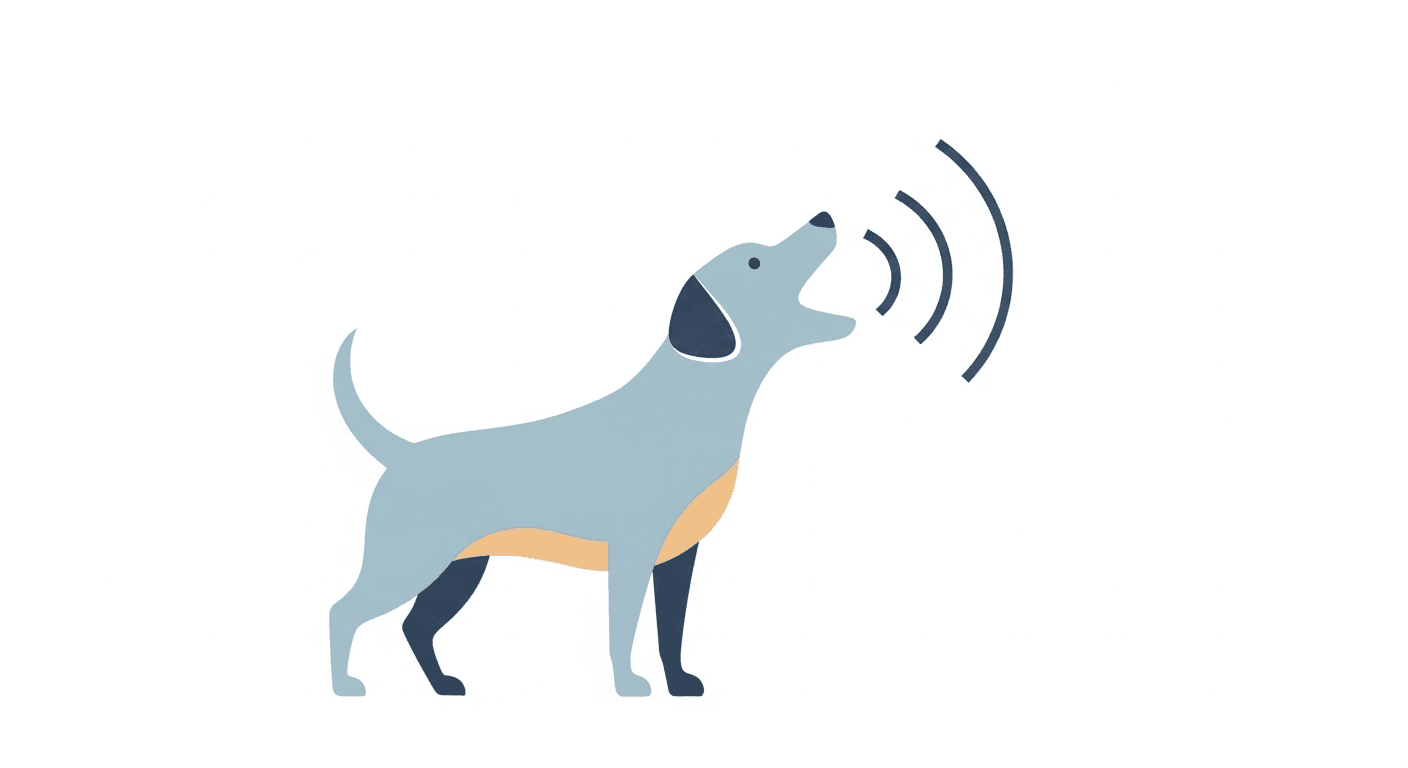
Understanding Why Dogs Bark
Barking is a natural, normal form of canine communication. Dogs bark to alert, to express excitement, to seek attention, to communicate distress, and to warn off perceived threats. Expecting a dog to never bark is both unrealistic and unfair. The goal of training is not silence — it is reducing excessive or inappropriate barking while preserving the dog's ability to communicate normally. Before choosing a training method, you must first identify why your dog is barking, because the solution depends entirely on the cause.
The main categories of problem barking are: alert/territorial barking (at sounds, passersby, or strangers), demand barking (to get attention, food, or play), excitement barking (during play or anticipation), fear barking (at things that startle or frighten), and separation anxiety barking (when left alone). Each requires a different approach.
Alert and Territorial Barking
This is the most common type. The dog hears or sees something — a person walking past, a delivery driver, another dog — and barks to alert you and warn the potential intruder. Some alert barking is appropriate. The training goal is to teach your dog that one or two barks to alert you is acceptable, but continued barking after you have acknowledged it is not.
- Acknowledge the alarm: When your dog barks at something, go to them, look at what they are looking at, and calmly say "Good dog, I see it. Quiet now."
- Teach a "quiet" or "enough" cue: Wait for a natural pause in the barking. The moment they pause, even briefly, say "quiet" in a calm, firm tone and immediately reward with a treat. Repeat until "quiet" reliably predicts a pause in barking, then you can use it proactively.
- Manage the environment: If your dog barks at passersby through the front window, move furniture so they cannot access the window, or use frosted privacy film on the lower section. Reducing the visual trigger reduces the barking dramatically for many dogs.
- Counter-condition the trigger: If your dog barks at the doorbell, begin training a new response. Ring the bell yourself and immediately toss a treat on the floor before your dog has time to bark. Repeat many times until the doorbell predicts treats rather than triggering an alarm response.
Demand Barking
Demand barking is trained by owners accidentally. At some point, the dog barked, and the owner gave them attention, food, a toy, or took them outside. The dog learned: barking produces results. Stopping demand barking requires extinction — completely ignoring the barking so it no longer works.
- Turn away completely when your dog demand barks. Make zero eye contact. Say nothing. Leave the room if possible.
- Wait for silence — even a one-second pause — and then immediately reward with whatever they wanted (attention, food, access to the garden).
- Extinction is typically followed by an "extinction burst" where the barking gets louder and more persistent before it fades. This is normal. Do not give in at this point — doing so teaches the dog that barking harder eventually works.
- Simultaneously train an alternative behavior: teach your dog to sit quietly beside you when they want attention, and reward that heavily.
Separation Anxiety Barking
Dogs that bark, howl, or whine continuously when left alone are typically experiencing genuine distress, not simply being nuisance barkers. This is a distinct problem that requires a specific desensitization protocol rather than standard barking training — punishing it or ignoring it will not help and may make the anxiety worse. See our dedicated guide on dog separation anxiety solutions for a step-by-step desensitization plan. If the anxiety is severe, a conversation with your vet is essential — a behavioral consultation and sometimes short-term medication support can make the training much more effective. Book an appointment at Happy Paws Veterinary Clinic to discuss behavioral options.
What Does NOT Work
Many products and methods marketed as "quick fixes" for barking are ineffective or harmful:
- Bark collars (shock, citronella, ultrasonic): May suppress barking in the short term through aversion but do not address the underlying cause. Can increase anxiety, cause redirected aggression, or damage your relationship with your dog. Not recommended by veterinary behaviorists.
- Shouting "Quiet!" or "No!": Dogs often interpret this as you joining in the barking. Calm, quiet responses are far more effective.
- Spraying water: May interrupt barking momentarily but does not teach an alternative behavior and can damage trust.
- Punishing barking that has already stopped: Dogs cannot connect punishment to something they did seconds ago. The punishment is meaningless or creates confusion.
Building a Calmer Dog Overall
Dogs that are under-stimulated, under-exercised, or chronically anxious bark more. Ensuring your dog gets adequate physical exercise, mental stimulation (puzzle feeders, training sessions, scent games), and social interaction reduces the overall level of arousal that drives excessive barking. A calm, fulfilled dog is a quieter dog. Track your dog's daily activity and behavioral patterns in the TailRounds Daily Log and use TailRounds AI Triage if you are concerned that the barking may have a medical component such as pain, cognitive dysfunction in older dogs, or hearing loss.
Continue Reading
 🎾 Dog Training
Dog Separation Anxiety: Causes, Signs, and Solutions
Understand dog separation anxiety and learn a step-by-step desensitization protocol to help your dog become comfortable being alone.
 🎾 Dog Training
Dog Aggression: Recognizing Warning Signs and Management Strategies
Learn to identify early warning signs of dog aggression and understand management and training strategies to keep your household safe.
 🎾 Dog Training
Positive Reinforcement Training: The Science and How to Apply It
Understand how positive reinforcement works in dog training, why it outperforms punishment-based methods, and how to apply it effectively.
 🎾 Dog Training
Fear-Based Behaviors in Dogs: Recognition and Compassionate Management
Understand the signs of fear-based behaviors in dogs, how to identify triggers, and evidence-based approaches to help a fearful dog.